The Kazimi Ziyarah

The Rites of Visiting Imam al-Kazim (a)
Sayed Mahmoud Al-Mosawi
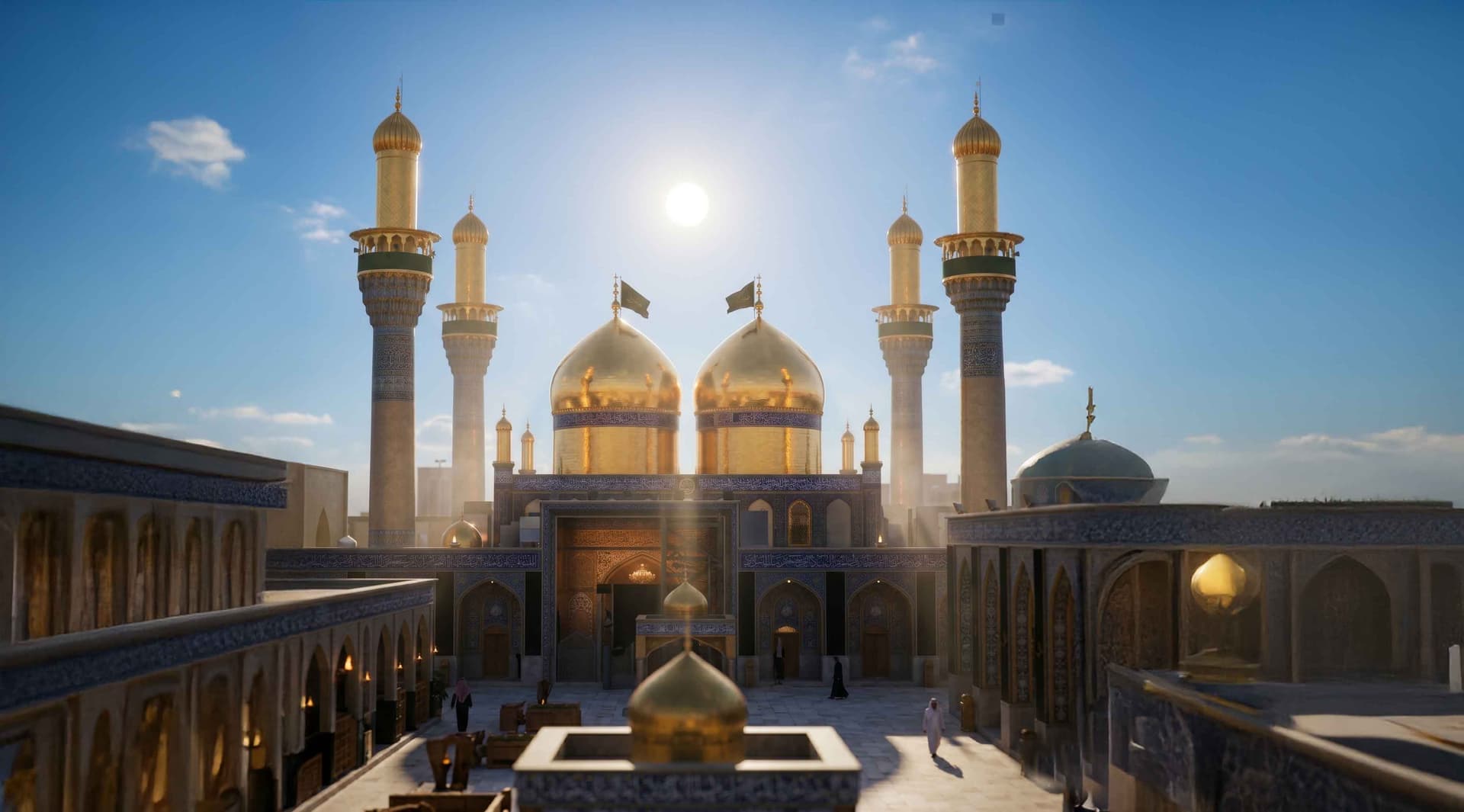
On the twenty-fifth of Rajab al-Asabb, visitors—women, men and children—head on foot and riding toward the shrine of Imam Musa al-Kazim (a) in Baghdad, renewing a wilaʾi covenant with their Imam, who died in the dungeons of the prisons. Their hearts are filled with hope from Allah the Exalted that the divine mercy will be poured upon them abundantly through his all-encompassing blessing, in what covers the affairs of this world and the affairs of the Hereafter, complying with the words of Allah the Exalted: “Our Lord, give us good in this world and good in the Hereafter, and save us from the punishment of the Fire” (Qurʾan 2:201), because the Ahl al-Bayt (a) are the means to Allah, and they are the pure source for the acceptance of devotion and humble entreaty.
Imam Musa ibn Jaʿfar al-Kazim (a) has become famous in people's awareness by the title Bab al-Hawaʾij (the Gate of Needs), because of the downpour of blessings and the abundant fulfillment of needs they have witnessed when visiting his thresholds and seeking intercession through his station. Such distinctions become manifest only because of the Imam's ordeal in his lifetime and people's pinning their hopes on it in their own lives. This does not contradict the fact that all the infallible Ahl al-Bayt (a) are gates of needs and the object of hopes.
The Merit of Visiting Him (a)
1 - From al-Husayn ibn Muhammad al-Ashʿari al-Qummi, who said: Al-Rida (a) said to me: Whoever visits the grave of my father in Baghdad is like one who has visited the Messenger of Allah (s) and the grave of the Commander of the Faithful, except that the Messenger of Allah and the Commander of the Faithful have their own merit[1].
2 - From al-Hasan ibn ʿAli al-Washshaʾ, who said: I said to al-Rida (a): What is there for one who visits the grave of your father, Abu al-Hasan (a)? He said: Visit him. He said: So I said: Then what merit is there in it? He said to him: The like of one who visits the grave of al-Husayn (a)[2].
3 - From al-Husayn ibn Yasar al-Wasiti, who said: I asked Abu al-Hasan al-Rida (a): What is there for one who visits the grave of your father (a)? He said: He said: Visit him. He said: I said: Then what merit is there in it? He said: He said: There is merit in it like the merit of one who visits his father—meaning the Messenger of Allah (s). I said: And if I am afraid and it is not possible for me to go inside? He said: Give salutation from behind the wall[3].
4 - From ʿAbd al-Rahman ibn Abi Najran, who said: I asked Abu Jaʿfar (a) about one who visits the Messenger of Allah (s) with deliberate intent? He said: Paradise is his; and whoever visits the grave of Abu al-Hasan (a), Paradise is his[4].
And there are other narrations with the same content.
The Recommended Times for Visitation
We have not found narrations that specify a particular time for visiting Imam al-Kazim (a). Accordingly, visiting him is recommended (mustaḥabb) at any time the visitor chooses and is able to; however, the general statements of the proofs indicate that the recommendation is emphasized on certain days, among them:
- The recommendation of visiting Imam al-Kazim (a) and all the Infallibles is emphasized on Fridays, even from afar, as al-Shahid al-Awwal mentioned in al-Durus[5].
- Some jurists have held that visitations are emphasized on the noble days that are specific to the Imam himself, as al-ʿAllama al-Majlisi said: (such as the day of the birth of Imam al-Kazim (a), which is the seventh of Safar; the day of his death (a), which is the twenty-fifth of Rajab, or its sixth, and it has been said its fifth; and the day of his Imamate, which is the middle of Rajab, or of Shawwal)[6]. Perhaps what confirms this is that visiting him (a) on his noble days is an instance of reviving his remembrance—indeed, it is among the highest instances of revival, because of the renewal of covenant it contains.
- It can be said that the recommendation of visiting him (a) is emphasized on the noble days in general, which are the Days of Allah, the days on which the believing person turns to worship, to thanking Allah the Exalted, and to glorification, because his noble shrine is among the houses of which Allah the Exalted said: “In houses Allah has allowed to be raised and wherein His Name is celebrated; He is glorified therein, morning and evening” (Qurʾan 24:36).
- Sayed Ibn Tawus, in Jamal al-Usbuʿ, assigned Wednesday to the recommendation of visiting him, and he composed a special visitation for this day, which he mentioned in his book. That was based on the narration of al-Saduq in al-Khisal from Imam al-Hadi (a), in which he apportions the days of the week to the Imams (a); so he inferred from that the emphasis on visiting him (a) on Wednesday.
- It can also be said that the recommendation is emphasized at times of need, for the sake of seeking intercession through him (a), because they are the gates that we have been commanded to knock at in times of need, since they are the means to Allah the Exalted.
The Acts at the Noble Sanctuary
It is fitting for the loyal follower to seek out the best of deeds and the most pleasing of words in the rites of the noble shrine, which he should perform when he is honored with visiting the shrine of Imam al-Kazim (a), so that through them he may make the most of the opportunity of his visitation and color with them the rites of his visit, and so that he may avoid forbidden words and deeds while on his blessed journey.
In this summary we attempt to mention the acts of the visitor of Imam Musa al-Kazim (a), relying on what has been reported from the Ahl al-Bayt (a) specifically or generally. We will explain the type of act, with a brief allusion to its basis and evidential source, so that the honorable visitor may become acquainted with the culture of his documented acts of worship and keep away from the chaos of transmission with which our present age has been afflicted.
The Etiquettes of the Sanctuary
Among the etiquettes that the visitor should observe, there has been reported specifically regarding the visitation of the sanctuary of al-Kazim (a), from Abu al-Hasan al-Hadi (a): (When you intend to visit Musa ibn Jaʿfar and Muhammad ibn ʿAli (a), perform the ritual bath (ghusl), clean yourself, and put on your two pure garments)[7].
Among the etiquettes are those taken by way of the underlying criterion (milāk) from the narrations that spoke about visiting Imam al-Husayn (a) and the rest of the Ahl al-Bayt (a), and from the rule of the obligation to venerate the pure sanctuary and the prohibition of violating its sanctity. So the visitor strives for humility, seeking blessing, and continual remembrance and glorification of Allah while he is the guest of the Imam (a).
How to Visit Him
The texts with which the visitor may visit the grave of Imam Musa ibn Jaʿfar al-Kazim (a) are varied, and they are as follows:
(1) The Visitation Specific to Imam al-Kazim (a)
From Muhammad ibn ʿIsa ibn ʿUbayd, from someone he mentioned, from Abu al-Hasan (a), who said: You say in Baghdad:
Peace be upon you, O Wali of Allah. Peace be upon you, O Proof of Allah. Peace be upon you, O Light of Allah in the darknesses of the earth. Peace be upon you, O you concerning whose affair badāʾ occurred for Allah. I have come to you knowing your right, hostile to your enemies, so intercede for me with your Lord.
And supplicate to Allah and ask for your need.
He said: And you greet Abu Jaʿfar (a) with this[8].
(2) A Visitation Specific to Imam al-Kazim and Encompassing the Ahl al-Bayt (a)
From Muhammad ibn ʿIsa ibn ʿUbayd, from someone he mentioned, from Abu al-Hasan (a), who said: ...And you say at the grave of Abu al-Hasan (a) in Baghdad—and it suffices in all the places for you to say:
Peace be upon the awliyaʾ of Allah and His chosen ones. Peace be upon the trustees of Allah and His beloved ones. Peace be upon the helpers of Allah and His vicegerents. Peace be upon the abodes of the knowledge of Allah. Peace be upon the dwellings of the remembrance of Allah. Peace be upon the manifestations of the command of Allah and His prohibition. Peace be upon those who call to Allah. Peace be upon those firmly settled in the good pleasure of Allah. Peace be upon those sincere in obedience to Allah. Peace be upon the guides to Allah. Peace be upon those of whom: whoever befriends them has befriended Allah, whoever is hostile to them has been hostile to Allah, whoever knows them has known Allah, whoever is ignorant of them has been ignorant of Allah, whoever holds fast to them has held fast to Allah, and whoever abandons them has abandoned Allah. I call Allah to witness that I submit to you, am at peace with whoever is at peace with you and at war with whoever wars against you, a believer in your secret and your open matters, entrusting all of that to you.
May Allah curse the enemy of the family of Muhammad among the jinn and humans, and I disavow them before Allah. And may Allah bless Muhammad and his family.
This suffices at all the shrines. You invoke blessings abundantly upon Muhammad and his family, name them one by one by their names, and disavow their enemies; and choose for yourself among supplications, and for the believing men and the believing women[9].
(3) The General Visitations
Imam al-Kazim (a) may be visited with the general visitations of the Ahl al-Bayt (a), such as al-Ziyara al-Jamiʿa al-Kabira and al-Saghira, and other visitations in which the address encompasses the Household of Prophethood.
Or he may visit Imam al-Kazim (a) with the text of Ziyarat Amin Allah, which is reported for visiting the Commander of the Faithful (a), but with which every Imam may be visited specifically, the address in it being directed to him.
(4) The Free Visitations
These are the visitations that scholars composed specifically for visiting Imam al-Kazim (a). They include the visitations mentioned by the authors of the mazar books among the eminent scholars of the Sect without attributing them to the infallible Imam, as in Misbah al-Zaʾir, al-Mazar al-Kabir, the Mazar of al-Shaykh al-Mufid, and others[10].
Among them:
A – In Misbah al-Zaʾir, Sayed Ibn Tawus mentioned a lengthy visitation whose introduction is: (When you intend to visit Imam Musa ibn Jaʿfar (a), you should perform ghusl, then come to the holy shrine with tranquility and dignity upon you. When you come to it, stand at its door and say: Allah is greatest, Allah is greatest; there is no god but Allah, and Allah is greatest. Praise be to Allah for His guidance to His religion and for the success granted toward what He has called to of His path. O Allah, You are the most generous one sought and the most generous one come to...)[11].
B – In al-Mazar al-Kabir by Ibn al-Mashhadi, one whose introduction is: When you arrive in Baghdad, Allah willing, it is recommended for you to perform ghusl for the visitation as a recommended act; then you head for the noble shrine and enter to the pure shrine-enclosure with tranquility and dignity, and say: In the Name of Allah, by Allah, in the way of Allah, and upon the creed of the Messenger of Allah; and peace be upon the awliyaʾ of Allah...)[12].
C – In Misbah al-Zaʾir, in the visitation of Imam al-Kazim (a): (You seek permission with what has preceded, then enter putting your right foot forward. When you have entered, declare Allah the Exalted greatest one hundred times, stand facing the shrine-enclosure and say: Peace be upon you, O righteous servant. Peace be upon you, O radiant light. Peace be upon you, O rising moon. Peace be upon you, O beneficial rain. Peace be upon you, O Imam al-Kazim...)[13].
D – The one that al-ʿAllama al-Majlisi cited in al-Bihar from al-ʿAtiq al-Gharawi, which begins with: (Peace be upon the namesake of the one who conversed with the Lord Most High, the son of the best of the successors, the son of the Mistress of Women, and the inheritor of the knowledge of the prophets. Peace be upon the light of Allah in the earth and the heaven. Peace be upon the treasurer of the knowledge of the Prophet of guidance, and the supreme trial, the trustworthy, the well-pleasing...)[14].
(5) Invoking Blessings upon Him
Invoking blessings upon him is considered one of the visitations, because it is of the same kind: we see that many of the texts of visitation reported from the Ahl al-Bayt (a) contain invocations of blessings upon them—and as is also derived from the implied meaning (mafhūm) of the verse: “And never pray over any of them when he dies, nor stand at his graveside” (Qurʾan 9:84). Among these invocations of blessings is what has been reported from Imam al-Hasan al-ʿAskari (a) concerning the Twelve Imams (a); so Imam al-Kazim (a) may be visited with the text of the invocation of blessings specific to him in this narration, which, as in Misbah al-Mutahajjid, is:
O Allah, bless the trustworthy one, the one entrusted, Musa ibn Jaʿfar, the righteous, the faithful, the pure, the immaculate, the manifest light, the striving, the one seeking reward, the one patient in enduring harm for Your sake. O Allah, and just as he conveyed from his forefathers what he was entrusted with of Your command and Your prohibition, carried [people] onto the clear path, and endured the hardships of the people of might and harshness in what he used to encounter from the ignorant ones of his people—my Lord, so bless him with the best and most perfect of what You have blessed anyone of those who obeyed You and were sincere toward Your servants. Indeed You are all-forgiving, all-merciful[15].
Visiting Him in Different Circumstances
There is no doubt that walking to acts of worship is a preferable (rājiḥ) matter in the sacred Law, as the narrations have indicated and as is the practice of the Infallibles (a). This applies to visiting Imam Musa al-Kazim (a), as is also derived from the proof of the unity of the criterion, in general terms, in visiting his pure forefathers Imam ʿAli (a) and Imam al-Husayn (a), regarding whom the greatness of the reward for walking to visit them has been reported in their visitation literature.
In bygone times the believers used to bear the hardship of visitation, despite the dangers they faced from the nawasib around the noble grave. Imam ʿAli ibn Musa al-Rida (a) would command them to take security measures and to practice taqiyya toward the enemies, to preserve their lives and their rites, while at the same time enjoying the honor of visiting their master Imam Musa ibn Jaʿfar al-Kazim (a), even from afar, from behind the walls, or in the mosques surrounding him.
These are the narrations that reveal this reality:
1 - From Ahmad ibn ʿAbdus, from his father Rahim, who said: I said to al-Rida (a): May I be made your ransom, visiting the grave of Abu al-Hasan (a) in Baghdad involves hardship; we only come to it and greet him from behind the walls. So what reward is there for one who visits him? He said: He said to him: By Allah, the like of what there is for one who comes to the grave of the Messenger of Allah (s)[16].
2 - From al-Husayn ibn Yasar al-Wasiti, who said: I said to al-Rida (a): Shall I visit the grave of Abu al-Hasan (a) in Baghdad? He said: If it must be, then from behind the screen[17].
3 - From ʿAli ibn Hassan al-Wasiti, from one of our companions, from al-Rida (a), concerning coming to the grave of Abu al-Hasan (a). He said: Pray in the mosques around it[18].
The Farewell
Al-Shaykh al-Tusi mentioned in al-Tahdhib, regarding the farewell to Abu al-Hasan Musa (a)—and it is transmitted from al-Muqniʿa of al-Shaykh al-Mufid:
(You stand at the grave as you stood the first time for the visitation and say: Peace be upon you, O my master, O Abu al-Hasan, and the mercy of Allah and His blessings. I entrust you to Allah and convey to you the greeting of peace. We believe in Allah, in the Messenger, and in what you brought and pointed to. O Allah, so write us down among the witnesses)[19].
________________________________________________
[1] - Kamil al-Ziyarat, p. 299.
[2] - Kamil al-Ziyarat, p. 299; and from al-Washshaʾ the like of it, with a slight difference, hadith 1.
[3] - Kamil al-Ziyarat, p. 299.
[4] - Kamil al-Ziyarat, p. 300
[5] - Al-Durus al-Sharʿiyya, p. 16.
[6] - Bihar al-Anwar
[7] - Kamil al-Ziyarat, p. 302.
[8] - Al-Kafi, vol. 4, p. 578, and Kamil al-Ziyarat, p. 301.
[9] - Kamil al-Ziyarat, p. 302.
[10] - We have a study on the validity, and indeed the preferability, of composing visitations and supplications, which is the practice of the eminent scholars of the Sect, contrary to those who held that it is disliked.
[11] - Al-Bihar, vol. 99, p. 13, from al-Misbah, p. 198.
[12] - Al-Mazar al-Kabir, 536.
[13] - Bihar al-Anwar, vol. 99, p. 15. From al-Misbah.
[14] - Bihar al-Anwar, vol. 99, p. 225.
[15] - Misbah al-Mutahajjid, vol. 1, p. 404.
[16] - Kamil al-Ziyarat, p. 300.
[17] - Kamil al-Ziyarat, p. 299.
[18] - Kamil al-Ziyarat, p. 299.
[19] - Tahdhib al-Ahkam, vol. 6, p. 83.