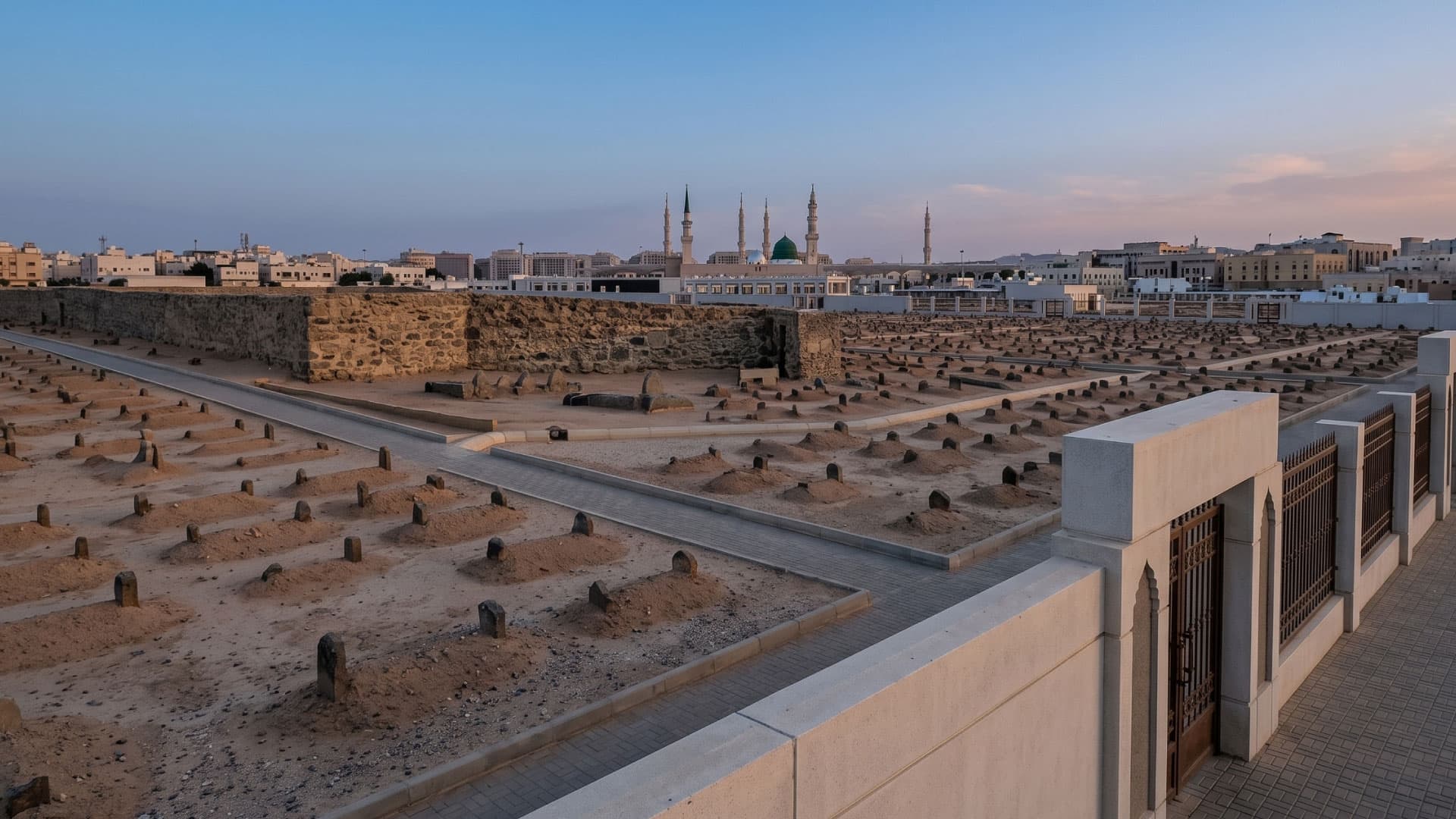
Imam Muhammad al-Baqir (a), son of Imam ʿAli ibn al-Husayn Zayn al-ʿAbidin (a), is the fifth Imam of the Ahl al-Bayt (a), the vicegerents of the Prophet (s). He was born in Medina the Illuminated in the year 57 AH, on the first of the month of Rajab—and it is said on the third of Safar. He received the covenant of the Imamate after the martyrdom of his father Imam Zayn al-ʿAbidin (a), and he undertook the building of Islamic knowledge in numerous fields. His title was al-Baqir because he split open (baqara) knowledge and spread the authentic teachings of the religion, and many narrators narrated from him in the fields of creed, jurisprudence, ethics, the Qurʾan and others.
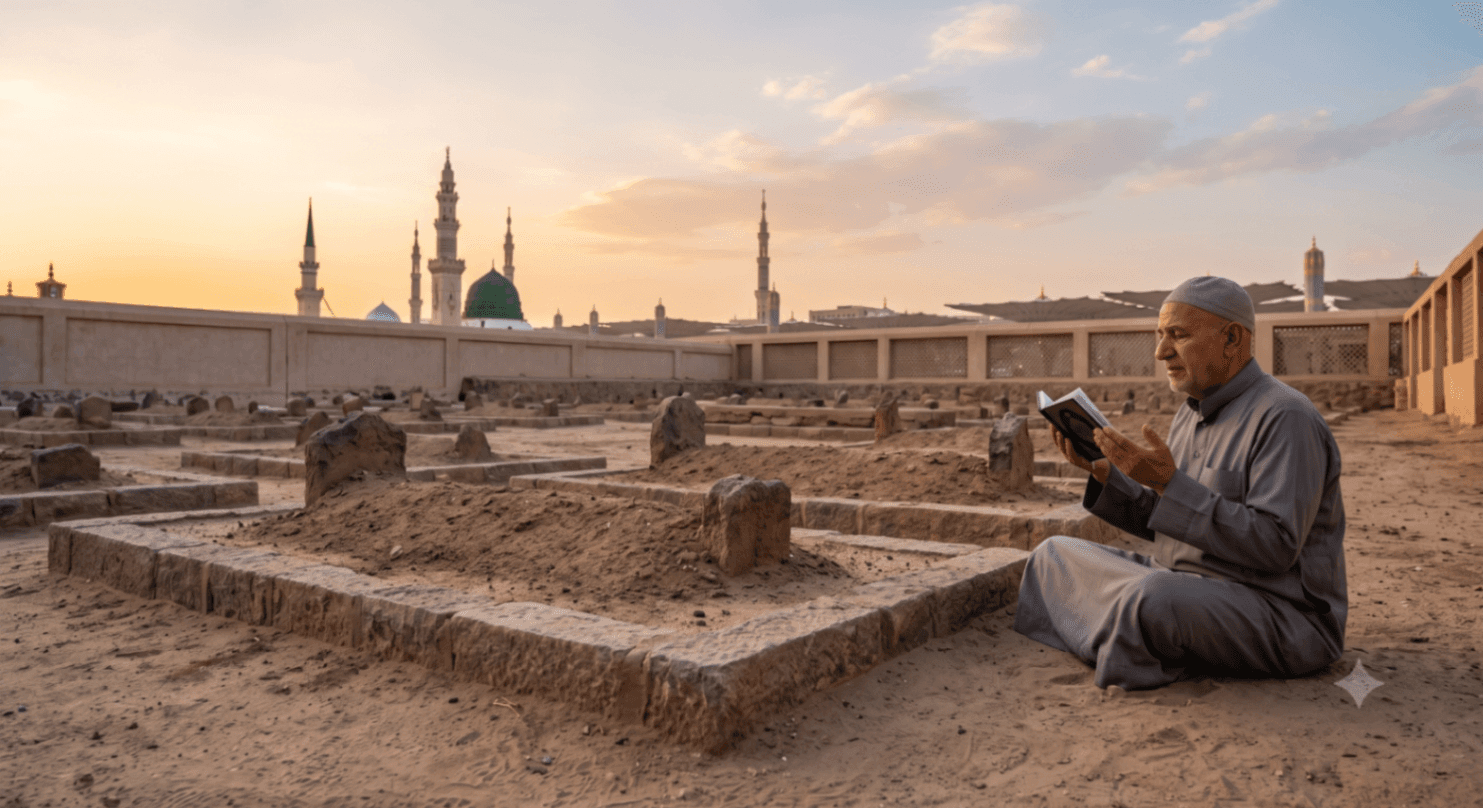
After nineteen years, which was the period of his Imamate (a), the Imam was martyred on the seventh of the month of Dhu al-Hijja in the year 114 AH—and it is said in 117 AH, or otherwise. The one responsible for his martyrdom was Hisham ibn ʿAbd al-Malik, who was heading the Muslims at that time. He was buried in Medina the Illuminated, in the cemetery of al-Baqiʿ, beside the grave of his father Imam Zayn al-ʿAbidin (a) and his uncle Imam al-Hasan al-Mujtaba (a). His noble grave had been built up, and a dome and a building came to stand over it, but the hand of hatred reached out to it and demolished its building, and it has remained to this day a grave level with the ground, marked with some stones. Yet that has not stopped the believers from setting out on journeys to visit him, even across barriers.
The Merit of Visiting Him
He Will Not Suffer from His Eyes, and No Illness Will Befall Him
It is narrated from Abu Muhammad al-Hasan ibn ʿAli al-ʿAskari (a) that he said: Whoever visits Jaʿfar and his father will not suffer from his eyes, no illness will befall him, and he will not die afflicted[1].
Visiting Imam Zayn al-ʿAbidin (a) Is Like Visiting the Messenger of Allah (s)
In al-Kafi: from Zayd al-Shahham, who said: I said to Abu ʿAbd Allah (a): What is there for one who visits one of you? He said: Like one who visited the Messenger of Allah (s). vol. 4, p. 579
In Visiting Him There Is Healing from Every Ailment, by Way of the Healing Sought from His Noble Soil.
It is reported in Kamil al-Ziyarat: from Abu Hamza al-Thumali, from Abu ʿAbd Allah (a), he said: I was in Mecca—and he mentioned in his account—I said: May I be made your ransom, I have seen our companions taking some of the clay of al-Haʾir in order to seek healing [seeking healing] with it; is there anything in that of the healing they speak of? He said: He said: Healing is sought with what lies between it and the grave, up to a distance of four miles; and likewise the grave of my grandfather the Messenger of Allah (s), and likewise the clay of the grave of al-Hasan, ʿAli and Muhammad. So take from it, for it is a healing from every illness and a shield against what you fear, and nothing among the things with which healing is sought equals it except supplication.. p. 281
Neglecting to Visit Him during Hajj Is Estrangement, and in Visiting Him Are the Returns of Provision.
In al-Khisal, from the Commander of the Faithful (a): Complete your Hajj with the Messenger of Allah (s) when you set out for the House of Allah, for neglecting him is estrangement, and with that you have been commanded; and complete it with the graves whose right and visitation Allah Almighty has made binding upon you, and seek provision at them. vol. 2, p. 616
Visiting Him Is the Completion of Hajj
It has been reported from Ismaʿil ibn Mihran, from Jaʿfar ibn Muhammad (a), who said: When one of you performs Hajj, let him conclude his Hajj by visiting us, for that is part of the completion of Hajj. (ʿUyun Akhbar al-Rida, vol. 2, p. 262).
Whoever Visits Him Is Like One Who Visited al-Husayn (a)
It has been reported in Thawab al-Aʿmal: al-Sadiq (a) said: Whoever visits one of us is like one who visited al-Husayn (a). p. 98
Visiting Him Is Like Visiting All the Other Imams (a)
It is reported in Kamil al-Ziyarat from ʿAbd al-Rahman ibn Muslim, who said: I went in to al-Kazim (a) and said to him: Which is better: visiting al-Husayn ibn ʿAli, or the Commander of the Faithful (a), or of so-and-so [so-and-so] and so-and-so?—and I named the Imams one by one. He said to me: O ʿAbd al-Rahman, whoever visits the first of us has visited the last of us, and whoever visits the last of us has visited the first of us; and whoever takes the first of us as guardian has taken the last of us as guardian, and whoever takes the last of us as guardian has taken [has taken] the first of us as guardian.. p. 336
The Times of Visiting Him
Visiting Imam Muhammad al-Baqir (a) is recommended (mustaḥabb) at all times; however, there are certain particularities of the noble days on which visiting him (a) is emphasized, among them:
The Days Specific to Him
ʿAllama al-Majlisi said: Visiting them (a) at the noble times, the blessed days and the times specific to them is preferable and more appropriate.. and the day of the birth of al-Baqir (a), which is the first of Rajab, according to what al-Shaykh narrated from Jabir al-Juʿfi, who said: Al-Baqir Abu Jaʿfar Muhammad ibn ʿAli (a) was born on Friday, the first of Rajab, in the year fifty-seven—and it is said the third of Safar; and the day of his death, which is the seventh of Dhu al-Hijja; and the day of his succession, which is the day of the death of his father (a)[2].
Tuesday of Every Week
Sayed Ibn Tawus mentioned in Jamal al-Usbuʿ that it is recommended to visit Imam Muhammad ibn ʿAli al-Baqir (a) on Tuesday of every week, relying in that on the narration assigning the days to the Ahl al-Bayt (a), which al-Shaykh al-Saduq narrated in al-Khisal from Imam ʿAli al-Hadi (a) in a hadith, where he said:
We are the days, as long as the heavens and the earth stand. Saturday is the name of the Messenger of Allah (s); Sunday is an allusion to the Commander of the Faithful (a); Monday is al-Hasan and al-Husayn; Tuesday is ʿAli ibn al-Husayn, Muhammad ibn ʿAli and Jaʿfar ibn Muhammad; Wednesday is Musa ibn Jaʿfar, ʿAli ibn Musa, Muhammad ibn ʿAli, and I; Thursday is my son al-Hasan ibn ʿAli; and Friday is my son’s son, and to him the band of truth will gather, and he is the one who will fill it with equity and justice as it has been filled with oppression and tyranny. This is the meaning of the days; so do not be hostile to them in this world, lest they be hostile to you in the Hereafter.. vol. 2, p. 395
Visiting Him in Dhu al-Hijja after Hajj, and Even after Every ʿUmra.
It has been reported from Ismaʿil ibn Mihran, from Jaʿfar ibn Muhammad (a), who said: When one of you performs Hajj, let him conclude his Hajj by visiting us, for that is part of the completion of Hajj. (ʿUyun Akhbar al-Rida, vol. 2, p. 262).
Perhaps it is after every visit to Mecca the Honored, that is, after ʿUmra as well; and it is covered by what is in al-Kafi from Sadir, from Abu Jaʿfar (a), who said: Begin with Mecca and conclude with us. vol. 4, p. 550
Fridays and the Virtuous Days
Among the noble days is Friday, which is a blessed day of ʿEid. Al-Shaykh al-Kafʿami said in al-Balad al-Amin: It is recommended to visit the Prophet (s), Fatimah and the Imams (a) every Friday([3]). And al-Shahid al-Awwal said in al-Durus: The recommendation of visiting the Infallibles is emphasized on Fridays([4]).
On the Middle of Rajab
Among the noble days is the day on which Imam ʿAli (a) contracted marriage with al-Zahraʾ (a). Al-Shaykh al-Mufid said in Masar al-Shiʿa—in the course of mentioning the month of Rajab—: And on the day of the middle of it, five months after the Hijra, the Messenger of Allah (s) concluded the marriage contract of the Commander of the Faithful ʿAli (a) with his daughter Fatimah (a)... On this day fasting is recommended, and visiting the shrines—upon their occupants be peace([5]).
The Manner of Visiting Imam Muhammad al-Baqir (a)
1 – Visiting him with free ziyarahs, which are those the visitor composes from his knowledge of his Imam: he greets him with the finest salutations, bears witness to him with the merit befitting him, pledges in his presence what it is obligatory upon him to pledge in his presence, seeks intercession through him with Allah the Exalted for the fulfillment of his needs, is loyal to his friends, and disavows his killers and those who wronged him.
2 – Visiting him with the unrestricted and comprehensive ziyarahs with which all the Ahl al-Bayt (a) are visited, such as al-Ziyara al-Jamiʿa al-Kabira and al-Saghira, the Ziyarah of the Imams of the Believers, and others.
3 – Visiting him with Ziyarat Amin Allah, with which, it has been reported, visitation is made at all the shrines.
4 – Visiting him with the joint ziyarahs of the Imams of al-Baqiʿ, which we will mention at the end of the manual.
5 – His ziyarahs specific to him. No ziyarah specific to Imam Muhammad al-Baqir (a) has been reported from the Imams (a)—or we have not seen a text on that—so a ziyarah specific to him may be composed, as Sayed Ibn Tawus did in his Tuesday ziyarah. ʿAllama al-Majlisi mentioned in his Bihar a ziyarah from Kitab al-ʿAtiq al-Gharawi that is not attributed to an Imam.
The First Ziyarah
From ʿAli ibn Hassan, who said: Al-Rida (a) was asked about going to the grave of Abu al-Hasan (a), and he said: Pray in the mosques around it; and it suffices in all places that you say:
Peace be upon the friends of Allah and His chosen ones. Peace be upon the trustees of Allah and His beloved ones. Peace be upon the helpers of Allah and His vicegerents. Peace be upon the places of the knowledge of Allah. Peace be upon the dwellings of the remembrance of Allah. Peace be upon the manifestations of the command of Allah and His prohibition. Peace be upon those who call to Allah. Peace be upon those settled in the good pleasure of Allah. Peace be upon those made sincere [those tested] in the obedience of Allah. Peace be upon those such that whoever befriends them has befriended Allah, whoever is hostile to them has been hostile to Allah, whoever knows them has known Allah, whoever is ignorant of them has been ignorant of Allah, whoever holds fast to them has held fast to Allah, and whoever abandons them has abandoned Allah,.
I call Allah to witness that I am at peace with whoever is at peace with you and at war with whoever wars against you, believing in what is secret and what is open of you, committing all of that to you. May Allah curse the enemy of the Family of Muhammad from among the jinn and humans, and I disavow them before Allah. And may Allah bless Muhammad and his Family.
This suffices for all the ziyarahs. You invoke blessings abundantly upon Muhammad and his Family, name them one by one by their names, disavow their enemies, and choose for yourself from supplication for the believing men and the believing women[6].
The Second Ziyarah:
It is the ziyarah shared with the Imams of al-Baqiʿ; it is mentioned in al-Bihar.
From ʿAmr ibn Hashim, from a man of our companions, from one of them (a), who said: When you come to the graves at al-Baqiʿ, the graves of the Imams, stand by them and place the grave before you, then say:
Peace be upon you, people of Godwariness. Peace be upon you, O proofs over the people of the world. Peace be upon you, O you who uphold justice among creation. Peace be upon you, people of the elect. Peace be upon you, Family of the Messenger of Allah. Peace be upon you, people of intimate converse. I bear witness that you conveyed, gave sincere counsel, and were patient for the sake of Allah; you were called liars and were wronged, yet you forgave.
And I bear witness that you are the rightly directed, rightly guided Imams, that obedience to you is obligatory, that your word is the truth, that you called and were not answered and commanded and were not obeyed, and that you are the pillars of the religion and the supports of the earth. You will never cease to be under the eye of Allah; He copies you from the loins of every purified man and transfers you from the wombs of purified women. The ignorance of the pagan age did not defile you, and the trials of caprices had no share in you. You were pure, and your origin was pure. The Judge of the Requital bestowed you upon us as a favor and placed you in houses Allah has allowed to be raised and wherein His Name is celebrated, and He made our invocation of blessing upon you a mercy for us and an expiation for our sins, since Allah chose you for us; and He made our creation pure through the favor He bestowed upon us of your wilayah, and we were named before Him with your knowledge, acknowledging our belief in you.
This is the place of one who has been excessive and erred, who has humbled himself and confessed what he committed, and who hopes by his standing for deliverance, and that the Rescuer of those who perish may rescue him through you from destruction. So be intercessors for me, for I have come to you when the people of the world have turned away from you, taken the signs of Allah in derision, and disdained them.
O He who is ever-standing and never heedless, everlasting and never diverted, and encompassing all things: Yours is the favor in that You granted me success and made me know my Imams, and in that upon which You have established me when Your servants turned away from it, were ignorant of knowing it, made light of its right, and inclined toward other than it. So the favor was from You upon me, along with peoples whom You singled out with what You singled me out with. So to You be praise, since I was, with You, in this station of mine, mentioned and recorded. So do not deprive me of what I have hoped for, and do not disappoint me in what I have supplicated for, by the sanctity of Muhammad and his pure Family. And may Allah bless Muhammad and the Family of Muhammad.
Then supplicate for yourself with whatever you wish. (Bihar al-Anwar, vol. 97, p. 204).
The Fourth Ziyarah: It is his ziyarah together with the Imams of al-Baqiʿ; al-Kafʿami mentioned it in his Misbah without attribution, and it is as follows:
You say, in the ziyarah of the Imams of al-Baqiʿ (a), after you have placed the grave before you, having performed the ritual bath:
Peace be upon you, O treasurers of the knowledge of Allah, guardians of His secret and interpreters of His revelation. I have come to you, O sons of the Messenger of Allah, knowing your right, having insight into your standing, an enemy to your enemies and a friend to your friends. May my father and mother be ransomed for you; may Allah bless your souls and your bodies.
O Allah, I take the last of them as guardians just as I took the first of them, and I disavow every confidant other than them. I believe in Allah, and I disbelieve in al-Jibt and al-Taghut and al-Lat and al-ʿUzza and every rival who is invoked besides Allah.
And you say in bidding them farewell: Peace be upon you, Imams of guidance, and the mercy of Allah and His blessings. I commend you to Allah and greet you with peace. We believe in Allah, in the Messenger, and in what you brought and guided to. O Allah, so write us down among the witnesses, and do not make it the last time of visiting them. And peace be upon them, and the mercy of Allah and His blessings. (Bihar al-Anwar, vol. 97, p. 207).
The Fifth Ziyarah: It is the invocations of blessing narrated from Imam al-Hasan al-ʿAskari (a).
O Allah, bless ʿAli ibn al-Husayn, the master of the worshippers, whom You chose purely for Yourself and from whom You made the Imams of guidance who guide by the truth and do justice thereby; whom You chose for Yourself, purified of impurity, selected, and made a guide, rightly guided. O Allah, so bless him with the best of what You have blessed any of the offspring of Your prophets, until it brings him to that with which You delight his eye in this world and the Hereafter. Indeed You are the All-mighty, the All-wise. (Misbah al-Mutahajjid, vol. 1, p. 403).
[1] - al-Tahdhib 78.
[2] - Bihar al-Anwar, vol. 97, p. 210.
([3]) al-Balad al-Amin, p. 269.
([4]) al-Durus al-Sharʿiyya, p. 16.
([5]) al-Ziyarat al-Jamiʿa, from Masar al-Shiʿa by al-Shaykh al-Mufid, p. 58; and Mawsuʿat Ziyarat al-Maʿsumin, vol. 5, p. 20.
[6] - Kamil al-Ziyarat, p. 315.