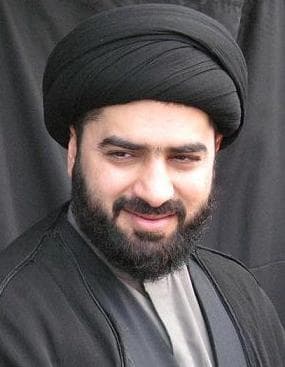

The Marjaʿ al-Modarresi
Early Juristic Mastery and the Brilliance of Thought
Sayed Mahmoud Al-Mosawi
Introduction
The path of the religious sciences extends without limit, and plumbing its depths drains time and takes up a long lifetime. You cannot find a consummate scholar, deeply engaged in giving, who does not acknowledge the shortness of his reach and the scantiness of his means for attaining what he hopes to reach. That fact and this feeling are nothing but evidence of knowing one's ignorance of most of the treasures that the verses hold within them and from which the narrations branch out, and of what the light of reason can uncover, concerning the horizons of life and the needs of human beings, of the truths of revelation, in what religion aims at in human life.
It is a process whose appetite never ends and whose benefits never cease, as long as the scholar holds the reins of research, knows where its material is to be found, is able to make it yield, and masters its exposition. That feeling rises, and that degree grows, the more the scholar advances in his knowledge and the deeper he goes in his reading. Among its most prominent instances is his acquiring the faculty of juristic mastery (fiqāha) and his grasping the ability of deduction (istinbāṭ), which is the highest methodological rank in the course of Hawza study and the last on the ladder of attainment; and it is—from another angle—the beginning of setting out into the wide horizon of research, for formulating knowledge and the bursting forth of learning.
Accordingly, the recognition of scholarly standing appears in two respects:
1 - In the respect of command over the proofs through cognitive ability.
2 -And the respect of breadth of learning and the activation and extension of output.
Every sphere of knowledge can be judged by this criterion within its scholarly scope and its benefits for the reality of life. However, juristic mastery and ijtihad are the summit of religious knowledge, because fiqh in its general sense is deep understanding of knowledge; that is, it is not merely knowledge of the result and the piece of information, but knowledge after reflection, thought and understanding. In technical terminology they have said that it is knowledge of the subsidiary legal rulings from their detailed proofs.

By that well-known definition, and regardless of the amendments made to it, they defined technical fiqh within three limits, which are:
1 – That it is the knowledge under which a legal ruling falls, from among the five rulings known in fiqh (obligation, prohibition, recommendation, dislike and permissibility).
2 – That it is the knowledge concerned with the subsidiary matters of religion, which means its distinction from the fundamentals of knowledge, such as beliefs.
3 – That this knowledge be from scholarly reasoning, and not any other kind of knowledge, such as inspirational knowledge, knowledge by mystical unveiling, and others.
These determinants were set only within efforts to formulate the individual sciences, each on its own, so that each science takes its identity in order to facilitate specialization, the emergence of its results established in its aims, and the setting of the method consistent with them.
However, the science of fiqh, in its evaluation and ranking among the other religious disciplines, takes the position at the summit in terms of results, for two reasons:
The first: its result falls within the context of practical application and the formulation of law in order to chart the course of life in its dealings, contracts, rights and duties, and in what it should press toward and what it should hold back from and refrain from doing. This means that it shapes the general conduct of the individual and society, and shapes the laws of dealing between people.
Whatever has its result in the domain of action and application acquires great importance, because it carries the attribute of binding obligation in its gradations within the five rulings well known in fiqh.
The second: fiqh in its reality is the legal formulation of the values of religion that have issued from its doctrinal foundations. In this point fiqh goes back to take on the semantic depth it has in the language, because it is connected with the totality of a person's beliefs, concepts and values; in other words, it is connected with his conception of religion. This is what the narration from Abu ʿAbd Allah (a) expressed in one of its aspects: (It is only for us to cast the principles to you, and it is for you to derive the branches)[1].
Because it is connected with the understanding of religion, fiqh is the last thing that jurists set out to work on and to practice deduction in. Even if that is not the result of a predetermined methodology, it is the established reality in practical conduct and in the specialized convention. For this reason, among the highest degrees of the scholarly ladder in the Hawza is for the student to be a jurist capable of deducing the legal ruling from its reliable proofs.
Hence scholars have been accustomed to writing and publishing in the various fields of knowledge whenever they felt capable in that field, while the field of demonstrative (istidlālī) fiqh has remained the last in which scholars write, in view of the methodological ladder—unless it is practice, the scholar keeping his writings to himself, or they remain in circulation between him and his teachers or peers. Yes, a scholar who has not gone beyond certain stages of the baḥth al-khārij course may write and publish in the field of fiqh and what is connected with it, according to his stage and ability: he publishes a commentary on a text, or a critical edition of it, or an elucidation, an arrangement, or a study from historical, doctrinal or other angles—things that do not reach the publication of juristic deduction by accepting one view or rejecting another. This is to ward off the defect into which the researcher may fall, given that he has not reached the stage of demonstrative research with an expert jurist. It is a conventional, rational matter, from which cases of early genius may be excepted.
The Discipline of Early Genius
However, the early genius that the Hawzas have encountered throughout their history did not leap upon them from outside their framework, nor was it the result of sudden events or mystical inspirations. Rather, genius sprouted and grew up under the availability of the mental groundwork in the student and the availability of a competent teacher, and then through traveling this path with strength and insight, in addition to psychological and educational preparedness. Thus he passes through the scholarly degrees with extraordinary speed and offers scholarly innovations along this way.

Under these conditions the Hawza has, throughout its history, generously produced models of early genius, and pioneering scholarly abilities have appeared that reached the degrees of ijtihad at a young age and in the prime of youth—such as the rarity of his time, al-Shaykh al-Tusi (Muhammad ibn al-Hasan) (385 AH–460 AH), who drank from the various sciences in his city of Tus until he reached the age of twenty-three, and moved from it to Baghdad to join the lessons of al-Shaykh al-Mufid. His scholarly abilities then blossomed and became visible in the book (Tahdhib al-Ahkam), in which he presented narration-based proofs for the texts of his teacher's fatwas, when he was between the ages of twenty-five and thirty; he wrote part of it during his teacher's lifetime and the other part after his death. The book al-Tahdhib is considered a prominent mark of al-Shaykh al-Tusi's early genius, because of the scholarly effort it contains, the ability to reconcile the narrations, and the tracing of the subsidiary branches. This ability no doubt grew with the passage of time and the accumulation of scholarly experience in the Shaykh (rh), after he studied under al-Sharif al-Murtada for another twenty-three years, and the scholarly leadership passed to him after the death of his second teacher.
Among the examples of early juristic mastery in the sky of Shiʿism is al-ʿAllama al-Hilli, Jamal al-Din Hasan (648 AH – 726 AH), the genius for whom the conditions of living in scholarly households were available. He imbibed the water of knowledge from his tender years and quenched his thirst from its spring as a young man: his father, Sadid al-Din, was one of the jurists of Hilla, and his maternal uncle, al-Muhaqqiq al-Hilli, was the rarity of his time. He excelled in his boyhood and his fame spread as a young scholar. Religious leadership came to him when he was twenty-eight years of age, and he bore its banner worthily, pouring his ink onto the pages of knowledge, which bore witness to the excellence of his output and to the very substance of juristic mastery.
Last but not least, al-Shahid al-Awwal, Muhammad ibn Makki al-ʿAmili (734 AH – 786 AH), who obtained the certificate of ijtihad from Fakhr al-Muhaqqiqin in Hilla after spending his first year there—having arrived there after a solid scholarly grounding in his hometown in Jabal ʿAmil. After five years had passed for him in Hilla of knowledge and juristic mastery, he returned home at the age of twenty-one, a jurist whose fame echoed across the horizons and to whom scholars came and went.
Besides these examples there are many others: those whose genius became visible early, and those whose early genius was expressed in knowledge and high aspiration, its effects appearing after a while—not appearing in the first years of his life, but rather his later output being evidence of it. In mentioning examples of early genius, we do not confine genius and great scholarly works to this category of scholars; among the eminent scholars is one who began attending scholarly lessons at the age of forty, yet his pen produced the finest works and the best lecture records (taqrīrāt). But we mention this because in this brief article we are concerned with bringing to light the early genius and early juristic mastery of one of the contemporary marajiʿ of religion and eminent figures of the Islamic Ummah, namely the religious authority (marjaʿ) Sayed Muhammad Taqi al-Modarresi (may Allah prolong his noble shadow).
The Marjaʿ al-Modarresi in His Environment

The religious authority Sayed Muhammad Taqi al-Modarresi was born in the year (1364 AH/1945 CE) in the holy city of Karbala. He grew up in a family of faith and piety and was raised amid a constellation of eminent scholars, in an atmosphere surrounded by the Hawza and nurtured by the religious marjaʿiyya. On his father's side he is a descendant of scholars and marajiʿ: his father was the gnostic jurist Sayed Muhammad Kazim al-Modarresi, a student of Mirza Mahdi al-Isfahani; his grandfather was Ayatollah Sayed Muhammad Jawad al-Modarresi, who was one of the companions of al-Mujaddid al-Shirazi, the teacher of fiqh and usul; and his more distant forefather was the religious authority Sayed Muhammad Baqir al-Modarresi. As for his mother's side, his mother was the daughter of the religious authority Sayed Mirza Mahdi al-Shirazi, a student of the eminent scholars Sayed al-Yazdi, Shaykh al-Naʾini and Shaykh Diyaʾ al-Din al-ʿIraqi; and his maternal uncle is the late great religious authority Sayed Muhammad al-Shirazi, as well as the contemporary religious authority Sayed Sadiq al-Shirazi.
He began his studies when he was still eight years old. After he had become steeped in the narrations of the Ahl al-Bayt (a), the Noble Qurʾan, fiqh and beneficial literature, he studied under a number of eminent scholars, among them his father the jurist, his maternal uncle the Marjaʿ Sayed Muhammad al-Shirazi, Ayatollah Shaykh Muhammad al-Kalbasi, Ayatollah Shaykh Muhammad al-Shahrudi, Ayatollah Shaykh Jaʿfar al-Rashti, and the religious authority Shaykh Yusuf al-Khurasani al-Biyarjumandi (may Allah have mercy on them all).
In the midst of this scholarly and faith-filled environment, the Marjaʿ al-Modarresi made his way in drawing inspiration from knowledge. He did not allow his time to be wasted nor his thought to be scattered; he was racing against time, until he excelled in the scholarly field of the Hawza and in the contemporary intellectual field. The product of that genius was a collection of pioneering works, in addition to his engaging in teaching at the level of bahth al-kharij when twenty-six springs had passed in his life.
Karbala, the Arena of Genius
The Marjaʿ al-Modarresi lived in holy Karbala from his birth there until his emigration from it, a period of twenty-six years: he was born in the year (1364 AH / 1945 CE) and emigrated from it in the year (1390 AH / 1971 CE). In this golden period of his noble life, springs of knowledge burst forth from within his breast while he was in the prime of youth, for during it he passed through all the degrees of Hawza education, and his ink generously produced valuable works that reveal his genius and the breadth of his learning.

Shedding light on this period of the Marjaʿ al-Modarresi's life can reveal to us the extent of his intellectual genius, and indeed of his early juristic mastery, since these qualities are found only in very few eminent scholars. In them His Eminence reminds us of that constellation of Shiʿi jurists who attained the degrees of ijtihad in the spring of life and the prime of youth. There is no doubt that such an intellectual faculty cannot be brought to light through general description and passing claims, or through mentioning teachers and attendance before them; rather, it must be revealed by output and spoken of by works whose fruits have appeared, whose fragrance has spread and whose brilliance has shone visibly.
The wide circulation of certain scholarly works does not in itself reveal early genius, except when the age stage of the scholar from which that work was produced is mentioned. We value what Shaykh al-Taʾifa al-Tusi wrote in the book al-Tahdhib, which is one of our four relied-upon books; but if we know that he composed it at about the age of twenty-five, this serves to clarify and illuminate the picture with regard to early genius.
For this reason, tracing the scholarly biography of His Eminence the Marjaʿ al-Modarresi in the first Karbala era—which he left in emigration at the age of twenty-six, before returning to it after more than thirty years of forced emigration—will show the features of that dazzling youthful genius and reveal a blazing scholarly brilliance.
The Commentary on Kifayat al-Usul and the Scholarly Texts
The period before reaching the age of twenty—that is, when the Marjaʿ al-Modarresi was between fifteen and nineteen—was the period of his study of the higher suṭūḥ, gathering the nectar of knowledge from his great teachers and searching for learning in the depths of books. Among his studies in the science of usul was the book (Kifayat al-Usul) by al-Akhund al-Khurasani, which is considered one of the most precise and most intricate books of usul in the curricula of the Hawza. The features of genius appeared in his writing a commentary on al-Kifaya when he was under the age of twenty. The Marjaʿ al-Modarresi says of this experience: (I relate here one of my personal experiences, when I was studying with a group of students the book (Kifayat al-Usul), which was the most difficult of books, and we were studying it with His Eminence Grand Ayatollah Sayed Muhammad al-Husayni al-Shirazi (may Allah preserve him)[2].

We would go to him amid the crush of the tasks that occupied him and take half an hour of his time for him to teach us this book. The Sayed would teach us for a quarter of an hour, and in the second quarter he would talk to us about politics and other issues.
The fifteen minutes in which the Sayed (may Allah preserve him) taught us were equal to at least an hour of what others teach, in addition to our not feeling bored. It was enough for us to sit while he explained the subject to us in an extremely simplified manner, solving the riddles and obscurities of the book until they became clear to us. Among his distinctive qualities, too, was that he spoke quickly, unlike some teachers who were accustomed to going to the corner of the class to think a little.
At the time when I was studying this book (Kifayat al-Usul) with the Sayed, I too wrote a commentary on the book al-Kifaya. One of the scholars among the marajiʿ of Najaf saw it written in a notebook, looked through it and declared that it was fit to be printed, as it contained a good commentary.
In those days in which we studied al-Kifaya I was under twenty, but thanks to good teaching I was able to write a commentary on al-Kifaya, and it is the intricate book! The credit for that goes to the art of teaching in which the teacher was skilled, which crystallizes in his attention to the students, his following of the subject and his depth in the material, and his effort to search for examples that bring the lesson's information closer to the students' minds)[3].

The ability to write a complete commentary on the book Kifayat al-Usul does not mean only comprehending its precise scholarly material; it means the ability to set it out in another style, which indicates a not inconsiderable ability for a young man of about seventeen years of age. This commentary has remained among the manuscripts that have not been published; however, the recording of this experience with his teacher Imam al-Shirazi during the latter's lifetime—he died in the year (1422 AH)—is further evidence of its being established. Likewise, the testimony of the religious authority residing in al-Najaf al-Ashraf to the quality of the commentary and its deserving publication is a further indication of the excellence of his scholarly pen at an early age. The marjaʿ mentioned is the husband of his paternal aunt, his father's sister: the great religious authority Sayed ʿAbd al-Aʿla al-Sabzawari (q). Perhaps he did not mention his name because Sayed al-Sabzawari was residing in al-Najaf al-Ashraf during the period of the defunct dictatorial regime.
In that period under the age of twenty, the Marjaʿ al-Modarresi drank deeply of the various sciences and became able to comprehend, teach and explain them. He showed unparalleled acumen: (he memorized the text of the book (Tabsirat al-Mutaʿallimin), as he memorized the text of (the book al-Samadiyya) on morphology and syntax; likewise he learned by heart the Alfiyya of Ibn Malik, which is a thousand verses of poetry on morphology and syntax. At the same time he taught (the book of al-Suyuti) on morphology and syntax (7) times in his early years, and he taught the two books (Maʿalim al-Usul) and (Kifayat al-Usul) and then wrote his commentary on them in the period of his youth. Likewise Allah the Exalted granted him success in commenting on the studies of prayer from the book (Sharaʾiʿ al-Islam) by al-Muhaqqiq al-Hilli, and likewise the studies of fasting, khums and jihad)[4].
Teaching Bahth al-Kharij
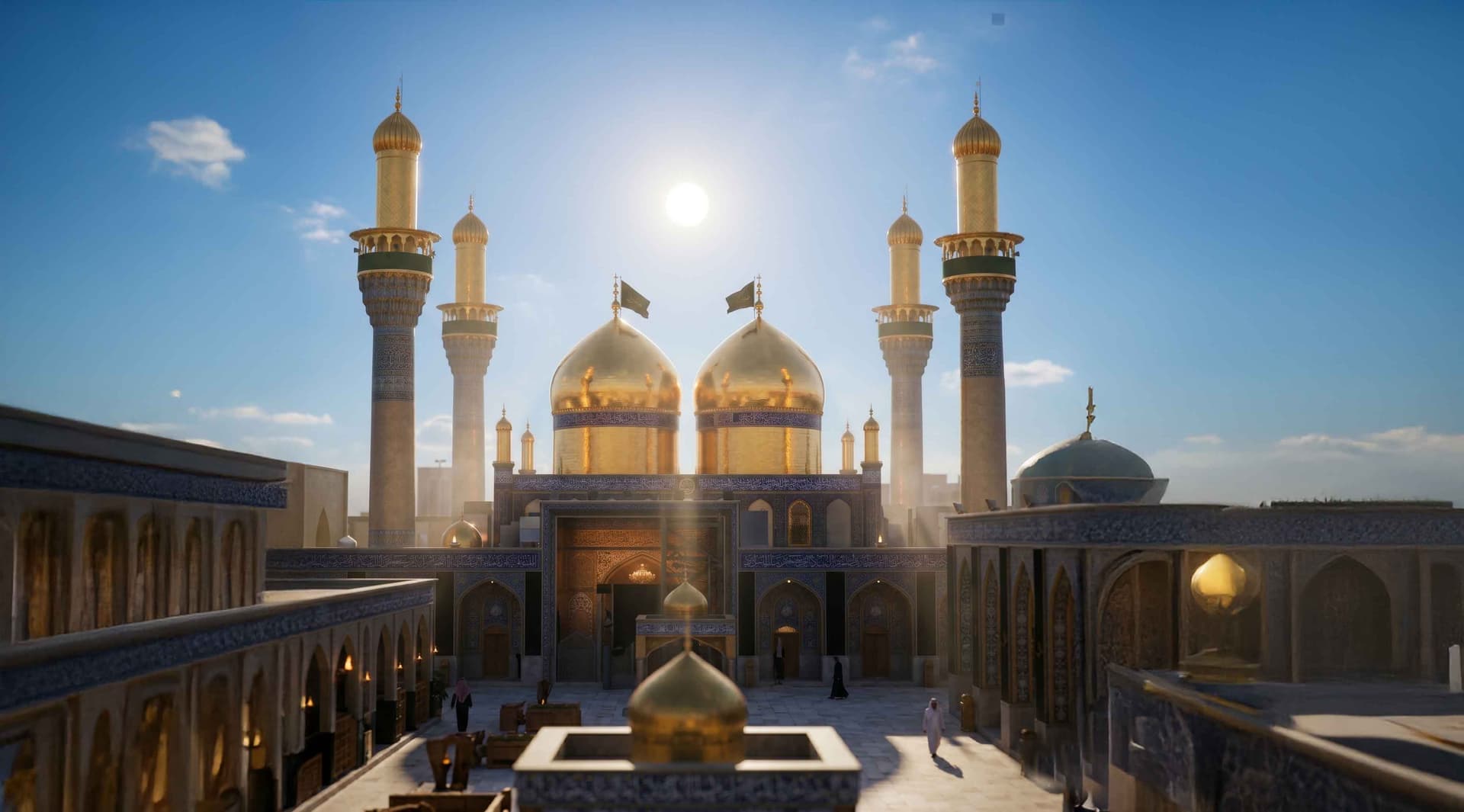
The first Karbala period did not witness only the attendance of the Marjaʿ al-Modarresi (may his shadow endure) with the teachers of bahth al-kharij and his brilliance in it while in the prime of youth; it also witnessed his beginning to teach the highest scholarly course in the Hawza, namely bahth al-kharij in (fiqh) and in (usul). That was in the purified Husayni Sanctuary, where a number of scholars attended his lessons, some of whom used to write up those lectures.

If we know that His Eminence the Marjaʿ al-Modarresi's emigration from Karbala under compulsion was at the age of twenty-six, and that his beginning to teach bahth al-kharij was shortly before the emigration, this means that his age at that time was, by estimate, between twenty-four and twenty-six. This indicates the practice of the process of theoretical ijtihad that jurists undertake: in bahth al-kharij the teacher mentions the issues with their proofs and the various opinions on them, then states his own scholarly foundations (mabānī) and his particular reasoning on that issue before his students, who are people of scholarly merit.
Sayed al-Modarresi's ascending the teaching chair of bahth al-kharij while under twenty-six is evidence of an early genius in ijtihad, which he continued to practice in exile, where the lecture series followed one after another and did not stop even upon his return to his birthplace, holy Karbala, after the fall of the tyrant in the year (2003 CE), and up to the writing of these words. Thus the Marjaʿ al-Modarresi has been engaged in juristic and usul research for more than fifty years, interspersed with his devotion to exegesis and to addressing epistemic and contemporary issues. This has borne fruit in a number of valuable books in the field of fiqh, among them his gloss on the book al-ʿUrwa al-Wuthqa by Sayed al-Yazdi, and his completion of it with a gloss on Muhadhdhab al-Ahkam[5] by Sayed al-Sabzawari. Likewise, the demonstrative books whose lectures he had delivered in the past were published, after having been confined to manuscripts, such as the book (The Section on Transactions: Studies on Sale), the book (Prayer: Demonstrative Studies) in five volumes, (A Demonstrative Study in the Jurisprudence of Khums and the Rulings of Spending and Beneficence), and the book The Jurisprudence of Deduction in the Science of Usul. He then set down his renewing vision of juristic deduction in his encyclopedia (Islamic Legislation) in ten volumes, whose first intellectual building blocks he had laid at the age of twenty-three in his valuable book (Islamic Jurisprudence, the Section on Transactions, General Principles).
The Book Islamic Jurisprudence: A Renewing Step
Among the most prominent things revealing the early juristic mastery of the Marjaʿ al-Modarresi is the tangible work embodied in his valuable juristic book, the book (Islamic Jurisprudence, the Section on Transactions, General Principles), which was printed in its first edition in the year (1393 AH/ 1972 CE) by Dar al-Sadiq in Beirut[6]. However, the writing of its introduction was in the year (1391 AH), and His Eminence indicated in his introduction that he had written it four years before this date, which means its composition was in the year (1387 AH); and in this year His Eminence was only twenty-three years old.
Sayed al-Modarresi, at twenty-three years of age, reveals in his juristic book a commanding ability in juristic deduction and in the juristic analysis of issues, and indeed an ambitious vision in the attempt to develop juristic writing. This is truly admirable. It is a work that has recently been printed in a fine edition in two volumes, to which (Studies on Sale) has been appended. The book in its old print is a document available to me and in some libraries, on yellowed paper, which can be consulted.

The book is a demonstrative commentary, with a new vision, on the Section on Transactions in the book Sharaʾiʿ al-Islam. It is a demonstrative commentary firm in its argument and elegant in its exposition, but it did not content itself with the direct demonstrative aspect, as is the case with the demonstrative commentaries that adopted the method of branches. While acknowledging the development of the juristic output of the Imami Shiʿi jurists and their advancement in the field of deduction, he set out in this book of his with a comprehensive vision that holds it necessary to write fiqh within the fabric in which the jurists firmly believe—that fiqh is branches of principles, and that it contains the ambiguous (mutashābih), which needs the decisive principles (muḥkamāt) of religion—so that the jewels of contemporary fiqh may be revealed in a form harmonious with religion and amenable to understanding.
The Marjaʿ al-Modarresi says at the beginning of his book, expressing the importance of writing fiqh with the methodology he followed: “We should know that Islamic fiqh has followed this method only a little. Although the jurists emphasize this method in their valuable works on usul, the writing of (fiqh) has followed this style only rarely. Most jurists wrote fiqh according to the method of branches: they wrote the issues of prayer demonstratively, then fasting, then hajj, then... etc. For this reason their proofs came out similar with respect to an abundance of juristic issues. Take al-Muqniʿ, for example: we see in it a mention of the branches according to the practical method, with quotation that is almost entirely of the texts of the legal hadiths. As for juristic reasoning, there is in it something that is almost entirely of the texts of the legal hadiths. As for juristic reasoning, there is very little of it in it, and even so it does not follow the style of gradation from the rule to the branches.
The book al-Nasiriyyat by Sayed al-Murtada (q) proceeds on the same method: juristic branches, with proof adduced for each one of them by what suits it.
The demonstrative books of al-ʿAllama al-Hilli (q) do not go beyond this method, which is merging the branches with the reasoning.
In the books of the later jurists we find the method of commentary and text more widespread. The demonstrative commentary takes up, by adducing proof, the branches that the text mentions, one after another.
The last of the commentaries in circulation is the encyclopedia (Jawahir al-Kalam fi Sharh Sharaʾiʿ al-Islam), in which we also see the method of reasoning on the branches, and most of the jurists after (al-Jawahir) followed its lead. This style is useful from the aspect of quickly becoming acquainted with the subsidiary issue and the proofs that may be cited on it, but it confuses the jurist greatly, especially in applying the branches to the general principles, since a single principle is examined some ten-odd times in the various chapters of fiqh, and in each chapter there is part of the discussion about its indication, or its chain, or its conflict, or.. or.., whereas if all the discussions were centered in one chapter it would be very easy to extract the branches from them.
It has been observed that it often happens that a single jurist differs in several of his books, or, in one book with several chapters, contradicts himself plainly concerning the juristic rules; hence the split between fiqh and usul is evident in many jurists. Changing this style to the authentic style in Islamic scholarship—that is, mentioning the principles and then deriving the branches from them—requires separating demonstrative fiqh from practical fiqh, so that the latter is in a simple style that is easy for the general public to consult, while the style of the former should be to begin from the most comprehensive juristic rules and then mention the branches that follow from them, so as to bring about the mind's openness to similar and parallel cases and to deepen its understanding.
Likewise, one should not confine oneself to examining the well-known juristic principles, but should attempt to deduce new rules, either from particular branches between which the differences have been established to have no special significance, or from verses and hadiths that the predecessors did not reflect upon so as to obtain general principles from them.
With this style al-Shaykh al-Ansari (q) began in his two books al-Makasib and al-Rasaʾil. In the first—as is well known—he departed from the traditional method with the study of sale, and from it he set out to the other transactions; even when speaking about wilāyah he digressed in it into the subject of the wilayah of the jurist.
As for the book al-Rasaʾil, he dealt in it with many juristic branches—indeed, he dealt with many of the juristic rules and spoke at length about them—which narrows the traditional gap between fiqh and usul, as was pointed out earlier.”[7].
In this book the Marjaʿ al-Modarresi began with a step along this path, by examining the general principles in the Section on Transactions and then mentioning their branches. It is a step regarded as pioneering in drawing a juristic-usuli map that helps toward a more authentic understanding of Islamic fiqh. He then followed it, years later in emigration, with the encyclopedia Islamic Legislation (on usul and fiqh), which was built on these foundations with a more complete crystallization and a wider grasp, because this step came after he had interpreted the Noble Qurʾan in full and emerged with scholarly insights inspired by the guidance of the Noble Qurʾan. He had also previously been steeped in the narrations of the Ahl al-Bayt (a), since in his early years, before the age of twenty, he studied the book Bihar al-Anwar by al-ʿAllama al-Majlisi (q) together with a friend of his, along with his continual engagement with the other books of narrations.
The Book Islamic Thought
Proceeding from an authentic Qurʾanic and narration-based awareness, the young, ambitious Marjaʿ al-Modarresi—who knew no stagnation and was not bound by outworn views—opened himself up to the bodies of knowledge that prevailed in that period of time, in order to present Islam's vision of life: a pure vision, unaffected by the impurities of human conceptions limited in their cognitive reach. At a time when some thinkers tried to move toward reconciling Western knowledge and human conceptions with the vision of the Islamic religion, as a kind of response to the requirements of the age, Sayed al-Modarresi set out from the insights of revelation in presenting the vision of life, firmly convinced that religion is what is capable of leading the nations through its comprehensive vision.
Sayed al-Modarresi poured the spring of his pure knowledge into his valuable book (Islamic Thought: A Civilizational Confrontation), which he wrote in 1969 CE at the age of twenty-four springs, and thereby showed an unparalleled awareness of the authentic theory of Islam on the one hand, and an awareness of the modern theories. In it he examined (the theory of knowledge) between Islam and human and philosophical conceptions; then he devoted a chapter to critiquing human conceptions with full professionalism, showing their points of weakness and putting his finger on their defective aspects. He then followed the two chapters with a third chapter on the nature of the epistemic vision of the world, as a comparative study between Islam and the dialectical philosophy of Hegel, the mechanistic one of Descartes, and the other theories, and between the theory of Islam through the philosophy of light, which believes that “Allah is the Light of the heavens and the earth” (Qurʾan 24:35), and that He is the Creator and everything other than Him is created by Him, in a fixed duality from which it proceeds to the awareness of the world of creation and to building its belief about it. The other part of the book took up studies of creed and faith, beginning them with tawḥīd and justice, then prophethood, the Imamate and the Return (maʿād). At the conclusion of the central studies he took up the question of (the human being and society), in order to discuss the various social theories, highlighting the theory of Islam in the social sciences, such as society, economics and politics.

What is astonishing is that, after more than five decades have passed since the book was written, it is still fresh, as though it had been written today and in the language of the age. This quality did not come from nowhere; it is a quality you find in most of the works of the Marjaʿ al-Modarresi, because they are connected with the guidance of the Qurʾan and the Ahl al-Bayt (a), which are bodies of knowledge fresh and tender in every age, and because the author used to put forward those ideas within a civilizational vision, so that the Muslims would take hold of the reins of affairs, to lead the world and build nations and civilizations—in addition to the fact that he was one of the foremost among the first who offered Islamic scholarly treatments of reality.
This matter reveals the standing of its young author as a giant in thought and creed, who reached far in intellectual output in numerous respects that took the lead in the fields of knowledge. Among them is his vision in the book (Islamic Leadership)[8], which consists of studies on the Imamate and legislative wilayah, in which he set out the form of leadership and the Islamic system for leading the Ummah. Its first edition was published in Lebanon in the year 1971 CE, but he wrote it before this year in holy Karbala, and groups of believers began circulating it for study while it was still a manuscript. Likewise, the pen of Sayed al-Modarresi wrote, in his second decade, the book (Studies in the Wise Qurʾan)[9], in which he set down a vital vision of the method of understanding the Noble Qurʾan, which he adopted in later years as principles for his first exegesis (Min Huda al-Qurʾan al-Karim); and his ink flowed in the early years of his life, revealing a number of other valuable books.
3/3/2021 CE
_______________________________________________
[1] - Wasaʾil al-Shiʿa, vol. 27, p. 61.
[2] - This experience was written, and the book printed, during the lifetime of his maternal uncle and teacher, Imam al-Shirazi (rh); that is why he wrote (may Allah preserve him), the book having been printed in the year 1413 AH.
[3]- The book The Hawzas Facing the Challenges (The Islamic Institute), p. 232, the Marjaʿ al-Modarresi.
[4] - The Marjaʿ and the Ummah: A Look at the Scholarly and Practical Biography of the Marjaʿ al-Modarresi, p. 25.
[5] - Thus His Eminence the Marjaʿ al-Modarresi has a complete juristic cycle along the lines of the details of al-ʿUrwa al-Wuthqa, given that the jurists wrote glosses on it, and it did not cover all the books of fiqh; the Marjaʿ al-Sabzawari completed it in the same style, and the Marjaʿ al-Modarresi wrote a gloss on it. This is a distinction rarely found in a jurist.
[6] - Founded by the martyr Ayatollah Sayed Hasan al-Shirazi
[7] - Islamic Jurisprudence, the Section on Transactions, General Principles, the Marjaʿ al-Modarresi. 1st ed., p. 18.
[8] - It requires a detailed examination, as it is an important document of early intellectual genius.
[9] - It requires a detailed examination, as it is an important document of early intellectual genius.