Skip to content
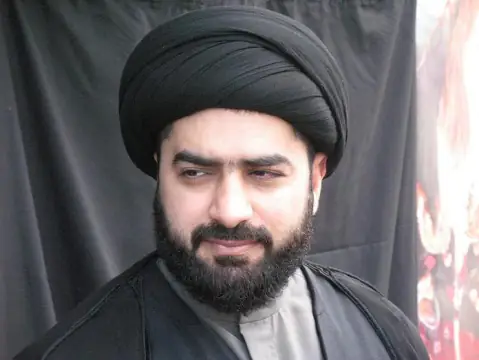
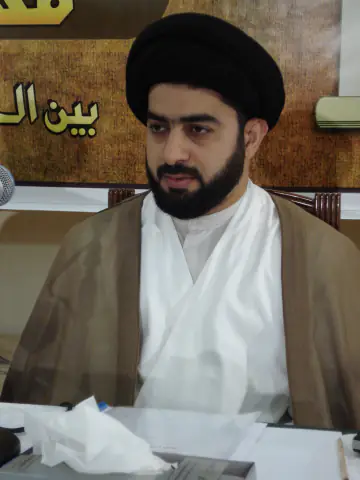
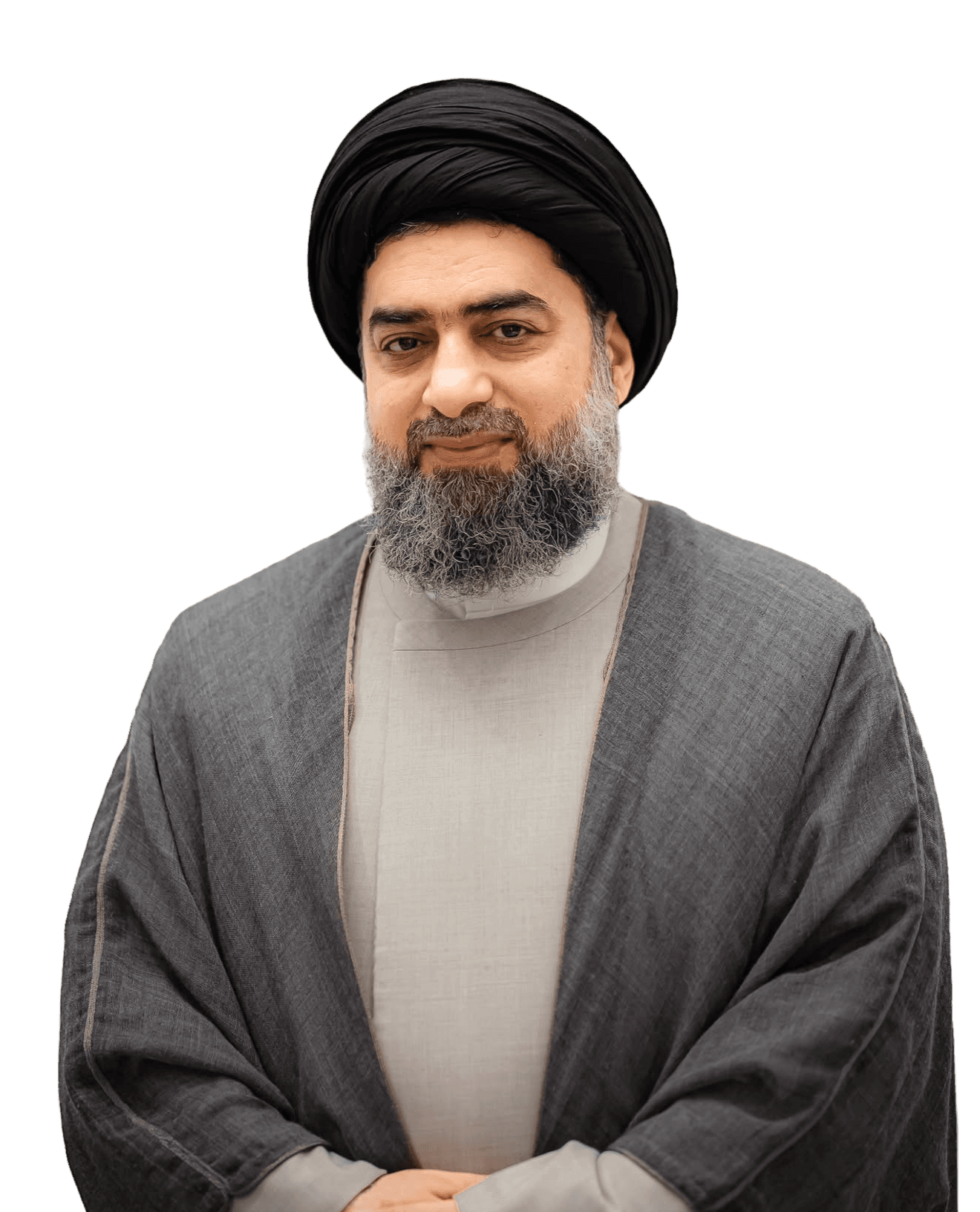
Sayed Mahmoud Al-Mosawi

Biography

Sayed Mahmoud Al-Mosawi

Scholar, researcher and author

An introduction to Sayed Al-Mosawi: his upbringing, his scholarly studies, his social and cultural activities, and the fields of his writing.

Born
1973
Books on the site
42 books

Translated from Arabic — the Arabic original is the authoritative text.Read the Arabic original

Stations in his life

Quoted as they appear in the biography text and the book records.

1973Born
  • Bahrain, the village of Bani Jamra; born in 1973 CE, on the fourth of Muharram al-Haram, 1393 AH.

1 / 31
1

Name

Sayed Mahmoud, son of Sayed ʿAdnan, son of Sayed ʿAli, son of Sayed Jaʿfar Al-Mosawi.

Bahrain, the village of Bani Jamra; born in 1973 CE, on the fourth of Muharram al-Haram, 1393 AH.

His maternal grandfather: the Husayni orator and memorizer of the Holy Qurʾan, Mulla ʿAbd al-Karim ibn Yusuf ibn Idris al-Ghanimi.
2

His Studies

  • He began religious studies from a young age in the mosques of the village of Bani Jamra. Before that, at the age of ten, he had joined (the muʿallim) for the Holy Qurʾan, with the well-known teacher in the village of Bani Jamra, al-Hajj ʿAbd al-ʿAzim al-Mahfuz (d. 2008 CE). He then took some lessons of the preliminary studies—(Tabsirat al-Mutaʿallimin), (Matn al-Ajurrumiyya) and (Mantiq al-Muzaffar)—while he was studying at the secondary stage.
  • After finishing the secondary stage, he joined the Hawza in Bahrain, at (the Hawza of Imam Zayn al-ʿAbidin (a)) of His Eminence Shaykh ʿAbd al-Amir al-Jamri, (the Hawza of Sayed ʿAlawi al-Ghurayfi), and (the Hawza of al-ʿAllama Shaykh ʿIsa Ahmad Qasim; that was from 1990 CE to 1992 CE.
  • He emigrated to Kuwait and enrolled in the School of the Greatest Messenger (s) (Madrasat al-Rasul al-Aʿzam), founded by the great religious authority (marjaʿ) Sayed Muhammad al-Husayni al-Shirazi (q), which was then under the administration of the late Shaykh Ibrahim al-Pakistani; that was in 1992 CE.
  • He then emigrated to Syria and joined the Hawza of al-Qaʾim, which was temporarily operating under the name of the Hawza of Imam al-Sadiq (a)—the Hawza under the patronage of the great religious authority (marjaʿ) Sayed Muhammad Taqi al-Modarresi (may his shadow endure)—and took many varied courses there, such as usul and fiqh, language, the Qurʾan and hadith, and doctrine, in addition to courses in economics, politics, writing and literature, and tajwid, in the period between 1992 CE and 1993 CE.
  • After his return to Bahrain he joined the Hawza of Imam Zayn al-ʿAbidin (a), then the Hawza of Imam al-Muntazar (aj), and then settled at the Hawza of al-ʿAlamayn, which was overseen by Shaykh Ahmad al-ʿUsfur (rh), and studied under the eminent scholars there.
  • He benefited intermittently from many marajiʿ, jurists, scholars and thinkers during journeys of Hajj and ziyarah, in many fields, in the form of courses, lessons, lectures and scholarly discussions; among the most prominent of those from whom he benefited over many years is His Eminence Grand Ayatollah Sayed Muhammad Taqi al-Modarresi (may his shadow endure).
  • He has completed two cycles of demonstrative jurisprudential study (al-bahth al-fiqhi al-istidlali), and regularly attends the kharij-level lectures (bahth al-kharij) of many of the great marajiʿ in fiqh and usul.
  • He holds a diploma in Neuro-Linguistic Programming (N.L.P) from the International Institute of Programming, and has knowledge of this science and particular views on it.
  • He teaches intermittently (fiqh, usul, and other cultural fields).
  • Among his most prominent teachers in the stages from the preliminary studies to demonstrative study (with due regard to their titles):

1- His Eminence Shaykh ʿAbd al-Amir al-Jamri (Bahrain), (fiqh).

2- His Eminence Shaykh Muhammad al-Khursi (Bahrain), (fiqh).

3- His Eminence Shaykh ʿAbd al-Husayn Abu Ruways (Bahrain), (logic and fiqh).

4- His Eminence Shaykh Mahdi al-Biladi (Bahrain), (logic).

5- His Eminence Shaykh Ibrahim al-Milad (Qatif), (fiqh).

6- His Eminence Shaykh Husayn al-Amiri (Iraq), (fiqh).

7- His Eminence Shaykh Husayn al-Shaykh (Qatif), (culture and politics).

8- His Eminence Shaykh ʿAbd al-Shahid al-Sitrawi (Bahrain), (doctrine).

9- His Eminence Shaykh Muhammad al-Khamis (Qatif), (syntax and morphology).

10- His Eminence Sayed Hadi Al-Mosawi (Bahrain), (reflection on the Qurʾan).

11- His Eminence Sayed ʿAdnan Al-Mosawi (Bahrain), (syntax).

12- His Eminence Shaykh Muhammad Jaʿfar al-Durazi (Bahrain), (syntax and usul al-fiqh).

13- His Eminence Shaykh ʿAli Hasan (Bahrain), (fiqh).

14- His Eminence Shaykh Muhammad ʿIsa al-Mukabbas (Bahrain), (ʿilm al-rijal).

15- His Eminence Shaykh Nasir al-ʿUsfur (Bahrain), (jurisprudential maxims).

16- His Eminence Shaykh ʿAli al-Makhluq (Bahrain), (fiqh and usul).

17- His Eminence Shaykh Muhammad Haydar al-Firdawsi (Bahrain), (fiqh and usul).

18- His Eminence Shaykh ʿAbd al-Rida al-ʿAli (Bahrain), (dirayah and rijal).

3

Social and Cultural Activities

  • He founded, and took part in founding, many committees and cultural bulletins that took upon themselves the commemoration of the occasions of the Ahl al-Bayt (a), education, charitable work, and the publication of articles and books.
  • He took part in founding the two societies al-Risala al-Islamiyya (the Islamic Message Society) and al-ʿAmal al-Islami (the Islamic Action Society) in Bahrain, and served as head of the cultural committee of the Islamic Message Society for four years (2002 CE–2006 CE).
  • He took part in founding the first collective wedding project in Bahrain.
  • Together with a group of believers, he held a series of cultural seminars, founded the Holy Qurʾan Conference, and served as its coordinator and general director.
  • Director of the office of the representation of the religious authority (marjaʿ) His Eminence Grand Ayatollah Sayed Muhammad Taqi al-Modarresi (may his shadow endure).
  • Member of the editorial board of al-Basaʾir, a journal of studies issued by the Center for Islamic Studies and Research of the Hawza of Imam al-Qaʾim (aj); he has been one of its writers since 1995 CE.
  • He was editor-in-chief of the scholarly journal Fiqh al-Hayat (The Jurisprudence of Life), which ceased after its first issue was published, owing to certain circumstances.
  • Managing editor at the al-Fikr al-Risali Center for Studies and Research, which issues the al-Fikr al-Risali series and various other books.
  • He has taken part in several conferences and seminars, and has given lectures on issues of the Qurʾan, society and culture, in many countries, and on satellite channels and radio stations.
  • Adviser to many scholarly centers, among them the Electronic Hawza of Imam al-Qaʾim.
  • Authorized religious representative (wakil sharʿi) of some of the great religious authorities (marajiʿ), from whom he holds ijazas (licenses) in narration.
4

Authorship

  • He began writing at an early age: he used to issue a bulletin at school while in the preparatory (intermediate) stage, then took to writing short articles, and at the secondary stage he wrote three booklets that were not published, two of which were prefaced for him by His Eminence al-ʿAllama Shaykh ʿAbd al-Amir al-Jamri (rh).
  • He has written for the daily press, with regular and irregular articles. He began writing in newspapers at about the age of sixteen, and wrote regularly on the (Issues and Opinions) pages alongside leading Arab writers while in his early twenties.
  • He has published many research papers and studies in cultural and academic journals.
  • He published his first book in Lebanon at the age of twenty.
  • His works vary in subject matter—among them historical, cultural, social, doctrinal, Qurʾanic and scholarly works—and their target audiences likewise vary, from young people to intellectuals to religious scholars. He has also prepared a number of study curricula.
  • His writing style has met with a wide reception and has had a profound impact on a large segment of people at various levels—society at large and its intellectuals, religious scholars and academics. Some of his views have been taken up in books, research papers, doctoral dissertations, lectures, courses and scholarly lessons, and several specialized (internet) sites have published some of his articles and parts of his works.
  • His writing style is distinguished by fluency and clarity of vision, and he has been keen on treatments of scholarly and contemporary issues that are grounded in Islamic principles.
  • Many newspapers, magazines and websites have published his works and presented reviews of them.
  • He prepared a course on the path to writing and taught it to a group of students of the religious sciences in holy Qom; he has worked to instill a feel for writing in many writers, and has provided some of them with forewords and evaluative comments on their works.
  • He has devoted a large part of his writing effort to the field of Husayni culture; several of his works on Husayni matters have been published, in their research, cultural and historical aspects.
  • For years he has been engaged in compiling an encyclopedia on the Husayni ziyarah, consisting of several volumes.
  • Dr. Mansur Sarhan, a specialist in libraries and archiving, mentioned him in his two books: (Monitoring the Intellectual Movement in Bahrain during the Twentieth Century), published in 2000 CE, and (Dictionary of Bahraini Authors 1900 CE – 2011 CE), published by the Isa Cultural Center in 2012 CE; and the writer Hasan Al Hamada, a specialist in libraries, published his writing experience in his book (Writers' Experiences).
  • He has many works in manuscript in addition to his printed works, including the following:
  1. On Pulpits of Light, written: (1993 CE), printed: (1994 CE).
  2. The Methodology of Islamic Culture, written: (1995 CE), printed: (1996 CE).
  3. A Cultural Meeting in the Damascus Countryside — A Meeting with His Eminence Grand Ayatollah Sayed Muhammad Taqi al-Modarresi, written: (1995 CE), printed: (1998 CE).
  4. Landmarks of Greatness: A Statistical Study of the Writings of Imam al-Shirazi. (2002 CE), printed in many editions.
  5. Horizons from the Movement of the Greatest Messenger (s), co-authored with a group of scholars (2002 CE).
  6. Imam al-Mahdi: The Unseen Witness. (2002 CE).
  7. The Art of Apologizing and Accepting Apologies, two editions, written: (1999 CE), first printing: (2003 CE), second printing: (2011 CE).
  8. Globalization and Society.. New Challenges and the Program of Tasks, written: (1999 CE), printed: (2003 CE).
  9. Husayni Culture, (2004 CE).
  10. Love in Marital Relationships. (four editions), written: (1998 CE), 1st ed.: (2004 CE), 2nd ed.: (2006 CE), 3rd ed.: (2008 CE), 4th ed.: (2011 CE).
  11. Imam al-Shirazi and the Relationship between Thought and Body, (2004 CE).
  12. The Project of Freedom in the Qurʾan (joint work), studies of the Holy Qurʾan Conference held by the Qurʾan Forum, Saihat, Saudi Arabia (2006 CE).
  13. The Path of Reform: A Reading of the Reformist Discourse of Imam al-Husayn (a). (2007 CE).
  14. Fatimah al-Maʿsumah, the Promised Paradise. (two editions). written: (2006 CE), 1st ed.: (2007 CE), 2nd ed.: (2011 CE).
  15. Studies in the Paths of Society and Civilization — Contemporary Visions in the Light of the Qurʾan, written: (2006 CE), printed: (2007 CE).
  16. The Project of Reading and the Mission of Writing: Birth Pangs and Experience, a contribution to the book (Writers' Experiences) by Hasan Al Hamada, two editions, the first: (2008 CE), the second: (2014 CE).
  17. The Days of ʿAshura — Critical Views on Our Reality during ʿAshura, (2009 CE).
  18. The Indexed Guide to Tafsir Min Huda al-Qurʾan, (2008 CE) .
  19. The Month of Ramadan, the Month of Achievement: 8 Rules to Be among the Achievers, written: (2009 CE), printed: (2009 CE).
  20. The Ziyarah of Imam al-Husayn (a): Its Divine Features and Its Educational Effects, written: (2010 CE), printed: (2010 CE).
  21. The Infant of al-Husayn: The Youngest Martyr and the Greatest Witness, (2012 CE).
  22. The Sacred Belonging, Imam al-Husayn: Modernity and Sanctity, written: (2010 CE), printed: (2011 CE).
  23. Emerging from the Reality of Crisis: Visions and Remedies in Politics, Culture, Society and Human Development, (2011 CE).
  24. The Definitive and the Metaphorical and the Generation of Knowledge: A Developmental Model for the Sciences of the Qurʾan, written: (2008 CE), printed: (2011 CE).
  25. The One Coming from the Other World: Thematic Insights for Your Life, from the Daily Supplications of the Month of Ramadan, written: (2012 CE), printed: (2012 CE).
  26. The Husayni Revolution: A Lamp of Guidance and an Ark of Salvation, written: (2012 CE), printed: (2012 CE).
  27. The Dreams of al-Husayn: A Study and Analysis Concerning Imam al-Husayn and the World of Dream Visions, written: (2013 CE), printed: (2013 CE).
  28. A Reading of the Method of Qurʾanic Exegesis of the Marjaʿ al-Modarresi, (2015 CE).
  29. The Honor of the Sun: The Story of a Woman and the Challenges of Life, written: (2014 CE), printed: (2016 CE).
  30. The Supplication for the People of the Frontiers by Imam ʿAli ibn al-Husayn Zayn al-ʿAbidin (a): A Study between the Circumstances of Reality and the Dimensions of the Civilizational Project, written: (2014 CE), printed: (2017 CE).
  31. White with Light: Ziyarat Amin Allah, Explanation and Analysis, written: (2014 CE), printed: (2016 CE). The second (expanded) edition from the Holy Husayni Shrine, 1443 AH/2022 CE.
  32. Dialogues in the Spaces of the Void: On Issues of Religion, Politics and Society, compiled in: (2011 CE), printed: (2017 CE).
  33. Stories of the Qurʾan: Features in the Philosophy of History, (2017 CE).
  34. Touring with a Discerning Mind, (2018 CE).
  35. utukufu wa juaK , a translation of the booklet The Honor of the Sun into Swahili, (2018 CE).
  36. The Husayni Ziyarah, (a study curriculum), (2019 CE).
  37. The Supplication (O Allah, Be for Your Wali): A Tour of Its Meanings, (1445 AH, 2023 CE).
  38. Imam al-Husayn (a): The Manifest Light and the Beacon of Guidance.
  39. The Jurisprudence of the Husayni Rites.
  40. The Rule of the Muslims' Market, and a Discussion of the Claims of Intrinsic Effect. (1445 AH/2023 CE).
  41. Imam al-Husayn and the World of Dream Visions: A Study and Analysis, (1445 AH/2024 CE).
  42. The Methodological Development in Compiling the Husayni Maqtal, (1445 AH/2023 CE).
  43. The Man of Heaven: The Awaited Mahdi in Surat al-Qadr, (1445 AH/2024 CE).
  • He is engaged in research, writing, administration and lecturing.


.