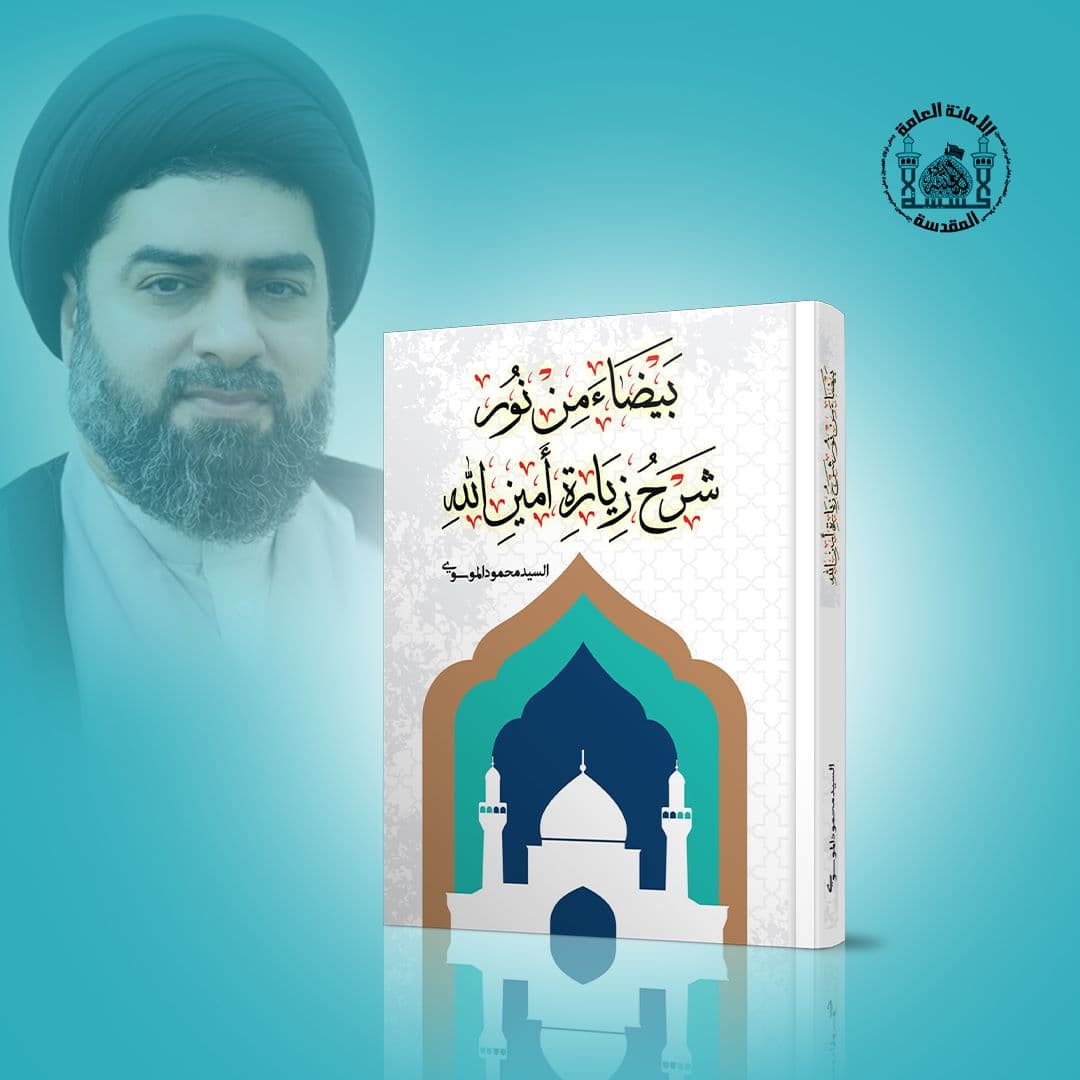
The Bahraini newspaper Al-Waqt, in its issue published on Friday 22/1/2010 CE, presented a review of the book “The Ziyarah of Imam al-Husayn: Its Divine Features and Its Educational Horizons,” on the occasion of its publication.

This was on the weekly Ishraqat page, which is edited by the writer Nader al-Matrook.
Text of the review
The Ziyarah of al-Husayn.. A Ritual of Worship with Manifold Functions
.
The ritual of ziyarah represents one of the most important practices connected with the forms of allegiance and attachment to Imam al-Husayn ibn ʿAli. This ritual has been surrounded by many signs, which were not confined to the dimension of worship or doctrinal allegiance to the person of al-Husayn, but went beyond that, so that political expressions and existing doctrinal and sectarian conflicts became intertwined in them. Shaykh Muhammad Mahdi Shams al-Din “2002 CE” may have been among the first to study this subject at length, in his book “The Revolution of al-Husayn in the Popular Consciousness,” where he dealt with the ziyarah of al-Husayn from the standpoint of the texts, and as an educational and doctrinal institution for the followers, and also shed light on its stages and its gradual popular crystallization. Shams al-Din mentions that two forms were used in confronting this ritual after it had become a sign of allegiance and protest: on the one hand, the roads leading to Karbala were cut in order to prevent the visitors, and punishment was inflicted on those of them who were caught; on the other hand, attempts were made to remove the object of the ziyarah by demolishing the grave of Imam al-Husayn, and that was in the reign of al-Mutawakkil. (pp. 49-65).
The Ziyarah.. An Institutional Ritual
The Bahraini writer Sayed Mahmoud Al-Mosawi, in his new book “The Ziyarah of al-Husayn,” offers a further expansion in setting out the legitimacy of this ziyarah and the manner of practicing it in a divine way, and in setting out its educational and spiritual effects. Al-Mosawi works—as Shams al-Din noticed early on—to give a comprehensive dimension to the ritual of ziyarah, as an institution of “worship” standing on its own, with its conditions, circumstances and requirements that must be obtained beforehand, and as containing—whether through its particular texts or by virtue of its outward embodiment in the ziyarah caravans and the groups organized for that purpose—a number of educational and doctrinal meanings and values.
In light of this, it is natural that Al-Mosawi’s reading of the ritual of ziyarah should appear to have acquired its own particular character, specifically the religious and doctrinal character that does not look at the accompanying matters or the incidental manifestations around it, which might compel one to read it anew, or at least to direct the reading to other sides. One may point, for example, to the commercial aspect involved in the ziyarah groups, and how these groups have today come to operate in an unprecedentedly free atmosphere, which has caused their practice to be accompanied by new expressions and representations that did not exist in earlier times.
What Al-Mosawi wants is to concentrate the organized devotional orientation in the practice of the ziyarah of al-Husayn, holding that “the standing of the ziyarah of Imam al-Husayn, its gifts and its blessings, were traced by the hand of divine power, which made them flow upon the tongue of the Household of Infallibility, that they might scatter its seeds in the hearts of the people of the earth, that perhaps they may stir and swell, and begin their steps on the path to Allah the Exalted,” and accordingly this ziyarah is “a unique element of worship, to which the Ahl al-Bayt gave firmly rooted attention, and the heart of every believer has become the good soil that received those directives, so that their hearts glowed with faith in them, and their hopes held fast to its firmest handle.” Al-Mosawi consequently concludes by saying that the ziyarah has become “a unique rite of worship, exceptional in its various aspects, and it has come to have its pivotal standing in man’s religiosity and in the building of his intellect and the inclination of his heart.” Therefore “it was necessary that we turn to it by shedding light on its nature, its motives and its effects, in order to formulate a balanced culture concerning the ziyarah, to preserve its limits, to attain the abundance of its effects, and to bring out its features and its essence, so that every seeker of knowledge may become acquainted with it, and so that the visitor’s ziyarah may truly be a reflection of what the Ahl al-Bayt wanted within their method, which corresponds to the Qurʾan and does not part from it until the people come to the Messenger of Allah (s) at the Pool on the Day of Resurrection.” Concerning the method of the book, Al-Mosawi says that in crystallizing the “culture of ziyarah” it relies on “the texts of the ziyarat that have come down from the Ahl al-Bayt, for the many ziyarat of Imam al-Husayn—to which we devote this study—are noble narrations overflowing with knowledge and understanding, and they have come down from the Infallible, whose word is a binding proof for the Muslims. We shall draw inspiration from them for insights in order to form an integrated vision of the culture of ziyarah, because of what we have seen they contain of horizons of knowledge and profound directives, which are meant to be repeated on the tongues of the visitors at all times, so that their souls, hearts and minds may be steeped in them, in order to produce the upright faith in which there is no wavering and which no defect afflicts.”
Al-Waqt Newspaper
1432 Friday 7 Safar 1431 AH - January 22, 2010