Source: Bani Jamra Media Center.
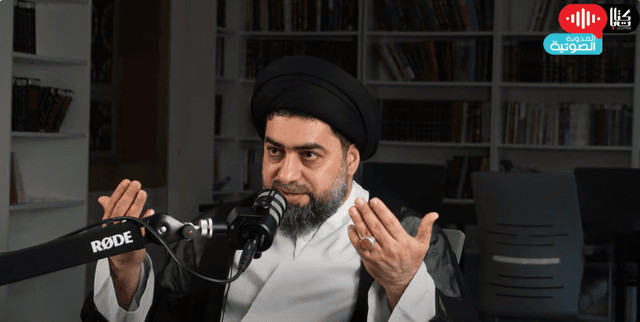
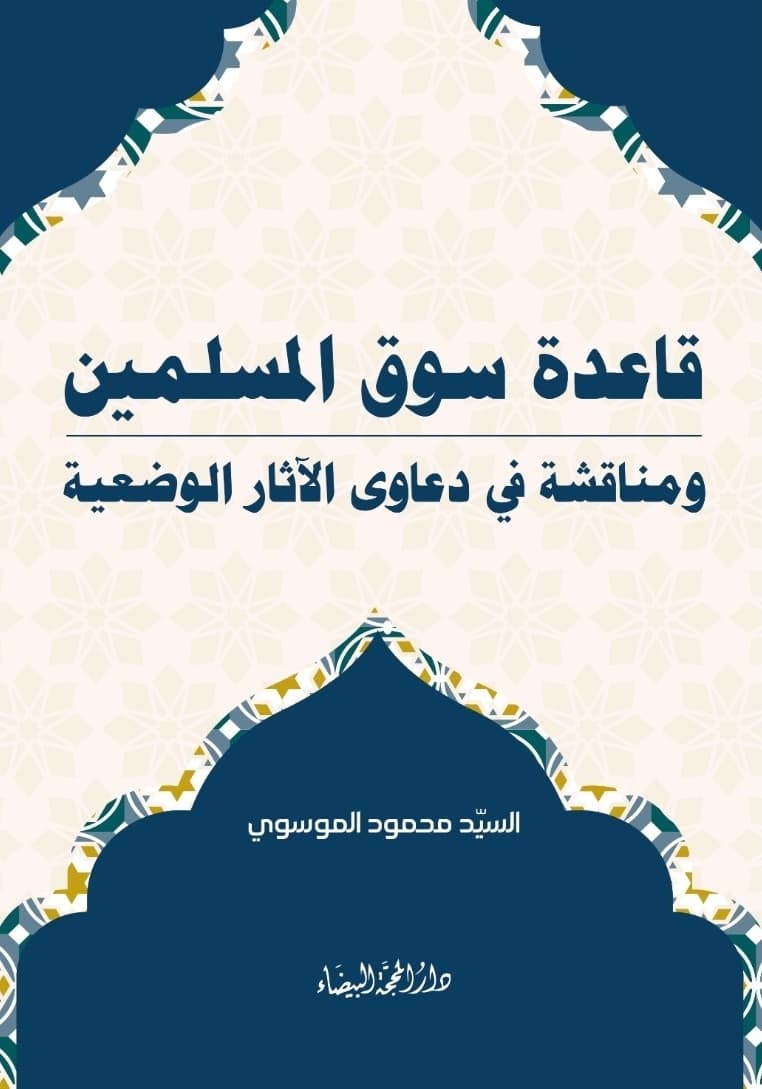
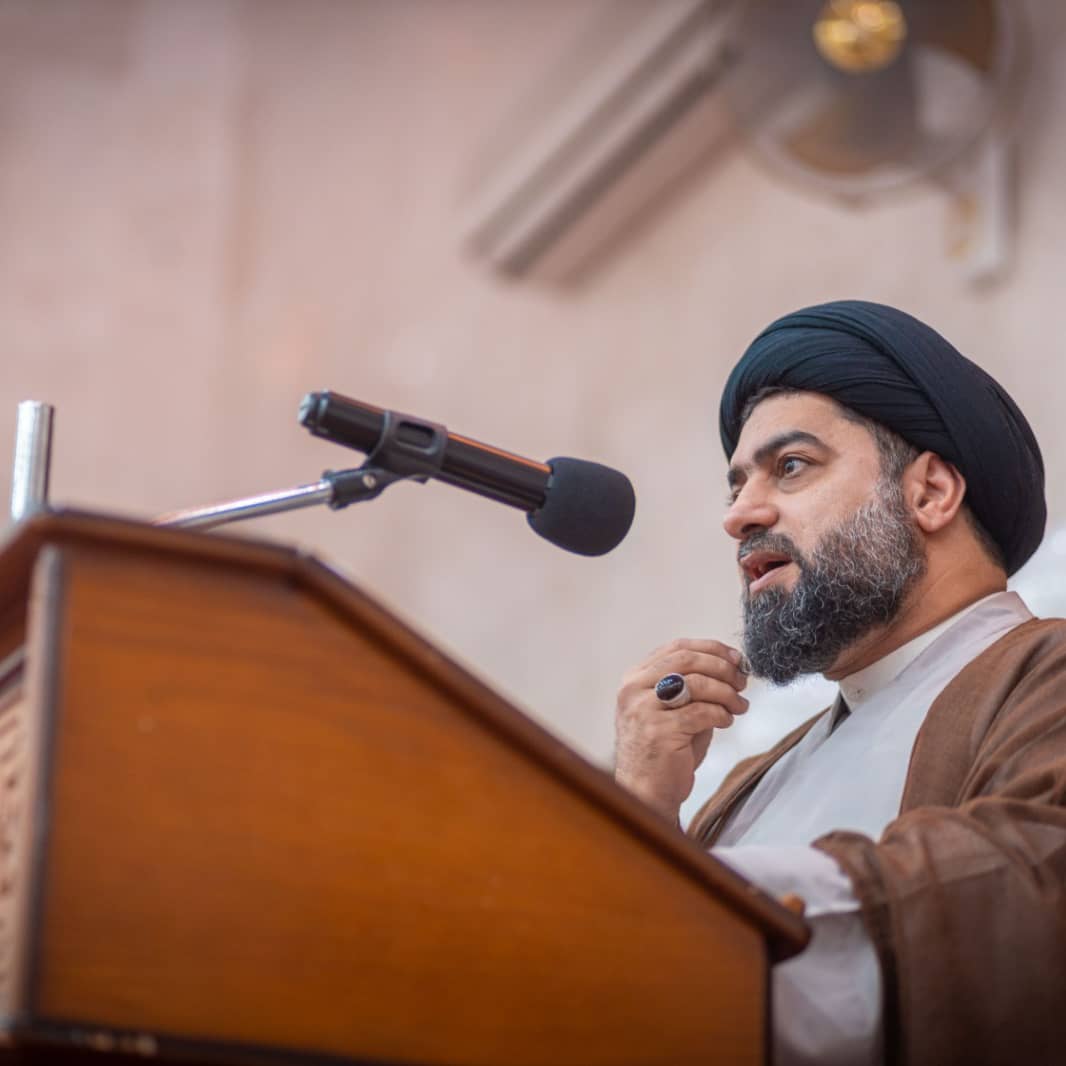
At the opening of the Book Forum, organized by the “Bani Jamra Media Center” in cooperation with the Majlis of the al-Badr Family, His Eminence Sayed Mahmoud Al-Mosawi was hosted on Thursday, Friday evening, 26-3-2009 CE, to introduce and analyze the book (Risali Culture). This project (the Book Forum) is considered a shift from a societal reality far from reading to a society interested in books and reading.
.
Sayed Mahmoud Al-Mosawi began his opening speech by extending abundant thanks to those in charge of this cultural forum (the Book Forum), represented by the “Bani Jamra Media Center,” for this good project that strengthens the place of the book in Islamic society.
His Eminence showed the merit and place of reading when he said: The place of the pen, writing and recording in general came from the Ahl al-Bayt (a), for we see many narrations that emphasize this matter: (Bind knowledge with writing) and (What is written stays and what is memorized flees). Also, that the deeds of the children of Adam are cut off except for three: (a righteous child who prays for him, an ongoing charity, and a book of knowledge from which benefit is derived). So a book remains like an ongoing charity, because it has influence, in that it influences society; every time a person is influenced, abundant reward also enters upon that deceased person. This shows us the place of the book in society. Also, the first Qurʾanic verse revealed to the Most Noble Messenger (“Read” (Qurʾan 96:1)), which calls to reading; for society cannot rise without reading.
The Circumstances of Authorship
After the opening, His Eminence Sayed Mahmoud Al-Mosawi spoke about the circumstances of the authorship of the book (Risali Culture), whose beginnings were in 1967 CE, in that period known as the year of the Naksa, in which the Zionists defeated the Arab forces composed of several Arab states with logistical support from the rest of the group of other Arab states. In this year Arab and Islamic societies fell into a very great setback, and as a result Arab and Islamic societies were in a state of frustration with the defeated Arab forces.
In those circumstances Islamic groups appeared in Iraq, and there were other groups in many Arab and Islamic countries, but the discussion concerns the particularity of this book, and specifically in Karbala, where they were called the Risali groups. These groups were under the leadership of a young marjaʿiyya at that time, namely Imam Sayed Muhammad al-Shirazi (rh), and after him Sayed al-Modarresi was the second leadership in that period. They used to pass special secret bulletins to these groups under the name (al-Marsad al-Risali), which was a collection of Islamic ideas derived from the Book and the Sunna, expressing a civilizational, renaissance thought called Risali thought.
After this stage came another stage, which extended from 1967 CE to 1979 CE, the year of the victory of the Islamic Revolution in Iran under the leadership of Imam Khomeini (r),
and from the year of the Naksa until the year of the victory of the Islamic Revolution in Iran, the circulation of these ideas was in a kind of secrecy and by limited means. Moreover, the circulation itself was not a circulation among individuals but a circulation among groups; and even after the book came out into the open, it was circulated by groups through teaching more than it was circulated by individuals.
Regarding the date of the book, since there is no precise date from which the year of issue can be known, the readings of Sayed Mahmoud Al-Mosawi arrived at the conclusion that the date of the book was the early seventies, and the formation of the thought the end of the sixties. He relays from Shaykh ʿAbd al-Ghani ʿAbbas, in the book (Tatalluʿ Umma), who speaks about the book and says that in the early seventies it became circulated in many Islamic countries, and the circulation was a circulation of movements more than it was a circulation of individuals, even at the Sunni level, although its beginnings are an explicit presentation of Shiʿism, yet some ideas were selected from it; and other movements in Lebanon, specifically the Islamic Resistance, teach it to their members. It took up a large space of circulation, and as is known, in the seventies and eighties there were severe security conditions.
The Circumstances of Circulation
Since the security situation in that period was sensitive, and the circulation of such books speaking about Shiʿism and about renaissance was something dangerous, His Eminence spoke about the circumstances of the book's circulation and his own living through some of these circumstances. He revealed that the book bears a pseudonymous author's name, and affirmed that the real author of the book is His Eminence the Marjaʿ Grand Ayatollah Sayed Muhammad Taqi al-Modarresi: The circulation of this book in its beginnings was under secret conditions, and it was a limited circulation for groups and not for individuals; and because it is elitist, it was circulated among elites, and if it had been of a general kind, it would have been circulated in a different way to individuals and groups. After that it was circulated to individuals; and the circumstances of circulation to individuals were also governed by the security situation that prevailed in the Arab and Islamic countries at that time. The beginnings of the victory of the Islamic Revolution in Iran were the beginnings of a state of alert in many countries and of fear of the Islamic tide coming with a renaissance thought, and specifically the Shiʿi tide. The slogans borne by the Islamic Revolution in Iran were slogans of liberation and slogans of supporting the forces of resistance and the liberation movements, so the region came to have intense fear; for this reason it was under sensitive and severe security conditions. I remember that I lived through some of these circumstances, as we used to transport the book in cooking vessels (pots); we would take advantage of the month of Ramadan, since the families exchange cooked dishes in it, so we would hide the book, or books in general, among these vessels and plates, but it was not usual in that period for someone to walk around carrying a book. For this reason the book was printed in the name of the writer (Ahmad Nasir), but in truth it belongs to His Eminence Grand Ayatollah Sayed Muhammad Taqi al-Modarresi, who wrote it in the early years of his twenties, and to this day it is still issued in the name (Ahmad Nasir). Many printings of it have been made, and some printings express the age of the book and express the circumstances of circulation. It was printed in many countries according to the location of the book in circulation. On one of the printings a Qurʾanic verse was written as a protective charm (In the Name of Allah, the All-beneficent, the All-merciful. “Do not be afraid of being overtaken, and have no fear [of getting drowned].” (Qurʾan 20:77)) and this indicates the sensitivity of the circumstances in that period.
The Contents of the Book
Sayed Al-Mosawi summarized the book quickly through his summary as follows: The book (Risali Culture) starts from a view of the reality in Islamic societies and the backward reality prevailing at that time, lived by Islamic society. The book started from this reality and the interpretation of this reality and the cause of the backwardness into which the Muslims had fallen, and it concluded that there is a state of divorce, as the book called it, between (the Shiʿa and Shiʿism). It addressed specifically Shiʿi society, in that Shiʿi society is the truthful expression of monotheism and the true extension of the message of monotheism, and in the end it wants this society to rise. The separation between Islam and the culture of the Muslims: there is a culture of the Muslims that the Muslims live, and there is a culture of Islam; this separation caused the state of backwardness.
Therefore the book came to establish a set of concepts specific to Shiʿi thought in particular. There are concepts such as taqiyya, the Imamate and awaiting (intiẓār), such as the jurist, taqlīd (following a jurist) and intercession (shafāʿa); these concepts are specific to Shiʿi thought. The book found that these concepts, in Shiʿi reality, were understood contrary to what Islamic thought wants for them. For example, awaiting was understood as negligence and retreating into homes until Imam al-Hujjah (aj) reappears. Therefore the book came to give new concepts, established from the Book and the Sunna, for these concepts, as well as a historical study of these concepts. The book expresses that the concept of awaiting is the opposite: in awaiting Imam al-Hujjah (aj), in his rising person, we must be rising, and we ought to make preparations to be among the men of Imam al-Hujjah (aj). We ought to change and to carry the message of the Imam (aj) in society. Likewise the concept of the jurist, following the jurist, the mission of the jurist and the leadership of the jurist: that is, is the time of the Occultation a time of the cutting off of the Imamate, with the Imamate having no extension? Of course not, for it has an extension, namely the jurists who undertake leadership, the jurists who comprehend Islam in a comprehensive and renaissance way; these are the extension of the Ahl al-Bayt (a), so there is compliance with them and submission to their leadership.
The book came to give these concepts, such as intercession, a rising, mission-driven understanding: does a person rely on it in his deeds, not being responsible and not coming near acts of obedience, and instead depending on the intercession of the Ahl al-Bayt (a) in the Hereafter? Of course not, because intercession is a responsible idea, in that a person must qualify himself to obtain intercessions, and as in the hadith: (He does not attain our intercession who belittles his prayer). So no negligent person, or one who is deliberately negligent, can attain the intercession of the Ahl al-Bayt (a). All these concepts, the book came and said, have (form and content), they have a framework and a substance; all these concepts have a message and have aims and ends, and they came for you to apply them in society. Therefore Islam came with a set of acts of worship, and these acts of worship are not mere rituals. Religious rites in general, whether Hajj or the Husayni rites, are not merely a formal or folkloric state; rather they contain substance that they came to strengthen within Islamic reality. Every rite .. every act of worship.. every concept that religion puts forward has a clear message that it came to realize in reality.
When the content is separated from the framework, the state is one of superficiality. So the book came to speak about the state of superficiality with focus on it. Our arriving at the state of superficiality means stripping away this content and retaining the form, the framework and the slogan without what is required. The book treated this problem in order to reach the goal, which is overcoming backwardness, to create a society with a rising, mission-driven character by offering a culture it named Risali culture.
The Concept of Risali Culture
It spoke at the beginning about culture and the role of this culture in society. Culture has a role in general; it defined culture as the knowledge that gives a person insight in life and a light with which he illuminates people. Then it came to speak about Risali culture: by what is it distinguished from culture in its general concept? It defined Risali culture as follows: (the sound, humane, courageous culture that produces radical reform of the problems of the nation today). A culture of this conception, the book came to say, must take its source, its concepts and its directives from an authentic Islamic thought. The source of this authentic thought is the Qurʾan, and the Qurʾan not in its traditional concept either; rather the book also came to give the Qurʾan a conception as a book of life. For the Holy Qurʾan is not only a book for seeking blessing .. nor only a book of ethics.. nor only a book of rulings ..nor only a book of historical stories.. rather it is connected to human life comprehensively. The book (Risali Culture) summarized that the Holy Qurʾan is a book of life, meaning it speaks of economics, speaks of politics, speaks of ethics and speaks of history; it speaks of all that as it connects with life. So it is a book of life, rising, and it breathes life into the human being. Therefore there are many directives that the book presents, belonging to the Qurʾan itself, to the Messenger (s) and to the Imams (a). The Messenger of Allah (s) said: (When tribulations become confusing to you like portions of the dark night, then hold to the Qurʾan). This is one example of the narrations of the Messenger and his good and pure Ahl al-Bayt.
Responsibility
The most prominent of the features of the book that Sayed Mahmoud Al-Mosawi addressed is: the issue of responsibility is among the most prominent features of Risali culture, and speaking about it is deep and very broad, from a scholarly standpoint as well and from a legislative standpoint. But in general I say that the human being was created, and the messages came, to charge the human being with a certain responsibility; the messages did not come only to give the human being an individual devotional state, but also assigned him a responsibility toward this message.
The seminar ended, in which Sayed Mahmoud Al-Mosawi gifted those present with a wonderful analysis and summary and a clear understanding of the book; his explanation and his seminar culminated in a discussion about the book and many discussions flowing in the same direction in which the book appeared, especially at that time, and about the extent of its presence and the extent of benefiting from it in the present and the future, and the utmost importance of such writings for the reality of the Shiʿa and Shiʿism and the Shiʿi concepts that some have understood deficiently, whereas the book has clarified them better and more comprehensively, in order to change a reality lived by Muslims in general and the Shiʿa in particular in that period, and the results the book brought about after its spread in various parts of the world.