We offer our condolences to the Master of the Age and Time, the awaited Imam al-Hujjah (aj), and to all Muslims on the martyrdom of our lady Fatimah al-Zahraʾ (a).
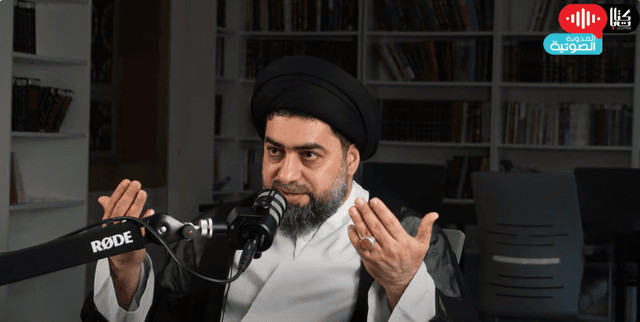
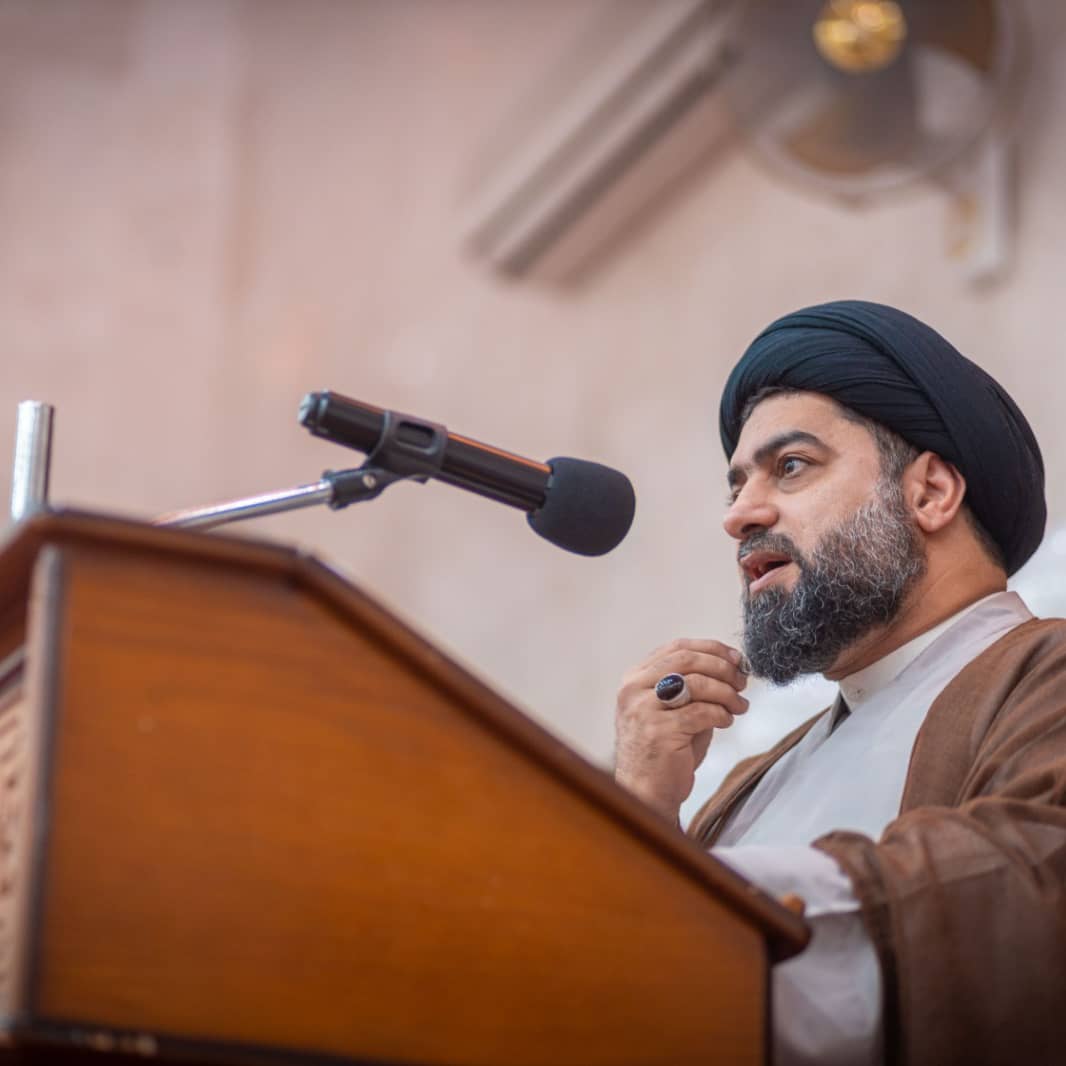
On this occasion Sayed Mahmoud Al-Mosawi delivered a speech about al-Zahraʾ (a), under the title A Visit to the House of Fatimah (a), in his majlis on the eve of Thursday, 7/6/2006 CE.
We present a summary of it, and the complete lecture will be included later in the audio library. A Short Visit to the House of Fatimah (a)
.
Great people were not born suddenly and without prior effort; every great person must have walked the path of perfection, lived the virtues and been raised on the way of greatness..
When we want to come to know the greatness of our lady Fatimah al-Zahraʾ (a), we must trace the footprints of history in her life's journey; and from that journey, rich despite its brevity in time, we nevertheless stand before an immense treasure of virtues and marvels in her daily life (a). We can take a quick look at that daily life by making a quick visit to the house of Fatimah and ʿAli (a), so that we may behold the traces of greatness and draw from their light a ray that illuminates our life and our path. For she is the exemplar of exemplars (because she is the proof of Allah over the proofs), so how could she not be an exemplar and a model for us?
Therefore we knock at the door of Fatimah al-Zahraʾ with all humility, and make a quick visit in which she (a) hosts us with her virtues and marvels.. through our reading of a narration related by Imam al-Sadiq (a), drawing inspiration from it for lessons and teachings..
The Distribution of Roles in the Family
Imam al-Sadiq (a) said:
(Fatimah (a) took upon herself for ʿAli (a) the work of the house, the dough, the bread and the sweeping of the house, and ʿAli (a) took upon himself for her what was behind the door: carrying the firewood and bringing the food..)
The prevailing system in the house of al-Zahraʾ is the distribution of roles between the husband and his wife, where the family home rests on the efforts of both parties, each taking the role that suits his nature. The wife has to manage the house from within, and the husband undertakes the outside management, and this is what accords with the innate nature of the human being.. For whoever changes this system will bear negative effects as a result of this change, or will need additional efforts to adjust the balance so that no imbalance occurs in the system of the family.. and so that the internal management of the house, the upbringing of the children and the like are not affected..
Patience with the Husband and Consideration for Him
Imam al-Sadiq completes the story, saying:
(He said to her one day: O Fatimah, do you have anything? She said: No, by the One who has magnified your right, for three days we have had nothing with which to offer you hospitality,
He said: Why did you not tell me?
She said: The Messenger of Allah (s) had forbidden me to ask you for anything, for he (s) said: Do not ask your cousin for anything; if he brings you something of his own accord, and if not, do not ask him,..).
It appears that the time was a time of poverty and destitution passing over Muslims in general, and this is what we glean from the rest of the story later. Therefore the Greatest Messenger (s) had advised al-Zahraʾ (a) to bear the circumstances her husband was going through and not to request even the simplest things, namely the provisions of the household..
In normal circumstances, the wife, as we mentioned, is the one responsible for the inside of the house, but her responsibility may collide with a great moral state, which is consideration for the husband's circumstances and not contributing to increasing the effect, even on the psychological level (through asking).. So she is content with what he brings spontaneously and accepts the situation, standing with her life partner to overcome the ordeal together. This is a great noble deed that al-Zahraʾ lived in some circumstances with Imam ʿAli (a).. so as to form a way of life for women in their dealings with the circumstances of their husbands.
Striving and Preferring Others
Imam al-Sadiq (a) continued the story, saying:
(He said: So he (a) went out and met a man and borrowed a dinar from him, then he came back with it when evening had fallen, and he met al-Miqdad ibn al-Aswad and said to al-Miqdad: What has brought you out at this hour?
He said: Hunger, by the One who has magnified your right, O Commander of the Faithful,
He said: That is what has brought me out; I have borrowed a dinar and I will give you preference with it. And he gave it to him..).
What Imam ʿAli (a) did was to strive and make an effort to provide the basic needs of the family, even by borrowing.. This is the culture that prevailed among the Muslims, as shown by al-Miqdad's going out for the same purpose, and these are the teachings of the religion of Islam, which calls people to strive and make an effort to obtain their daily sustenance, not to stagnate, to wait for relief and to depend on others.. For success does not come except when Allah the Exalted finds effort expended by the human being..
And despite the dire need at that time, Imam ʿAli (a) gave us the finest example of good opinion of Allah and reliance upon Him, for he preferred al-Miqdad's need to his own.. and gave him all he possessed.. while he himself was in need of it.. But Allah the Exalted looks upon these sincere stances in a special way, sends blessing into them and sends down swift success upon them..
The House of Fatimah, the Place of Marvels
Imam al-Sadiq completed the story with his saying:
(Then he — that is, Imam ʿAli — came and found the Messenger of Allah (s) sitting and Fatimah praying, and between them something covered. When she finished, she brought that thing forward, and behold, it was a large bowl of bread and meat,
He said: O Fatimah, from where does this come for you?
She said: It comes from Allah. Allah provides whomever He wishes without any reckoning,
Then the Messenger of Allah (s) said: Shall I not tell you of your likeness and hers?
He said: Yes, indeed,
He said: The likeness of Zechariah when he visited Mary in the sanctuary and found provisions with her. He said: O Mary, from where does this come for you? She said: It comes from Allah. Allah provides whomever He wishes without any reckoning (Qurʾan 3:37),
Then they ate from it for a month, and it is the bowl from which al-Qaʾim (a) eats, and it is with him.
In one manuscript: (and it is with us).
Here the effects of the trust in Allah shown by Imam ʿAli (a), and the effects of the patience and consideration for the husband on the part of Fatimah al-Zahraʾ (a), became manifest.. for these virtues were before the eye of Allah the Exalted, so He sent down His table upon them.. to be for them one of the virtues and one of the marvels.. Thus greatness is made manifest to us in the house of Fatimah, so that this radiant house may be a model for every house.