Under the auspices of the Representative Office of the religious authority (marjaʿ) His Eminence Grand Ayatollah Sayed Muhammad Taqi al-Modarresi (may his shadow endure)
The Noble Qurʾan Conference (The Fourth Session)
(The Islamic Political System in the Qurʾanic Conception)
Bahrain 20–21 May 2010
.
Report – Husayn Muhammad Hakim al-Turayfi
Amid a Qurʾanic, spiritual and faith-filled atmosphere, and in the presence of select figures among the honorable scholars, at their forefront the son of the religious authority (marjaʿ), His Eminence the religious authority (marjaʿ) Sayed Muhammad Taqi al-Modarresi, Sayed Sajjad al-Modarresi, and a number of intellectuals and Qurʾanic institutions in Bahrain and Saudi Arabia, the Representative Office of Grand Ayatollah Sayed Muhammad Taqi al-Modarresi in Bahrain concluded the proceedings of the Noble Qurʾan Conference in its fourth session last Friday evening, whose proceedings began in the period between 20–21 of this May at the Maʾtam (Grand Abu Saybaʿ), north of the Bahraini capital (Manama).
Because the Islamic system has Allah, Almighty, as its source and is derived from the Islamic creed, which gathered all the beliefs and the heavenly Books upon a new method and drew for human life conceptions, principles and visions for foreseeing the future; and because the Noble Qurʾan, which is from Allah, the All-mighty, the All-knowing, has laid out an Islamic political system by which all who have gone astray and all who seek the upright and correct path are guided, it fell to the Representative Office of Grand Ayatollah Sayed Muhammad Taqi al-Modarresi to make this theme a prominent title for a number of the themes put forward in the program of its annual conference, for treatment and for shedding light on its effect in shaping a sound and correct Islamic political reality in accordance with the Qurʾanic data, and for benefiting from the light of the Noble Qurʾan and the Pure Progeny in one of its systems, namely the Islamic political system.
The Conference Papers:
The conference papers came in harmony with the goals set by the organizers of this event, bearing the following titles:
The first paper: (The Islamic Political System between the Qurʾanic Conception and the Man-Made Conception) by His Eminence Shaykh Saʿid al-Nuri (a leading figure in the al-Wafaʾ Movement)
The second paper: (The Islamic Political System between Constants and Variables) by His Eminence Shaykh ʿAbd al-Ghani ʿAbbas (one of the scholars of Saudi Arabia)
The third paper: (The Jurisprudence of the Constitution and the Rulings of the Islamic State in the Islamic Concept) by Dr. Rashid al-Rashid (researcher and writer on religious and political affairs)
The fourth paper: (The Experience of the First Islamic Government in Medina al-Munawwara: Its Contributions and Its Features) by His Eminence Sayed Majid al-Mashʿal (President of the ʿUlamaʾ Council — Bahrain)
The fifth paper: (The Islamic State, the Command of the Lord and the Aspiration of Humankind: Its Goals, Its Landmarks, Its Model) by His Eminence Shaykh ʿAbd Allah al-Salih (Deputy Secretary General of the Islamic Action Society)
The first session began with a fragrant recitation of verses of the Wise Reminder by the child reciter Hasan Abu al-Hasan (of the Iqraʾ Qurʾanic Society).
Ustadh Ibrahim al-Safsif moderated the first night, beginning by welcoming the attendees, men and women, and announcing the start of the fourth annual conference of the Noble Qurʾan.
The Opening Address
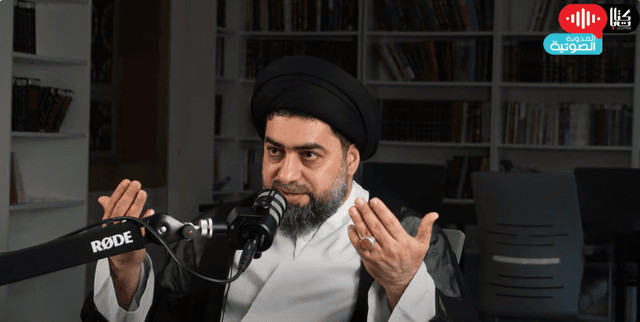
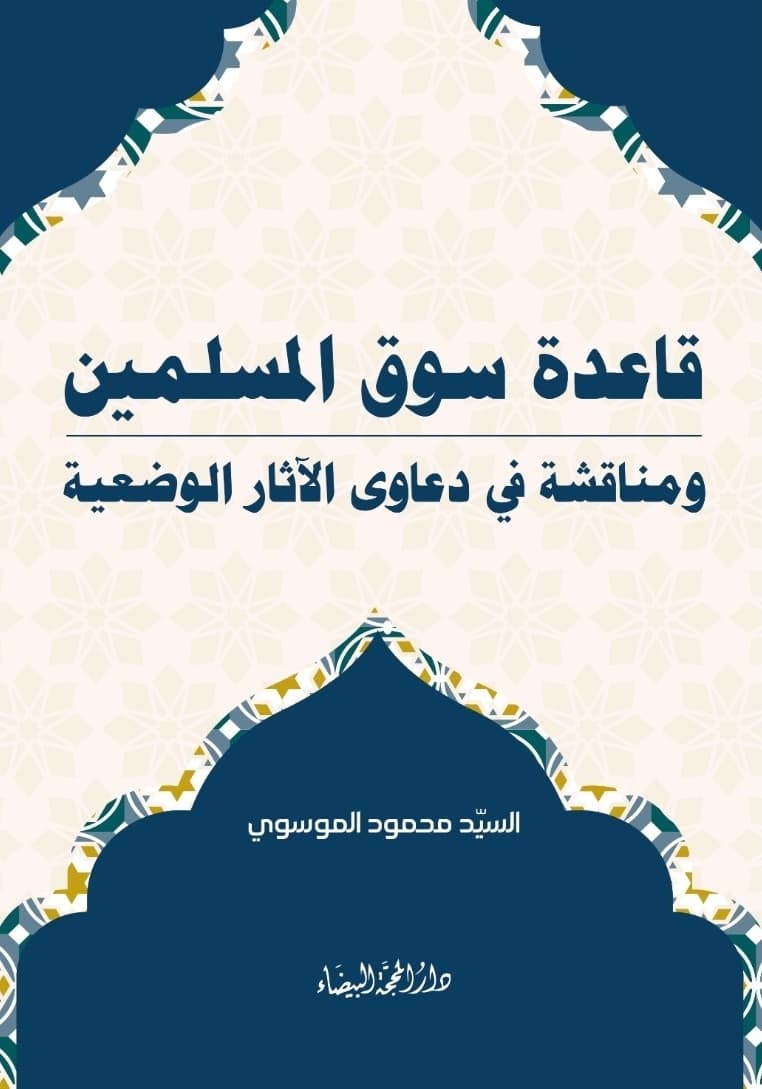
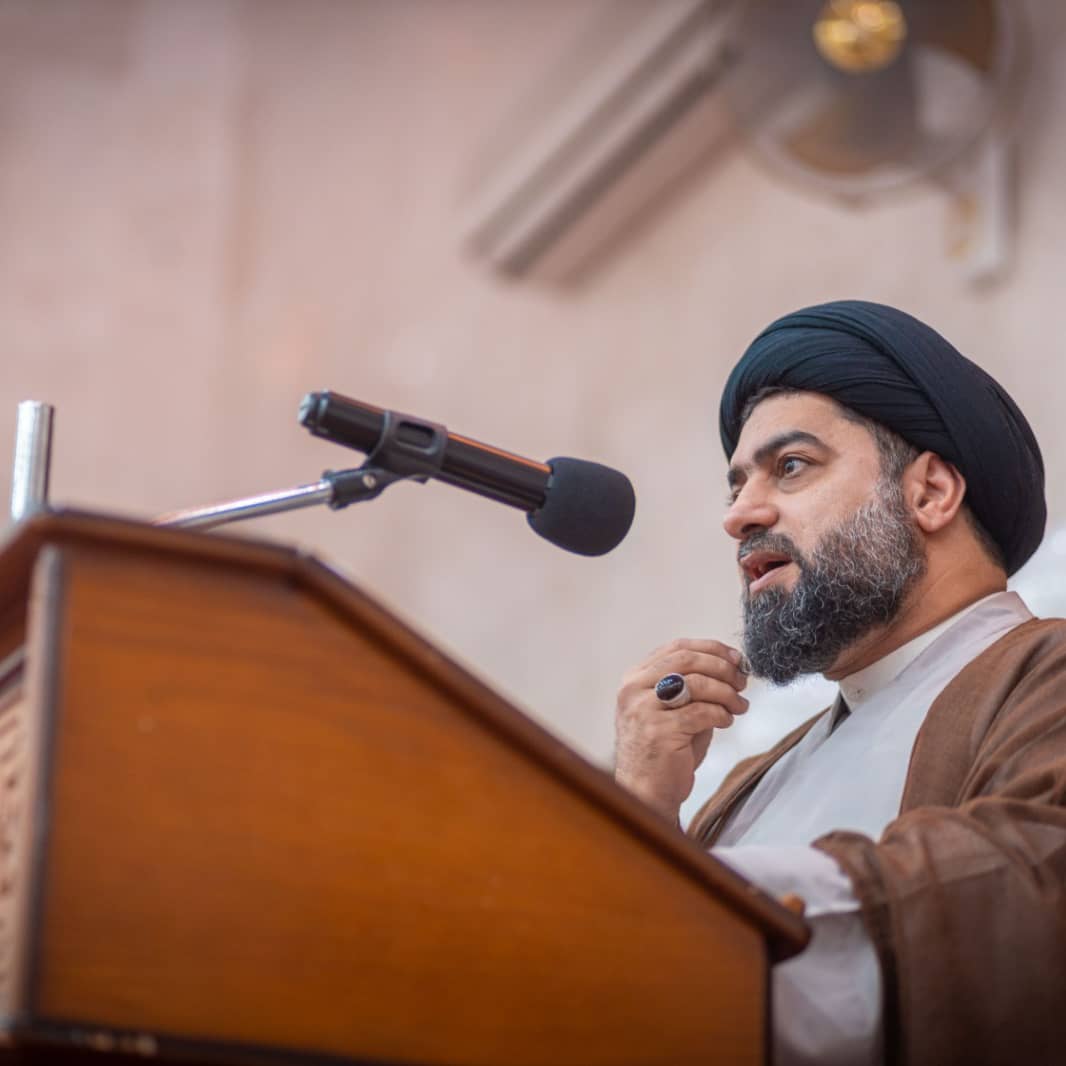
The opening address was delivered by the General Coordinator of the conference and Director of the Representative Office of the Marjaʿ al-Modarresi, His Eminence Sayed Mahmoud Al-Mosawi, who welcomed the attendees and then explained that this conference is the common word and the ground from which we set out to advance in the process of Qurʾanic deliberation, so as to draw our civilizational identity. This Qurʾanic deliberation of ours is not a deliberation about the Qurʾan, for we do not cast doubt on the capacity of the Qurʾan to give; we have passed that stage through faith in, and submission to, the insights of the Noble Qurʾan, so that we may set out from our faith in and submission to the capacity of the Noble Qurʾan, by which it brings mankind out from darkness into light in all spheres of life. This Qurʾanic deliberation is a deliberation of the verses of the Noble Qurʾan and their implications.
Al-Mosawi spoke about the subject of the conference, which is considered one of the sensitive subjects, namely (The Islamic Political System in the Qurʾanic Conception), as one of the many miracles of the Qurʾan, not only in how far ahead of its time its presentation was, but in the very fact that the Noble Qurʾan contains the political system. For the Noble Qurʾan has set forth for us the principles of politics and has made clear to us the necessity of rejecting oppression and supporting the truth in reality.
At the close of his address, he offered thanks to the participants, those who worked, the supporters and the attendees, and conveyed to them the greetings and prayers of His Eminence the Marjaʿ al-Modarresi from the city of his grandfather Imam al-Husayn (a), holy Karbala.
The Political System and the Necessity of Qurʾanic Grounding
His Eminence Shaykh Muhammad ʿAli al-Mahfuz (Secretary General of the Islamic Action Society).
In an age overwhelmed by seditions, conflicts and disputes, connecting with the Qurʾan is indispensable, because of its pivotal role in shaping the system of our lives and in guiding our affairs toward what is better, more righteous and more upright. With these words His Eminence ʿAllama Shaykh Muhammad ʿAli al-Mahfuz began his address, going on to say that the Qurʾan represents the culture of life in every sense of the word, for its verses carry a vitality without parallel in any intellectual theorizing or man-made theories, on the spiritual, material, moral, educational, political and social levels.
His Eminence continued, saying that we are called to open up to the culture of the Noble Qurʾan, to act upon its directives and to march in its train, and that the individual needs the Noble Qurʾan on one level and society needs it on the level of the collective, far from self-centeredness and from closing oneself off against others; and that the Noble Qurʾan has laid a ground for building the social-political system in a refined and lofty manner.
His Eminence listed a number of verses and noble hadiths relating to building social-political systems in the light of the Noble Qurʾan, and to the relationship of the ruler with the ruled.
His Eminence concluded his talk with a call to open up to the great meanings and tremendous titles that the verses of the Noble Qurʾan carry.
The First Paper:
(The Islamic Political System between the Qurʾanic Conception and the Man-Made Conception)
By His Eminence Shaykh Saʿid al-Nuri (a leading figure in the al-Wafaʾ Movement)
His Eminence began by greeting the noble attendees and offering abundant thanks to the Representative Office of the Marjaʿ al-Modarresi for holding this valuable conference and for its appreciated invitation, then began to review the themes of his research, which he summarized in four main themes:
The first theme: The internal political system in the Noble Qurʾan.
The second theme: The external political system.
The third theme: The distinguishing features of the Islamic political system.
The fourth theme: The distinguishing features of the man-made political system.
Then Shaykh al-Nuri discussed the four themes in detail, saying: The Islamic political system rests on two main dimensions. The first dimension relates to the network of political relations within Islamic society, and the second dimension is the external political system in the Noble Qurʾan, which relates to the network of external relations between Islamic society and other societies.
The first theme: The internal political system in the Noble Qurʾan.
The Noble Qurʾan establishes the existence of major goals that the human journey seeks to realize, and there are four main goals that the concept of vicegerency and the Trust encapsulates, namely:
Purification and upbringing.
Knowledge, and the shaping of the intellect and wisdom.
Establishing equity and a just life.
Founding unity and social cohesion.
Then he explained that there are in politics two kinds of social-political system. They are the despotic system, in which there is a social-political leadership that has absolute rights over society, while society has absolute responsibilities toward it; but in return this leadership has no responsibilities toward society, and society has no rights with it, meaning that it is one-sided. But there is also, and these are the words of Shaykh Saʿid al-Nuri, another kind of social-political system, namely the dual-rights system, in which the social-political system rests upon a politics that has rights over its base, yet also has responsibilities toward its base, and the popular base likewise has rights and responsibilities over its base. This kind of system is the one that the Noble Qurʾan has made clear to us; for the Islamic social-political system belongs to dual systems of mutual rights, unlike despotic systems, and this is the essential point in the theme of our research.
Therefore the Noble Qurʾan, in what relates to the Chosen Messenger (s), the Noble Qurʾan mentioned a set of rights of our Most Noble Messenger, as he is the highest model of human leadership for society, and in return it mentioned a set of rights of the Umma over the Messenger of Allah. Thus the Noble Qurʾan founded a social-political system of mutual rights and duties between the leadership and the base, aiming to establish purification, wisdom, justice and unity. His Eminence Shaykh al-Nuri listed examples of the rights of the leadership and examples of the rights of the members of Islamic society over the leadership.
The second theme: The external political system.
His Eminence moved on to speak about the second theme, saying that the Noble Qurʾan has established a set of principles in what relates to the global and human role of the Islamic Umma and its relationship with other nations, among them:
1. Embodying what is right and combating what is wrong worldwide
2. Embodying justice and equity with those who differ religiously and are not aggressors
3. Resistance and firmness with aggressors and the arrogant
4. Respecting international charters and norms
The third theme: The distinguishing features of the Islamic political system
They are:
Monotheistic and moral roots.
Human comprehensiveness.
Reciprocity of rights between the leadership and the public.
Pairing wilayah with consultation.
Balance between the internal and the global.
Balance between morals and firmness.
The fourth theme: The distinguishing features of the man-made political system
They are:
1. Severance of doctrinal roots
2. Severance of the moral vision
3. Prevalence of the values of interest and material pleasure
4. Slogans of rights and material freedom
5. The importance of material development
6. Prevalence of the values of oppression, aggression and corruption
The Second Paper
(The Principles of the State from the Qurʾanic Point of View)
By His Eminence Shaykh ʿAbd al-Ghani ʿAbbas (one of the scholars of Saudi Arabia, a teacher in the Hawza and the supervisor of the al-Qurʾan Nur Foundation).
His Eminence began with praise and thanks to the Representative Office of the Marjaʿ al-Modarresi for the continuity of this conference into its fourth year, and for the sensitivity of the subjects it has put forward and their importance for society and for researchers.
His Eminence reviewed his research with a preamble on the multiplicity of exegeses and the problem of exegesis in our present age, concerning a new term that has appeared, namely the term “thematic exegesis”, which is that the exegete gathers pieces of information that differ in place and time but are united in subject, and are joined by a common denominator. He made clear that the benefit of thematic exegesis is that the picture in it is more integrated, and that our need for thematic exegesis comes down to two reasons. They are, first: making clear the integrated picture of any of the subjects we see fit to discuss, and discerning the Qurʾanic vision of it. The second reason is: that the Qurʾan is able to interact with our time and our reality.
After His Eminence the Shaykh had reviewed the opening of his paper, Shaykh ʿAbd al-Ghani entered into the heart of the subject, namely the state in the Noble Qurʾan. His Eminence said: If we wish to learn about the concept of the state in the Noble Qurʾan, we do not find a detailed discussion of this concept. Perhaps the concept of the state did not come in the Qurʾan in the political sense but rather came in the economic sense; for the verse of “dawla” was revealed concerning the circulation of wealth among the affluent, and not concerning power among those concerned with political affairs. There may be no detailed discussion of the concept of the state in the Qurʾan, but there is a summary elaboration on this concept, and this is what we ought to dive into the depth of.
His Eminence raised some inquiries, namely: Is there an exclusive form of the state in the Noble Qurʾan? Taking note that there are two forms of the state, namely the legitimate state, with the presence of the Prophet or the Imam, and the illegitimate state, which is the opposite of the first. And if there is none, what ought we to do then?
In that case, and these are the words of Shaykh ʿAbd al-Ghani ʿAbbas, we ought to search for and glean the principles, functions and form of the state in the Noble Qurʾan, as an attempt to glean the principles on which the state rests, its functions, and its way of dealing with the people. We can take the Qurʾanic verses that brought together the Prophet Moses, the one to whom Allah spoke, upon our Prophet and upon him be the best of blessings and peace, and Pharaoh. So if one were able to gather these verses, which are connected in one context, namely the concept of the state, for the Noble Qurʾan speaks to us specifically about Pharaoh, whether in his dialogues with the Children of Israel or with Moses, the one to whom Allah spoke. His Eminence mentioned some of the main points around which these verses revolved, with a detailed account of each point and an explanation of it for the noble attendees, and from which we can glean the concept of the state. They are:
1. Centralism, lordship and dictatorship.
2. Consultation in the political system.
3. The media under Pharaoh.
4. The exclusivity of cultural direction.
His Eminence concluded his talk by saying that this research needs a completion, in an attempt to glean much from between the dialogues of Pharaoh and Moses and of Pharaoh with the Children of Israel, so that we may ultimately arrive at the general principles of the state, but from a Qurʾanic point of view, setting out in that from the verses that speak of the Children of Israel.
His Eminence Sayed Jaʿfar al-ʿAlawi (President of the Islamic Message Society) made an intervention on the subject of the Islamic political system between the Qurʾanic conception and the man-made conception, namely that the man-made system, as it exists now and as it is also grounded in the Noble Qurʾan, is on levels and not of one form; for the general frameworks of the bad system do not rise to the refined Qurʾanic level.
The Second Night 21.05.2010 The program for the second night, with a fragrant recitation of verses of the Wise Reminder in the voice of the reciter Husayn Fallah.
The session was moderated by Ustadh Hani (from the Eastern Province), who in his turn welcomed the noble attendees, emphasizing that the Noble Qurʾan is the constitution of life, for it has not left between its two covers any matter, small or great, in the life of human beings without setting for it a complete system, by which they proceed in order to realize happiness and justice among people.
The Third Paper:
(The Jurisprudence of the Constitution and the Rulings of the Islamic State in the Islamic Concept).
By Dr. Rashid al-Rashid (researcher and writer on religious and political affairs).
After discussing the definition of the constitution and the definition of the state, Dr. Rashid al-Rashid went on to address the two basic themes of his research, namely the constitution and the state. He said that the system of the state has developed along with the development of constitutional systems. The Doctor gave an account of the political and constitutional systems in the ages before Islam and after it, and of how the Messenger of Allah (s) took the concept of the state out of the individual and into the collective, that is, from the context of the individual to a set of values and principles, when he founded the first state in Medina al-Munawwara and laid down laws within the framework of organized moral systems.
Then Dr. al-Rashid spoke about the constituents of the state, which he summarized in three themes:
1. The land.
2. The people.
3. The constitution, which regulates the relationship of this society with all its members and groups and sets the moral values that regulate the life of this society.
Then he spoke about the goals of the constitution from the legal standpoint, dividing them into five parts:
1. Creating a form and framework for the political system to which the responsibility of governing and administering this society falls.
2. Explaining the principles on which the basic structure of the political system rests, and its basic rules.
3. Explaining and defining the institutional structure for building the Islamic state.
4. Explaining the rights and duties of all the components of the administrative organization that the constitution defines, in the form of the political system and its administrative structure.
5. Defining the oversight mechanisms and tools over the work of the organs of the state.
Then al-Rashid went on to explain the major aims of the constitution, enumerating them in three points:
1. Civilizational ascent.
2. The rule of law, and the subjection of the state to a body of regulations, laws and systems.
3. Guaranteeing stability.
Then he read to the noble attendees and explained to them briefly the provisions of the constitution in the language of the law, and about legitimacy, the constitution and constitutional rules according to the Islamic concept, and about the fact that the basic rules of the Islamic constitution are the very ones found in the sources of Islamic legislation, namely the Noble Qurʾan, the purified Prophetic Sunna and the narrations of the Ahl al-Bayt (a).
Dr. Rashid al-Rashid also addressed the subject of the sources of the constitution in the Islamic concept, namely:
1. The Noble Qurʾan.
2. The noble Prophetic Sunna.
3. The intellect.
4. Those firmly grounded in knowledge, that is, the jurists.
After that Dr. al-Rashid moved on to the basic differences between the constitution in the Islamic concept and other constitutions, which he summed up in three points:
1. The difference in source, in that the Islamic constitution has Allah, Glorified and Exalted is He, as its source, while the other constitutions have human beings as their source.
2. Constancy: in the Islamic concept it is constant in vision and method, whereas in the other constitutions it is the complete opposite.
3. Neutrality in the Islamic system, which lays down a general system fit for all people, with their different colors, groups, races and affiliations; as for the man-made constitutions, they are always changed and tailored to the measure of the family, the tribe, the party, or those at the helm of rule and power.
Al-Rashid continued his talk by enumerating the features of the Islamic constitution, namely:
1. Loftiness and constancy.
2. Perfection and completeness.
3. Stability.
4. Humanity and universality.
5. Justice and equality.
Al-Rashid concluded his talk with the rulings of the Islamic state, which emanate from the sharʿi limits, saying concerning them that the jurists and the leading figures of the Umma must have a role in supervision and oversight over the legislative side of elected councils. For in the Islamic political system the legislative council is not above the legislative aspects connected with the juristic legislative system of the Islamic Shariʿa.
The Fourth Paper:
(The Experience of the First Islamic Government in Medina al-Munawwara: Its Contributions and Its Features).
By His Eminence Sayed Majid al-Mashʿal (President of the ʿUlamaʾ Council — Bahrain).
There are two theories in circulation about the role of governments and their responsibilities:
1. Development, material prosperity and social welfare.
2. The state that defends the borders of the state, geographical and of principle, and the entity of the Umma, its values, its dignity and its identity.
The Most Noble Messenger is the bearer of the universal, everlasting Islamic Mission and the leader of the Umma, and his sayings are a Sunna to be followed, disclosing the Islamic position and the sharʿi vision, proceeding from his position as a divine leadership for the Umma and from the explicit Qurʾanic text, where He, Glorified and Exalted is He, says “There is certainly a good exemplar for you in the Apostle of Allah—for those who look forward to Allah and the Last Day, and remember Allah much” (Qurʾan 33:21).
After that His Eminence turned to the justifications and goals: that Islamic government, in the Islamic perspective, is not an end in itself but a means of preserving a set of basic values in Islam; or say, it is a means of preserving the doctrinal, intellectual and spiritual project of the Umma; and in a third expression, it is a means of preserving the Islamic Mission and the identity of the Umma, and of preserving the honor of the Umma and its dignity. It is not possible to neglect the values and the Islamic Mission, or the dignity of the Umma and its honor. And because the Most Noble Messenger (s), as the bearer of a Mission, carries a great project, it is indispensable to found a state that supports this project and preserves that Mission; and this is a major Islamic responsibility that is not exclusive to the Noble Messenger (s), but rather this is the concern of every bearer of a theory and a project.
The Messenger (s) took several foundational steps for the objective preparation of the conditions of the Islamic state, namely:
1. Building a central mosque in Medina and taking it as a center for worship, politics and jihad.
2. Strengthening the bonds of love among the Muslims through the brotherhood between the Emigrants and the Helpers.
3. Defining the landmarks of internal and external policy through the writing of the document of the political treaty between the Muslims and the Jews.
The second theme of Sayed al-Mashʿal’s research concerned the launching of the project of the Islamic state in Medina al-Munawwara, and the decisive stance of the Messenger of Allah (s), and the vigor and awe that the Muslims had during that era, with mention of examples from that era. The Messenger of Allah (s) lived through a bitter and harsh struggle in order to erect the young Islamic state, and he erected it until it became a state held in awe; and during five years he addressed several letters to the kings of neighboring states, calling them to Islam.
The Fifth Paper:
(The Islamic State, the Command of the Lord and the Aspiration of Humankind: Its Goals, Its Landmarks, Its Model)
By His Eminence Shaykh ʿAbd Allah al-Salih (Deputy Secretary General of the Islamic Action Society)
At the beginning of his presentation Shaykh ʿAbd Allah al-Salih said that in the Qurʾan is all that the human being needs, and that conferences such as these are among the milestones that must be developed, cultivated and multiplied; and that the state, or the Islamic system, is a command from the Lord, because Allah’s command was to establish this system, and human beings yearn for this system. Since the beginning of humankind had no complexities in it and could not accommodate the Islamic system at that time, it was not then a proposal for them; but with the complexities that later arose for human beings, the Islamic system became something required.
His Eminence Shaykh al-Salih made clear that there are three kinds of authority, from ancient times until today, namely:
1. The despotic state, whose model is Pharaoh, who put himself forward as a god, and Nimrod.
2. The consultative state, or the democratic in today’s terminology, whose model is the Queen of Sheba.
3. The divine, godly state, whose model is the divine, godly system, as with Allah’s prophet Joseph (a).
After reviewing these three models and their distinguishing features through the verses of the Noble Qurʾan, al-Salih continued his talk by saying that the Islamic system is a means of bringing out godly, divine values and of establishing the values of truth, justice, equality and freedom in life.
Shaykh ʿAbd Allah al-Salih concluded his talk with the model of Allah’s prophet Joseph (a), how he worked on the qualifications of rule and leadership, and he mentioned examples of his rule over Egypt and how he administered the state.
His Eminence Shaykh Habib al-Jamri made an intervention in the form of a question about the paper of Dr. Rashid al-Rashid, saying that we, as Muslims, our choice is Islam and our constitution is the Noble Qurʾan, and the contemporary problem concerning the application of the Islamic vision and the Islamic method, which revolves around the application of the Islamic choice and its system, by whoever applies the Islamic method other than the Infallible, and around who guarantees to the general public that the non-infallible from among the general public will apply the Islamic experience, when the non-infallible Islamist presents it as though it were a revealed Qurʾan. The Doctor answered that the guarantee is the state of oversight that Islam has founded, and this is a practical dimension that always needs oversight.
The Qurʾanic Workshop
Under the Title (The Human Being in the Face of Crises and Trials)
Friday 21.05.2010 CE, in the Morning
On the sidelines of the Noble Qurʾan Conference, a Qurʾanic workshop was held, managed by the al-Nabaʾ al-ʿAzim Society, under the title: (The Human Being in the Face of Crises and Trials), with the participation and attendance of an elite group of specialists and supervisors of Qurʾanic activities in Bahrain and the Eastern Province of the Kingdom of Saudi Arabia. The workshop was moderated by His Eminence Shaykh Habib al-Jamri and Ustadh ʿAli Adam, Secretary of the al-Nabaʾ al-ʿAzim Society for the Sciences of the Noble Qurʾan.
The program began from half past eight until half past nine with a period for having breakfast, along with acquaintance among the parties taking part in the workshop.
His Eminence Shaykh Habib delivered the opening address of the workshop, which he began by welcoming the noble attendees, saying: On the sidelines of the Noble Qurʾan Conference this workshop, or forum, is held in order to listen to the Qurʾanic insights and creative Qurʾanic ideas from researchers and students, under the title (The Human Being in the Face of Crises and Trials), and the participants in this workshop are diverse. In the course of his address, which he began by reciting this verse “Do the people suppose that they will be let off because they say, ‘We have faith,’ and they will not be tested?” (Qurʾan 29:2), Shaykh al-Jamri said that the methods of the Noble Qurʾan were varied and multiple in discussing the term “affliction”; the Noble Qurʾan has treated this matter on the individual, personal and social scope, and the Qurʾanic verses have identified the generality of affliction in many verses.
He emphasized that in our Islamic lands you may not find a house without some kind or type of trial having befallen it, which a person may not express in times of ease, concerning what he was tried with in hardship.
The workshop was moderated by Ustadh ʿAli Muhammad Adam of the al-Nabaʾ al-ʿAzim Society for the Sciences of the Noble Qurʾan.
The First Paper:
Title: “How the Noble Qurʾan Makes the Afflicted Person Patient”
Party: the al-Dhikr al-Hakim Society – al-Sanabis.
Presenter: Ustadh Hasan ʿAbd al-Shahid al-Saffar.
In it he explained that the Noble Qurʾan adopted a practical method of calming the soul of the afflicted person in many places and noble verses. The Ustadh summarized his paper in seven quick points, with mention of the verses relating to each point, namely:
1. Trial is the sign of faith.
2. The prior notification; that is, Allah, Glorified and Exalted is He, informed us in advance in His Wise Book that we shall be tried.
3. An opportunity and an alert for returning to Allah, Glorified and Exalted is He.
4. Affliction is the measure of distinction, for the afflicted person who is patient excels others.
5. The afflicted person is, in himself, guided.
6. The linking of affliction with Allah, Glorified and Exalted is He.
7. Most trials descended upon the prophets and the believers.
The Second Paper:
Title: “Trial and the Way of Dealing with It”
Party: Iraq.
Presenter: His Eminence Sayed Sajjad al-Modarresi (son of the Marjaʿ al-Modarresi).
His Eminence began his talk by saying that the Qurʾan is a Book in which there is a clarification of all things, and when we say that, we say it only because the Noble Qurʾan is the book of legislation as opposed to the book of creation, and as for all matters in the universe, in the Qurʾan there is mention of those matters and treatment of them,
His Eminence Sayed al-Modarresi offered five steps toward treating trial, namely:
The first step: The most important step for the afflicted person to take is to return to the Noble Qurʾan, so as to find a solution for his problem and for himself, and as Imam ʿAli (a) says: Seek to make the Qurʾan speak.
The second step: Trial is an important sunna: it is the wisdom for the sake of which Allah, Glorified and Exalted is He, created the human being; so the human being must correct his vision of life. For the wisdom of trial is the return to Allah, Glorified and Exalted is He. When trial comes, it comes for two reasons:
1. The sins of the human being. 2. The difficult examination, to raise the rank of the believer.
The third step: Submission to the command of Allah, Glorified and Exalted is He; for patience is a rank, and contentment is a rank higher than it.
The fourth step: Not being ungrateful for blessing; for there is no sense in our being ungrateful for all the blessings of Allah lavished upon us because of a simple affliction that has come down upon us. Rather, we ought to give thanks for those blessings, among them the blessing of trial.
The fifth step: A positive outlook toward trial.
The Third Paper:
Title: “Crises and Trials: A Chosen Necessity”
Party: the Kingdom of Bahrain.
Presenter: His Eminence Sayed Muhammad ʿAli al-ʿAlawi.
His Eminence summarized his presentation in three basic points, namely:
1. Existence and the place of the human being in it. Allah, Glorified and Exalted is He, created the human being for one goal and aim, which He has made clear in His words, Almighty is He, “I did not create the jinn and the humans except that they may worship Me” (Qurʾan 51:56). So the human being is the issue of this existence which the Master, Almighty is He, has proclaimed.
2. Fear and the divine Hand of Allah. Whoever wants Paradise must hold to submission and understand the equation of trial correctly; for everything that comes to us, we must understand that it is good from Allah, Glorified and Exalted is He, even if its outward appearance is evil.
3. Why crises and trials. For Allah has made trial for the sifting of human beings and the bringing out of their original metal.
The Fourth Paper:
Title: “The Human Being in the Face of Crises and Trials.. The Qurʾanic Model”
Party: the Anwar al-Qurʾan Committee – the Kingdom of Saudi Arabia.
Presenter: Ustadh ʿAli Al Zawwad.
What concerns us is the educational side of the question of trial, and how the Noble Qurʾan has dealt with it.
The conclusive truth that the Noble Qurʾan affirms is that all the prophets concerning whom trial is mentioned passed this trial successfully; and if we were to make a precise investigation of the cases of trial, we would find that there are hidden secrets that direct the believer to pass through what is the cause of his reaching this rank. These examples that the Noble Qurʾan presents were one of the causes of the firmness of the call of truth in the face of falsehood, for “Indeed this Quran guides to what is most upright” (Qurʾan 17:9), most upright for us in all our states, in states of affliction and states of ease alike. Knowing these concepts and spreading them among the believers makes them able to direct their feelings and sensations in times of crisis; and we can coordinate these concepts through educational programs that root the concept of patience and endurance for the young in particular and for the believers in general. Our connection with the Noble Qurʾan in itself impels us to serenity and tranquility: “We send down in the Quran that which is a cure and mercy for the faithful” (Qurʾan 17:82).
The Fifth Paper:
Title: “Affliction Is a Curriculum for Building the Human Being”
Party: the Noble Qurʾan Forum – the Kingdom of Saudi Arabia.
Presenter: Ustadh Husayn Manyan.
When Islam came, its main goal was to reform the human being and to free his will from the darkness of al-Jahiliyya, from bondage and servitude, and to charge him with what realizes his happiness in the two abodes. In the Noble Qurʾan it has given us a picture of the human being at the height of loftiness and elevation: he is the best of creatures, the most upright, the most honored and the noblest, and he is the bearer of the Trust. The Noble Qurʾan is a Book of truth that does not speak to us of the crises that the human being faces in terms of philosophical ideas, extremist beliefs or social problems; rather, the Qurʾan speaks to us of sunnas and values, and of true rules for facing all difficulties and trials, through drawing parables and telling stories that disclose to us realities by which we are enlightened and gain insight. There are more than 17 headings in the Noble Qurʾan in various spheres of life, calling on the human being to adhere to them as laws and as regulations for ordering his affairs in life, and they are the best curriculum for building the human being. It calls to patience, uprightness, firmness, facing ordeals, and not inclining toward the wrongdoer; and it calls to justice and kindness, giving the zakah, following the leadership, reflecting on the creation of the heavens and the earth, calling to peace, unity and brotherhood, judging by what Allah has sent down, calling to good character and purifying the self. An example of that is the nation of Moses (a), when he was absent from his people for 40 days.
The Sixth Paper:
Title: “The Human Being in the Face of Crises and Trials”
Party: the al-Dhikr al-Hakim Society – al-Sanabis..
Presenter: Sayed Hashim al-Mosawi .
He began by explaining the term “facing”, in that it needs weapons and an army in the face of the other army; and facing trials needs psychological strengths at times, and practical and financial ones at other times, according to the trial directed at the human being. The human being by his very nature lives in weakness and in need of Allah the Exalted; when the human being is cut off from his Lord, he loses strength and has no power over anything for himself. Therefore he needs weapons with which to face the trials he faces in life, and among the most important of these weapons is patience. We observe the emphasis on this point from Allah, Glorified and Exalted is He, that a person’s patience is inspired in him by Allah, Glorified and Exalted is He, and is not a patience from himself: “So be steadfast, and you cannot be steadfast except with Allah [’s help]. And do not grieve for them, nor be upset by their guile” (Qurʾan 16:127). The believing person’s feeling that he stands in the trench of truth and supports the confederates of Allah makes him live what is stated in this verse: “and you did not throw when you threw, rather, it was Allah who threw” (Qurʾan 8:17). Patience may also come by way of mutual enjoining among the believers, as the Exalted has said: “and enjoin one another to [follow] the truth, and enjoin one another to patience” (Qurʾan 103:3). Among the weapons with which the human being faces these trials are:
1. The remembrance of Allah and the Last Day / for we are in a society living in a state of psychological disturbance, in which suicide is frequent, and the remembrance of Allah and the Last Day makes the human being psychologically at peace
2. Reflecting on the outcome of patience
3. Divine hope and faith in the Unseen
4. Supplication and the state of taking refuge in Allah, Glorified and Exalted is He
5. Recalling and remembering the former peoples mentioned in the Noble Qurʾan
The Seventh Paper:
Title: “Trial Is the Test of the Believing Person”
Party: the Iqraʾ Society – ʿAali ..
Presenter: Ustadh ʿAbd Allah Abu al-Hasan .
All that we go through in our lives is a trial, and as He, Glorified and Exalted is He, says “You will surely be tested in your possessions and your souls, and you will surely hear much affront from those who were given the Book before you and from the polytheists; but if you are patient and Godwary, that is indeed the steadiest of courses.” (Qurʾan 3:186) Ustadh Abu al-Hasan turned to some verses of the Wise Reminder relating to affliction and patience with it, and the Ustadh concluded by putting forward ways of facing these trials, by way of nearness to the absolute powers, up to nearness to Allah, Glorified and Exalted is He, and patience, Godwariness, contentment, and awareness that this affliction is a test and is a blessing that none but the believers appreciate
The Interventions
There were several interventions after the workshop, by His Eminence Shaykh Majid al-ʿUsfur, who stressed the necessity of having a culture of trial and patience, as an immune system that the believers face. He continued, saying that there is a need in addition to this culture, namely that there be scholars specialized in the field of Qurʾanic knowledge and scholars specialized in psychological treatment; for we have a problem in converting the aspect of religious texts into legislation and curricula, and what we have are programs of reception and not training programs. His Eminence made clear that we must learn how we ought to turn these Qurʾanic insights into training programs
There were also a number of interventions by His Eminence Sayed Mahmoud Al-Mosawi, His Eminence Shaykh Muhammad Hasan Al Ibrahim, Ustadh Muhammad Muhsin al-Ziyadi of the Noble Qurʾan Committee at the al-Safa Charitable Society in Saudi Arabia, and His Eminence Shaykh Yasir al-Salih.