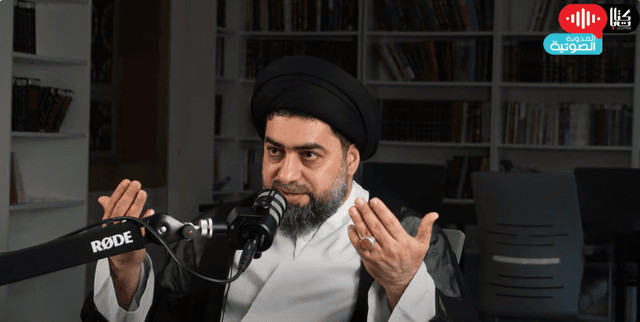
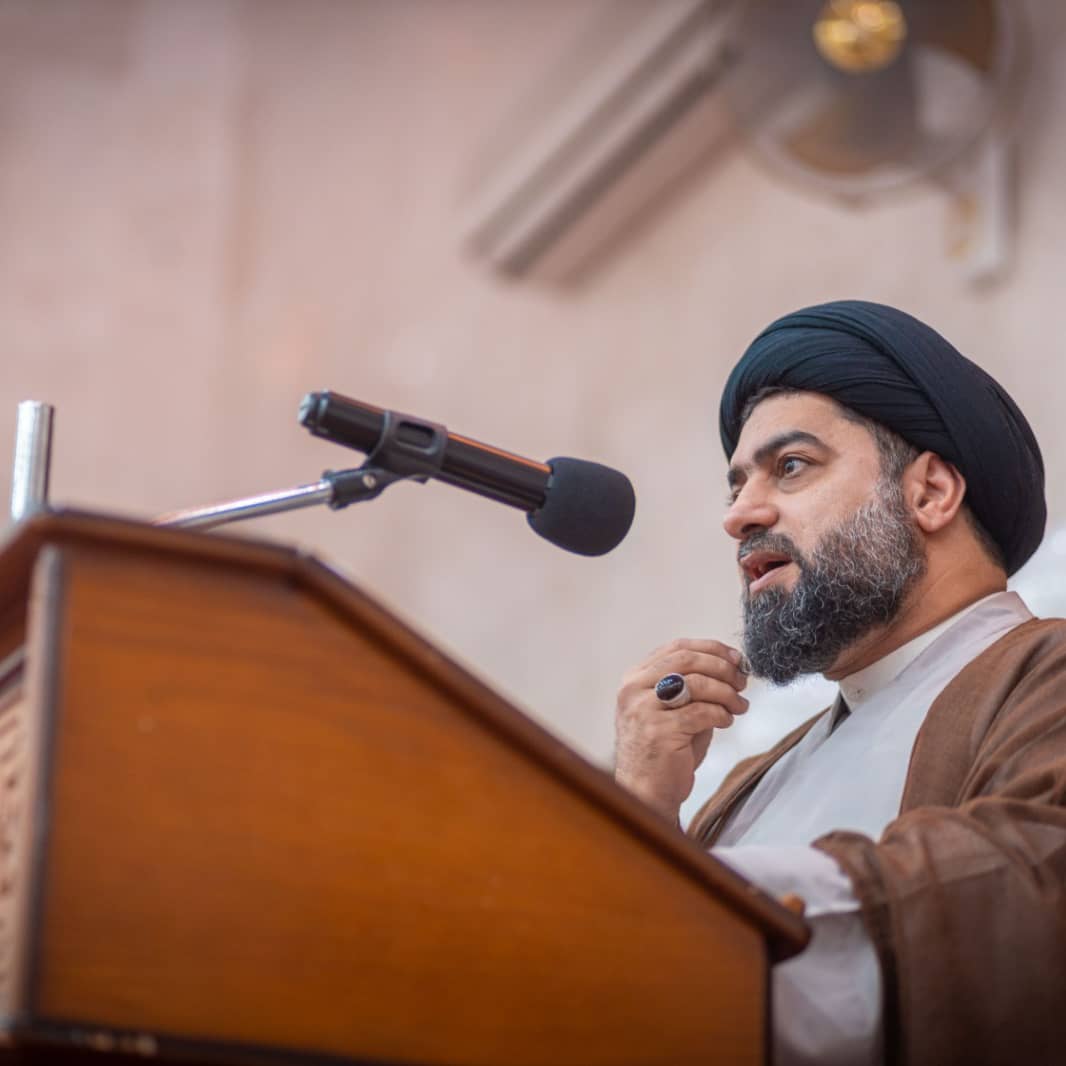
Sayed Mahmoud Al-Mosawi participated in an investigative report conducted by the journalist Muna Hubayl in the Bahraini newspaper al-Watan, in its issue number 20, published on 30 December 2005, on neuro-linguistic programming. It determines a person's psychological map and the seats of his strength .. Does linguistic programming clean the subconscious mind of the sediments of the past?
.
Written by - Muna Hubayl:
More than (90%) of a person's values are formed during the first seven years of his life, as are more than (95%) of his emotional programming and beliefs. The science of neuro-linguistic programming has employed these facts and figures and set about capitalizing on the fact that the mind supports a person continuously in everything he does, to the furthest extent.
Whoever follows the course of these sciences observes the extent of their expansion, despite the existence of those who doubt them, have reservations about them, or even forbid them; yet reality points to an increase in those who take them up day after day.. Have our societies truly turned into a vessel that receives everything new, even if it touches religion, and does everything imported from the “khawajas” benefit us and is it beyond reproach? Do the sciences of neuro-linguistic programming conflict with the principles of religion or simply harmonize with it? What is the quality of the courses offered, and are their exorbitant prices proportionate? How did neuro-linguistic programming turn from raising people's awareness into fooling minds and looting pockets? And is programming truly a cure for all our psychological problems? Majdi ʿUbayd, a certified trainer in neuro-linguistic programming at the Canadian Center, holds that programming is among the strongest of the sciences of human development, and it is not something newly invented, for most of it is available in the principles of the Islamic religion. It is a Western science brought into being by Richard Bandler, a mathematician and student of behavioral psychology, and John Grinder, a linguist. Its aim is to study models of successful personalities, identify their strategy, and then apply it to others who seek success.
He adds: “Each one of us has his own neuro-linguistic programming from birth, then he receives programming from his parents and after that from the outside environment.”
Explaining linguistic programming, Majdi says: “Neuro-linguistic programming is a set of habits, ideas and experiences acquired from the environment in addition to personal experiences. As for the word linguistic, it expresses the means of communication, whether verbal, words and phrases, or non-verbal, facial expressions and body movements, in which the nervous system is used; hence it was called neuro-linguistic programming, or the engineering of success, as Dr. Muhammad al-Takriti calls it, because it quite simply guides you to the ways of success.”
On its usefulness he says: “We do not possess the magician's wand, nor do we seek the help of the jinn to turn your world into a rosy life free of troubles: “Indeed Allah does not change a people’s lot, unless they change what is in their souls” (Qurʾan 13:11). Nor do we fool naive minds, for those who take up programming today are doctors, religious shaykhs and intellectuals who entered the courses for knowledge and to control the psychological pressures to which they are exposed and the illnesses that may result from them, such as cancers, clots, stomach ulcers, blood pressure and diabetes.”
Majdi continues: “Scientists confirm that 45% of the aforementioned illnesses are strongly connected to tension and depression, and 90% of cases of headache are psychological in origin. The strength of belief in individuals creates within them a motivation toward success or failure; many studies prove the possibility of treating intractable and psychological illnesses by non-medical methods relying on positive suggestions alone. We receive daily 50% negative suggestions from outside, and a child receives 184 thousand negative messages from his parents, creating a failed, shaky personality devoid of confidence.”
An Experience of Success
We cite the experience of Nur ʿAli Ahmad, a university student (23 years old) holding a diploma in programming. She says: “I was aware of the methods of programming in my life, but indirectly, from my conservative upbringing. But after the diploma things became clear in terms such as optimism and calm under the name of positive thinking, striving to develop oneself, and self-confidence as a key to success. Programming is a science whose theories are drawn from the orchards of the sciences.”
Nur's experience with programming began when she turned to a consultation center to solve a psychological problem that had troubled her since she was five years old. She suffered from fear of hearing the sounds of bodies colliding or of beating, and she could not watch such situations or even remain in the place, for panic would fill her.
This problem some describe as passing and simple, yet it is part of the store of the subconscious mind that controls thinking, feelings and behaviors, which formed within her a barrier that could not be broken.
Nur says: “I came to know the al-Istishraq Center by chance through Bayt al-Salam al-Ijtimaʿi, and after that I entered a session whose basis was complete relaxation and summoning up the situation in image together with the accompanying feelings of pain. I did indeed summon up the image and turn it into a dot at the trainer's request, and then burned it, so that the pain and the image vanished into oblivion. I do not deny how effective neuro-linguistic programming was in solving the problem, because it relied first and foremost on suggestion, and not on the illusion that is rumored about it. Suggestion transports you to the situation so that you treat it in the past, for you are striving to clean the subconscious mind of all the sediments and negative feelings that affect you. I learned from programming the trait of diplomacy in dealing with others, positivity, and striving to serve them without leaving any negative point drawn about me in their subconscious mind.”
Fantastical Prices
Majdi ʿUbayd says: “The theory says that you must pay a lot in order to realize the importance of knowledge, and when you contemplate the hoped-for benefits you find them double their value. We do not deny that the courses are expensive, but we are required to cover numerous expenses, among them that most of the trainers and lecturers in the courses are of a world level of culture, such as Dr. Ibrahim al-Fiqi. The lecturer costs us accommodation and advertisements, and the venue, such as hotels or halls, and all of these are deducted from the course fees.”
He adds: “The emergence of a group of beginners and holders of a diploma who promote courses at fantastical prices for the purpose of trade and fooling people, most of whom have no license from the Ministry of Labor and often work in secret; trade in neuro-linguistic programming is a losing operation, because it relies first and foremost on the image of the trainer and his balanced personality in all respects: health, psychological, family and religious. It is not reasonable that someone should train while he is still a junior employee or divorced, for the trainer is an ideal image of a successful person. How can a captain not know how to swim?!”
He concludes his remarks by saying: “We are in urgent need of the sciences of programming, especially in Bahrain, whose people still link it with the nerves or with computer programming, because it reached us late compared with Saudi Arabia and Kuwait. Thousands of generations graduate from our schools burdened with psychological complexes and hatred of study, lack of self-confidence and despair of life, emptiness and being lost, and all of that is caused by the teachers' ignorance of sound ways of dealing. You see the teacher rebuking the student, belittling him and preventing him from discussion, using the curricula as an excuse. We call on the Ministry to introduce programming into our curricula and to teach it to teachers before students, to prevent an increase in psychological problems for coming generations.”
Return to Life after Suicide
The experience of ʿAli Majid al-Shaykh Ibrahim Al Mubarak, 18 years old, a student holding a diploma in programming. His experience shed light on the importance of programming in changing life. Yesterday he was that young man who failed at his studies and who for 3 years had no luck in the second year of preparatory school, of an introverted and shaky personality, who attempted suicide; today he is a strong personality, a young man full of life, after entering the diploma. His days are completely different: his steps have returned to yesterday, but with a spirit of renewal and self-confidence, to repeat the second year of preparatory school. He advises his young brothers to take up programming because it draws the course of your life anew.
Sayed Mahmoud Al-Mosawi explains his view of the sciences of neuro-linguistic programming, saying: “We do not form an opinion rejecting programming as a whole; rather we call for not being dazzled by slogans in which the marketing side predominates over the scientific side. Religion does not stand before a vast quantity of instructions and techniques in the position of rejecting or accepting them wholesale; rather there must be examination and detailed study, especially of the philosophical origin of some of the guidance and therapeutic methods. Programming, according to what is put forward, is the science of the engineering of success or, as others express it, the map of the human being in his thinking and behavior, and this is a dangerous claim, for while we claim that religion, the teachings of the Qurʾan and the guidance of the Prophet contain the best engineering for human success, and what is most objected to is dealing with this science as one deals with axioms, at a time when in the West it is put forward on a philosophical basis and studied closely. For example, “Michael Heap”, a clinical psychologist at the British University of Sheffield, presented a study in which he concluded that programming lacks objective evidence to prove its claims. Also the attempt to Islamize some of the skills incorrectly, because Islamization requires a degree of knowledge of the sciences of religion. Programming needs more testing, of its knowledge on one hand and its effectiveness on the other. We do not deny benefiting from some of the good and influential skills put forward, especially what is put forward at the first stage.
Many reports, among them the reports of the research center affiliated with the American army in its study of the claims regarding the development of human capacity, agreed that there is no scientific evidence to support the claim that programming is an effective strategy for influencing others. People should know some information so as to have a clear and complete vision: the largest groups adopting it in the world are the “New Age” movement and the advocates of worshipping the powers of the self, the “neo-shamans”, who are among the neo-pagan movements in the West. In addition, Dr. (Shelly Crabo), a professor of psychology at the University of Utah in America, after practicing the marketing of programming for many years, went back and rejected it, on account of several observations, which in brief concern the personality of one of the founders and his behaviors for which he was tried, doubt about the credibility and strength of the effect, and that the science does not increase the number of the successful but rather increases the number of trainers. I present this information because there is no one who presents it, so that there may be balance in our understanding of programming, and so that it may come within the circle of the discussions of those who study it.
As for suggestion and the rumors circulating around it, suggestion is used to treat some illnesses, and since the patient is being treated for a chronic problem he has, it is acceptable here for the therapist to use techniques of suggestion to treat him, so long as he does not use anything forbidden by religion. But if an orator uses it in his speeches, relying on it to convince people of an idea, this is a kind of deception of people. Some have indeed noticed, on television screens and elsewhere, those who rely on the general influences of programming, and on suggestion in particular, to convince people of ideas containing a great deal of error, which also lack scientific evidence. What should be carefully noted in this regard is that the skills of attraction in oratory are for attracting the listener and receiver to the idea and for alerting him to the evidence, so that he sees it clearly and exercises his reason, not that they be used in place of the scientific evidence for the idea, to convince people by suggestions.
S.R., a single woman aged (30 years) who works as an employee in one of the government departments, had been suffering for 15 years from anxiety and depression. In the last 3 years she suffered a shock and a nervous breakdown following the sudden death of her grandmother and her receiving the news of the death of Sayed al-Hakim, which affected her greatly and made her liable to fear from the mere mention of death. After that she turned into an introverted, pale-faced person with no trust in others, believing in the existence of a mysterious force controlling her. Her performance at work and in the family declined and she stopped driving the car or taking part in cultural activities in the area. She then turned to psychiatry and after that to the consultant Salah al-Khawaja.
The consultant focused on the control of negative messages over the patient through her thinking and her inability to enjoy a normal life, and from the criticisms of those around her, which play a role in the deterioration of the situation. He says: “The most sensitive area in the makeup of a human being is the spiritual and doctrinal side, so it must be harnessed well in treating the patient. The methods used, which I liken to a secret mixture, are the use of the time-line therapy technique and behavioral medicine, which relies on a set of behavioral questions to identify the patient's condition as part of the treatment. The skilled consultant is the one who masters the removal of the feelings and the image, and so the problem ends completely.”
A Person Is His Own Doctor
As for Dr. Tariq al-ʿAdawi, a psychiatrist, he holds that the patient is the only one capable of solving his problem, and the closer the doctor is to the patient's beliefs, the easier the patient's treatment. Neuro-linguistic programming is useful in treating some psychological conditions, such as fear and anxiety, through suggestion, but this does not mean that it is able to treat psychological illnesses involving a chemical imbalance, such as severe obsessive-compulsive disorder and schizophrenia. It does not conflict with psychiatry, for each science complements the other. Between rejection and acceptance and the multiplicity of opinions and experiences, neuro-linguistic programming has entered into a debate with religion and psychiatry.