Writer: ʿAbbas al-Jamri*

The hadith stock narrated from the Ahl al-Bayt (a) faces a storm of weakenings, in whose winds weakening built on certain well-regulated rules intermingles with the winds that come rushing to weaken while resting on no scholarly support. What has aggravated this situation with regard to the noble hadith stock is the speed of information and the ease of obtaining it in our present time because of the internet, which produces counterfeit versions of the person of understanding, the expert and the intellectual, without a cumulative building of knowledge, which requires effort in reading, research and investigation.
The narrations of the maqtal of Imam al-Husayn (a) have not been far from this situation, and we hardly emerge from one commotion over weakening before we enter another.
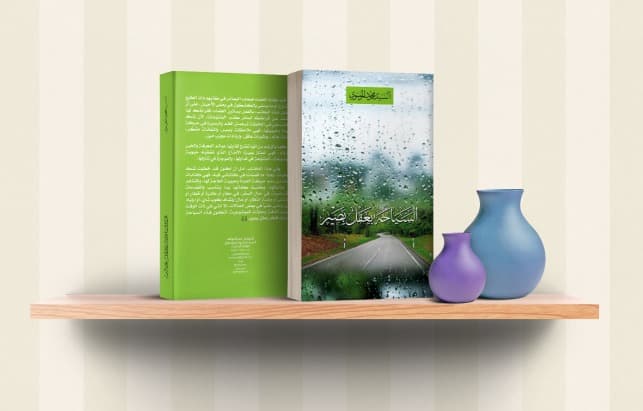
The Islamic researcher Sayed Mahmoud Al-Mosawi has set his pen to plowing this area, and has written a study unique of its kind, which he titled (The Methodological Development in Compiling the Husayni Maqtal), in which he clarified a number of the methodological problems that beset some understandings of narration-based research, and which, more often than not, are stirred by the truncation of methods into a single vision, making the precise vision of the details of the maqtal a hazy vision that needs calm and studied deconstruction.
For example, the writer raises the problem of giving precedence to the maqatil that appeared in the first seven Hijri centuries, and of weakening certain details in any narration that appeared after the seventh Hijri century. He addressed this aspect by pointing out that the books of the Shiʿa in some eras used to be hidden because of the concurrent difficult circumstances, killing on the basis of identity, and the evident restriction of the Shiʿa in the Umayyad and Abbasid eras. The author also drew attention to the fact that the maqatil themselves bear distinctions among them because of the orientation of the writer of the narration: some of them viewed the event of al-Taff with the eye of writing the personal biography of the Imam, some wrote it in a doctrinal spirit, and others wrote one aspect of the event, such as the story of the captives and their lady, Lady Zaynab, and so on. Thus, looking at the differences between the methodologies of writing the maqtal gives us a better view of the differences of the maqatil that are in our hands.
The writer clarified the nature of the composite writing of history, that is, writing assembled from several sides/narrations and recounted in a single maqtal, as found in the book al-Irshad by al-Shaykh al-Mufid, the book Muthir al-Ahzan by Ibn Nima al-Hilli, and the book al-Luhuf fi Qatla al-Tufuf by Ibn Tawus.
Among what should be heeded in the narrations of the maqtal and their variety is the literary feature, which men of letters introduced abundantly because of the firm connection between the event of al-Taff in general, and al-Husayn in particular, and the surging emotion of the lovers of the Pure Progeny. And since emotion is a firm pillar in treating the account of the historic slaughter, and a solid foundation in nourishing belief in the Ark of Salvation, the literary language had its positive effect—one not free of remarks that verifying scholars can take up. This is what al-Mosawi drew attention to in his book, stressing the importance of drawing the artistic picture of the ʿAshura event, which is in its origin a bloody canvas from whose sacrifices history drips, and by what its self-sacrificing heroes poured out belief is revived. Despite the beauty of this approach, it gives one aspect preponderance over another in view of the extent of its effect, which makes the man of letters compelled to elaborate on one aspect over another; and here some observations can be recorded, which the book did not overlook.
What made al-Mosawi's study cohesive is his inclusion of what the Imami jurists have done throughout history in writing the maqtal, which will add a great deal to this difficult task, since the jurist possesses the tools of language, of transmission (riwaya) and of critical understanding (diraya), and the two dimensions, juristic and doctrinal, in a way that makes his verification more balanced and cohesive than that of others. This chapter in al-Mosawi's book places the reader before the responsibility of researching the writers of the narration and understanding their depth in the tools of historical research, and it also makes the reader deliberate before issuing hasty judgments about some details that may come from the pulpits which he does not grasp. Al-Mosawi has listed the names of some of the jurists who undertook this sharʿi function, along with the names of their books and a brief description of those books.
Nor did the author miss what has recently been called the rational criterion in accepting or rejecting narrations. He divided it into two kinds: the first is that which rests on comparisons between what comes in the narration and the present age, and this kind may fall into numerous problems. The second kind is the one that compares narrations while taking into consideration the question of the doctrinal constants, which the reader needs as an arsenal that gives him insight into some of the meanings brought by the events of Karbala.
In my belief, the book is very important for all groups. The preacher will benefit from it in gaining insight into the methodological differences in writing the maqtal, and this will lend him sound judgment in oratory and alertness in narrating the events. The listener will benefit from the book in the aspect of investigation and of deliberation before rejecting some of the narrated reports, and his acceptance will have a methodological basis. Perhaps that will lighten the burden of the problems that are raised every season, most of which are unnecessary—indeed, harmful.
As for researchers, they will benefit from the book as an indexed reference for the types of compilation methods, and for the books and the writers. The researcher can shorten the road in enriching his writing on any aspect of the noble maqtal by relying on the book The Methodological Development in Compiling the Husayni Maqtal, and by clearly identifying the motives and reasons for writing this narration or that. This requires the researcher in particular to carry this book with him in all stages of research among the books on the event of al-Taff.
16/8/2023 CE
----------------------
* A writer and researcher from Bahrain