A Reading of the Book: The One Coming from the Other World
By His Eminence Shaykh Muhammad Hasan Al Ibrahim
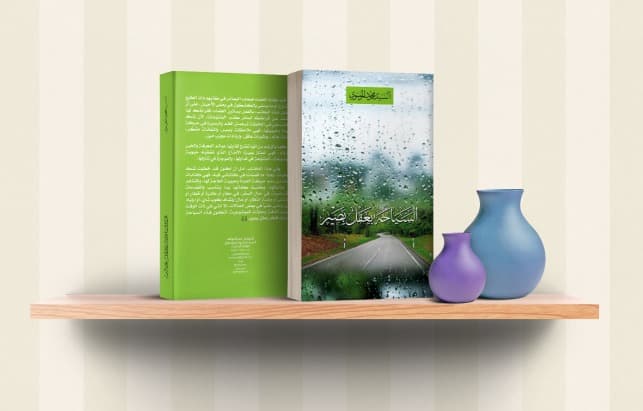
Title: The One Coming from the Other World.
Author: Sayed Mahmoud Al-Mosawi.
.
First edition: 1433 AH/2012
Size: A5
Pages: 144
(Thematic Insights for Your Life from the Daily Supplications of the Month of Ramadan)
presented by His Eminence Sayed Mahmoud Al-Mosawi in his latest book “The One Coming from the Other World”
The book's introduction speaks about a central point that is considered the basic starting point of its construction, namely the extent of the influence of worship on a person's life and on moving him toward human perfection and virtue—in other words, toward success and felicity.
The writer sets out by heralding the world of the spirit, where there is purity and sanctity—the spirit in its purest meaning and its loftiest rank—and he promises the reader an ascent on high through supplication, like an unbridled Buraq, as unbridled as the supplicant's awareness and his comprehension of the reality of supplication and its contents.
He points to the godly models whom we meet and admire, and whom we think to be the product of a world other than the one we live in, because of the godly hue they have and their brilliance in the world of success.
He gives the reader the glad tidings that he can change and change himself for the better, and so become one of these ideal models, through the new rebirth from that other world.
He affirms that supplication, in the certainty of the Ahl al-Bayt, is one of the keys to success and the reins of felicity. This concept is almost unfamiliar at the practical level, since its meaning is not asking and waiting for the return on the asking, “supplication”; rather, it is more than that, since he clearly puts forward the importance of regarding supplication as a comprehensive movement of change that touches the essence of the human being and takes hold of his points of orientation—through what supplication gives us, which goes beyond mere turning [to Allah] and humility, including:
- Depth of knowledge and the discovery of truths.
- The map of the good life and its fixed laws.
- Sound methods of thinking.
- Correct plans of management.
- The paths of glory and the ways of success.
- Noble traits of character and good qualities of the soul.
- Divine direction and hidden enablements.
Yes, those short daily supplications which we read in the daytime of the month of Ramadan every year, and which some may sometimes neglect, hold in their essence a great power of change, in which the writer has had the palm of precedence, along this elevated curve.
The writer has drawn up a method that clarifies his mechanism for bringing out the thematic insights of the thirty supplications, through the following method:
· Looking at each supplication as a thematic unit, proceeding with its passages on the chosen thematic basis; this does not mean being confined to the course we have followed in the study.
· Adopting the closing parts of the supplication as the thematic starting point for the topic, considering them as means invoked in seeking or as desired goals.
· Explaining the vocabulary of the supplication within the main text and in the course of presenting the ideas, in order to preserve the thematic form.
· Supporting the idea of the supplication with verses and narrations, and elucidating the thematic horizons from them.
· Confining oneself to benefiting from the texts of the supplications and being content with mentioning them, without mentioning their reward, so that the subject of the supplications does not branch out.
· Adopting the educational presentation and style in order to benefit from the insights of the supplication.
Here a question may spring to mind:
Namely, how successful is the method derived from projecting a kind of mechanism of contemplation of the verses of the Noble Qurʾan onto these supplications?
And has the writer succeeded in connecting the passages of a single supplication?
And is there really a common thread among the thirty supplications, with the depth of thematic interconnection that the introduction promises?
The answer to that is obtained from whoever has enjoyed reading this wonderful book, which truly transports you to another world, and which itself answers these questions in a beautiful, flowing, harmonious composition.