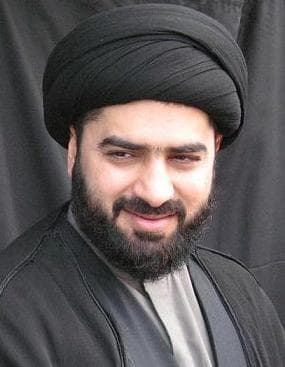
Sayed Mahmoud Al-Mosawi
Introduction
Sociologists and anthropologists have observed that the intellectual influence that touches thinking and pours into a person's culture is the deepest and strongest influence, and that it surpasses all other influences, such as political, economic or social influence. However, this influence does not usually come about in an easy and simple way; it is a complex influence and, at the same time, a slow one. On the basis of this fact, if we want to study the reality of society in its transformation or in the changes that have come upon it, we cannot confine those civilizational, social and cultural transformations to superficial or outward causes, and the study must not be detached from the study of the cultural and scholarly notions that prevail in that time. As for how the influence of those notions is to be read, when they may be a reality that dominates the culture of the present and the awareness of the current moment? This is done by returning to the earlier historical eras and reading them as they are, then working to compare them with the current reality, so that the extent of the presence of those notions becomes clear to us, together with their influence, which may not be perceived self-evidently and by necessity, but rather through reasoning and thought.
Likewise, the documents that circulate in the two eras under study play an active role in clarifying the view of the extent of the influence of some ideas on reality. Cultural transformations are those accidents that come upon the manner of human thinking and make it move with its new vision and the method that has come upon it, as a result of a firm conviction and an acceptance of the mechanisms and values on which that vision was founded. The transformation and the influence may occur in another space of society, influenced by the first tide of convictions or by the prevailing discourse formed from the new culture, or influenced by partial convictions through accumulations of interaction, reading and general acculturation, and this is an indirect influence. Through this a shared space appears in the prevailing culture, which lays the foundation for a reality through which rapprochement, meeting and the building of joint work become possible within those shared spaces.
There are many vital concepts whose emergence onto the surface leads to attention on the part of the active parties in society, and that is through:
1/ The circulation of those concepts in the prevailing discourse.
2/ Through the actual orientations of those concerned, through the creation of new preoccupations in work on the part of movements, leaders and others, heading toward reinforcing the condition that the concept imposes.
As an example of the first, we find that in the era of the nineties of the last century the use of the concept of pluralism began to increase, as a concept with political, religious, social and cultural dimensions. This became noticeable through the writings issued by the Islamic movements and by religious scholars in general; likewise their oral speeches, their political moves and their social orientations, we find them distinguished by a focus on pluralism as a principle in which society, the state and the intellectual alike need to believe.
As an example of the second, which is the creation of new preoccupations in the space of Islamic action, for instance: the issue of human rights, as a concept whose importance has emerged in a way plainly visible in recent times (for whoever follows the reality of the Islamic arena observes that there are new Islamic readings of the issue of human rights; indeed, it has become part of the political and legal Islamic action of many Islamic movements, which have formed special bodies and institutions for it whose focus is the defense of human rights, and in particular of detainees, who are known in legal and rights institutions as prisoners of conscience)[1].
Cultural transformations are important transformations, and it is of great importance that scholars, thinkers and reformers take note of them, especially those transformations in which the basic factor is Islamic thought, through one of its active channels in society. We Muslims have grown accustomed to monitoring the notions that come to us from Western thought, such that we find studies dealing with their influences and repercussions in their various aspects, while we are heedless, or feign heedlessness, of our own cultural product, which was born from the womb of authentic Islamic thought. The West has been able to dictate to us its preoccupations, which are also our preoccupations, by virtue of the wave of globalization and the global influence of concepts and ideas. This is a relatively positive matter, because knowing the preoccupations and notions of the other concerns us, inasmuch as they are directed at us in one respect, and in another respect they add to our stock of knowledge a cultural accumulation and a wider awareness of what is happening around us. However, the absent duty is the deficiency in the study of the notions and concepts produced by contemporary and new Islamic thought, a study that digs into the extent of the influence they have had on reality and the extent of the progress they have achieved in general Islamic awareness. For it cannot be claimed that there are no positive influences of Islamic concepts, even to some degree, while we are witnessing a political and cultural ferment that has created climates different from those of earlier times. This matter ought to urge us to take note of the conceptual influences produced by Islamic thought, at the very least so that they may awaken in us the spirit of hope for continuing the steps diligently.
Risaliyya and the Transformations of Awareness
In this study we seek to shed light on the concept of (Risaliyya) as a notion that has become strikingly widespread in recent years among the theorists of the Islamic movements, among Islamic intellectuals, and among scholars who have a mass discourse. Culture, the person, conduct, society, the scholar and the intellectual are usually described by it, so one says (Risali culture) and (the Risali person, scholar and society), and other such attributions by which is meant a distinctive quality that accompanies what is described. It has also become, for many, a goal that they strive to realize in the person, considering it the fundamental quality of the perfect human being at whose hands the purposes of religion, the directives of the Shariʿa and the building of the ideal Islamic society are realized.
Therefore it has become important to study this concept and to shed light on its historical origin and on the conceptual dimensions that distinguish it from other qualities.
We can regard (Risaliyya) as a concept springing from the depth of Islamic thought, as a word, since it is derived from al-risala (the message) and al-rasul (the messenger), a word that has a great presence in the verses of the Noble Qurʾan, in its various derivatives, approximately (497) times, expressing the tasks of the Prophet and of those who follow him, and expressing the essence of the Islamic religion as a message of guidance to all humanity, as in the saying of the Exalted: “such as deliver the messages of Allah and fear Him, and fear no one except Allah, and Allah suffices as reckoner.” (Qurʾan 33:39). Likewise, Risaliyya is regarded as an authentic Islamic concept in terms of the content and the connotations that were derived from the Islamic sources (the Noble Qurʾan and the purified Sunna).
Before entering into the connotations that emerge from the concept of Risaliyya, and its social and political shades, we affirm that the literature of Islamic thought did not use this expression noticeably before the seventies of the twentieth century CE, even though Islamic thought passed through many stages of renewal before that date, such as the stage of the crystallization of the sciences of ijtihad in jurisprudence and its principles at the hands of Shaykh al-Ansari, Ibn Idris and al-Muhaqqiq al-Hilli, and likewise the stage of taking a stand and confrontation, as in the Tobacco Revolt, the 1920 Revolution and the Constitutional Revolution. This matter, namely the non-appearance of the concept of Risaliyya in Islamic discourse in general, extends even to the time just before the launch of the Islamic Revolution in Iran and the emergence of a group of jurists who took charge of the affairs of the Umma: they were not observed to use the word Risaliyya to any great extent, even though their movement was characterized, in one way or another, by the connotations of this concept.
The content of the mass, activist Islamic discourse used different words to describe the activist person and to describe the ideal state: some were content with the expressions (the believer) and (the committed), and some gave preference to the word (the caller) and (the call), all according to the foundations of the intellectual nature adopted by this or that discourse.
The Risali Movement
At the end of the year 1967 CE, there formed in Iraq, specifically in holy Karbala, Islamic groups with activist engagement that called for changing the crisis-ridden reality in which Iraqi society and the ruling authority were living at that time, and that also called for establishing the teachings of religion and making them firmly rooted in society. These groups were under the leadership of the marjaʿiyya (religious authority) of Imam Sayed Muhammad al-Shirazi (rh), who called for transformative action at all levels and was distinguished by his great thought and activity, together with a group of scholars, the most famous of whom were the religious authority (marjaʿ) Sayed Muhammad Taqi al-Modarresi, Sayed Hasan al-Shirazi, Sayed Sadiq al-Shirazi and Sayed Hadi al-Modarresi. Those groups were given the name (the Risali Vanguards), and those groups became famous by this new term, since the first to apply it in this form was (the Risali Movement), which was formed from those groups[2]. Later the name (the Islamic Action Organization) was given to its Iraqi faction. (The emergence of this Risali organization was an urgent civilizational response that Iraqi society was living through, as at that time it was suffering from the pains of the June 1967 setback before the usurping Zionist entity, a setback that was the natural result of the factors of dependency, backwardness and domination by which our Islamic world, and the Arab world in particular, is ruled.)[3].
Whoever follows the history of the contemporary Islamic movement since the crystallization of the organized movements at the beginning of the second half of the twentieth century CE observes that the movements took on the coloring of certain slogans and terms that express their ideas or their motives for action. This is what was observed in the general Risali Movement, which adopted this expression and took on its coloring in its names and in its publications, describing the person it sought and who belonged to it as the Risali person. Since that time this term has been in a process of crystallization, being taken up in circulation and definition in the writings and cultural lectures of the movement by its leaders and thinkers, until it became an authentic concept that expresses the spirit of this movement in its cultural depth.
This term, Risali and Risaliyya, became very particularly associated with this movement, and it was the movement that heralded it in all the regions in which it was spreading, in the Arab countries and elsewhere. Naturally, this particular association generated some sensitivities toward this term among many other groups, parties and leading figures, who would not utter it at all, because using it had become inseparable from the Risali Movement and its branches; and the Risali groups regarded it as an identity by which they defined themselves and as a sign of belonging. We will point later to the effect that this notion produced in other Islamic discourses, and this is what calls us to divide the development of the use and the influence of the term Risaliyya into three stages:
The First Stage: The Stage of Secret Use
For in this stage the use of this term was particular to (the Risali Movement), and specifically to its Iraqi faction, the Islamic Action Organization, in its own literature. Among the products of that stage was a private bulletin of limited circulation, distributed only to those working in the Organization, namely the bulletin (al-Marsad al-Risali)[4], which contained general Risali directives and concepts. In this stage the term itself took on a purely political and revolutionary coloring, given the monopoly over its use in it. This stage began in the year 1967 CE, which is the year of the secret founding of the Risali Movement, and ran to the year 1979 CE.
The Second Stage: The Stage of Public Discourse
In the year 1979 CE, after the victory of the Islamic Revolution in Iran, the term Risaliyya was used publicly by the Risali Movement in its general media, in its directive speeches, and in its writings that were issued by its leaders, scholars and thinkers. This stage is the one that contributed to spreading the term and generalizing it in all the Islamic countries. The discourse of the Risali Movement retained for a long period the particularity of using this expression, until this term predominated in its cultural and political output, whether in the titles of books or in the main headings within them. This stage is primarily a stage of theorizing and guidance for the Risali groups, to build their members on the one hand, and to put forward Risali visions on various events and developments on the other. The Risali Movement also put forward its in-depth vision of religion and its way of reading history and the movement of society through a Risali outlook on Islamic society in general.
We can list some names of the books that were issued in that period and that expressed this fact. Among them are the writings that established the root of Risaliyya by putting forward an active and responsible transformative thought in public life; among them were (The Path to the Revival of the Muslims) and (The New Formulation of the World of Faith, Freedom, Welfare and Peace) by the religious authority (marjaʿ) Sayed Muhammad al-Shirazi (q), and the exegesis (Min Huda al-Qurʾan), (The Islamic Society) and (The Islamic Challenge) by the religious authority (marjaʿ) Sayed Muhammad Taqi al-Modarresi, and other books. But there was a group of books that pointed directly, through their titles, to the term (Risaliyya), and they were, as it were, the intellectual literature of the Risali Current in various countries, among them:
Books by the religious authority (marjaʿ) Sayed Muhammad Taqi al-Modarresi: (On Risali Conduct), (How Do We Nurture the Risali Groups), (How Risali Leadership Should Be), (The Mosque, the Launching Point of the Risali Revolution), (Cells of the Risali Resistance), (Risali Experiences), (On Media and Risali Culture), (The Iraqi People and Their Risali Responsibility), (Woman between the Tasks of Life and the Responsibilities of the Message), (Fatimah al-Zahraʾ, Pioneer of the Risali Revolution), (The Program of the Risali in the Era of the Tyrants), (The Umma between Risali Leadership and Counterfeit Leadership); and there are other lectures whose titles or contents include the Risali approach. Those books were issued from the year 1979 CE to 1987 CE.
And other books by Ayatollah Sayed Hadi al-Modarresi, who is one of the most prominent leaders of the Risali Movement: (The Risali in the Equations of Conflict), (The Risali between the Lines of Pressure and the Pressure of the Lines), (Conflict and Challenge in the Life of the Risali) and (The Risali Woman).
And other books by various authors, such as (Ramadan, a Risali Program) by Shaykh Hasan al-Saffar, (The Exemplary Risali Messenger) by Shaykh ʿAbd Allah Salih, and (Features of the Risali Personality), published by the Islamic Action Organization in Iraq, and others.
This is in addition to the many books and booklets that were issued under various titles, but which put forward Risali thought through acts of worship, ethics and general concepts.
This stage, through surveying some of its publications, proves conclusively that this term was particular to the Risali Movement and that the movement adopted it with great insistence. Through them it put forward its thought publicly, and that thought met with wide popularity in various Arab countries; it was eagerly taken up by young people thirsting for a vital, authentic thought that treats their contemporary issues with a new spirit from the perspective of Islam. Likewise, many scholars and intellectuals from other currents found in that great tide of books expressing Risali culture material that quenched their thirst and stirred in them the spirit of responsibility toward society[5].
The Third Stage: The Stage of Influence
After years had passed of broadcasting this term and explaining its concept and its activist and cultural connotations in mass discourses and in varied scholarly discourse[6], it spread in religious circles and among other Islamic movements different from the Risali Movement, which adopted it in their general discourse. Through the first two stages the researcher notices that this term imposed itself on the other discourses, since they found in it a distinctive expression of the reality of religious belonging in its active form in life, and they found in it a comprehensiveness and an encompassing of many of the directives of religion in its multiple aspects, in keeping with what reality needs of multiplicity of engagement on the part of the Muslim person. The words that used to be used had their own particular connotations expressing a specific state, such as (the conveyor), upon which the process of conveying the religion in its doctrinal aspect casts its shadows, and (the caller), upon which the process of calling to the moral teachings casts [its shadows]. There is no doubt that all those expressions are authentic Qurʾanic expressions and have their great connotations; however, the expression (Risali) comprised them and comprised others besides, as it is a kind of summary of the spirit of the Message that the Greatest Messenger (s) brought, with the comprehensive revival of human life that this Message encompasses.
So the circulation of the term Risali and Risaliyya was no longer confined to the members of the Risali Movement alone; rather it became widespread, and even the groups that used to avoid it uttered it. Personally, I attended one of the high-level seminars of some who do not belong to the Risali Movement, and I found that the first three contributions, namely the speech of the president of the society or institution organizing the seminar, the speech of the foremost religious-legal figure in that group, and the speech of its foremost political figure, began with words about the Risali personality, the Risali person and Risali responsibility, whereas none of them had used this expression in previous years. Here I found myself before the scene of the influence of Risali discourse in its clearest forms. I traced the discourses, institutions, writings and activities of groups other than the Risali Movement, from which that culture emerged, and I found the influence extending beyond that, in the naming of institutions and internet networks, and some titles of articles, bulletins, books, committees and others; and the notion of Risaliyya became part of the cultural entity of the various Islamic currents.
Perhaps that is due to the vitality and comprehensiveness of the term itself, and to the culture that used to express it and to express its own vitality in society, just as it is due to the foundational and intellectual studies that played the role of crystallizing the Risali vision in its active and motivating form.
The Stance.. the Project.. the Culture
There is a difference between the stance, the project and the culture in terms of the breadth of influence and the extent of its continuity. The stance is limited to a particular issue; it ends when that issue ends, or with the retreat or the death of the one who undertakes it. The project is the institutionalization of the need so that it bears the property of continuity, and so is connected to the goals and aims for which it was founded, without being connected to the individual. Turning the issue into a project and an institution moves it from its connection with the individual (in continuance and in cessation) to its connection with the aims and goals. However, the institution undoubtedly ends when the need for those goals ends, or after they are reached, unless that institution is connected to general aims whose nature is permanence and continuity, as is the religious institution represented by the hawzas, which encompass changes and transformations from the methodological standpoint and from the standpoint of reality.
As for culture, it is more encompassing than the stance and than the project, since culture, in its encompassing tendency, covers many aspects of life and charts a conduct for the human being's interaction with the various issues and needs, and is renewed as they are renewed. Culture creates a method for human action that can encompass changes within the constants it has established, and therefore it is more lasting. It depends on the one who adopts it, and such people may be many or few. Without doubt, an exception to this is the case where that culture does not carry the constituents of a cultural vision.
If we observe the movement of the religious institution and the movement of the jurists and Islamic leaders, we will find their (Risali) movement varied according to the division to which we have pointed, while emphasizing that the influence of some stances is sometimes in its historical form, as a historical reality and as experiences from which researchers benefit, not in its direct capacity.
Thus the 1920 Revolution, which Mirza Muhammad Taqi al-Shirazi led against British colonialism in Iraq in 1920 CE, was connected to the person of the leader, and it ended when the enemy resorted to killing him with poison[7]. Although Shaykh al-Shariʿa took over the leadership after him, it remained connected to the person and to the kind of stance he took; therefore the British took control of Iraq anew. Likewise was the Mujaddid al-Shirazi, Mirza Muhammad Hasan, in Iran (1891 CE), who was able to drive out colonialism through the Tobacco Revolt: that movement of his succeeded and ended in the cancellation of the British concession in the tobacco trade, and it undermined their authority and the authority of internal despotism. It has become one of the events and occurrences of history from whose lessons benefit is drawn.
As for institutional work, there are many Islamic movements or institutions that continued for a long time, and they end when their goals end, as we said earlier. We mention, for example, Shaykh Muhammad Rida al-Muzaffar, when he founded the College of Jurisprudence, which continued after his death. As for institutions of an encompassing nature, such as the hawzas, they are the most capable of continuing, though they need administrative constituents to guarantee their continuity; as for their continuity as a type, it is a fact and has not been interrupted from their emergence until now.
As for cultural foundation, it is the most enduring, for many of the earlier scholars founded ideas and theories that have remained to this day, such as Shaykh al-Naʾini, Ibn Idris al-Hilli, al-Tusi, Sayed Jamal al-Din al-Afghani, Mirza Mahdi al-Isfahani and others, at various levels.
Naturally, the one who takes charge can combine the three qualities, as he shows a stance, founds an institution, and carves out a culture or a concept connected to the cultural aspect, which moves the human being and influences him through his intellect and his convictions.
Risali Culture
Risaliyya, as a term, was founded in accordance with an integrated cultural system, and it expresses an encompassing vision of human life through the Islamic outlook, by way of its authentic sources.
It was not merely an expression of a passing activist state; rather it turned into a deep content with its detailed connotations, even if some used it without regard to those connotations. Risaliyya has become a culture with its own foundations, landmarks and methodology. From this starting point we will shed light on it, as one of the notions that have influenced our contemporary reality and have contributed to driving forward the Islamic awakening and enriching it culturally and in terms of activism.
The religious authority (marjaʿ) Sayed Muhammad Taqi al-Modarresi (may Allah preserve him) is the leader of the Risali Movement and its activist theorist, and later its religious authority (marjaʿ). He crystallized and formulated Risali culture in numerous books, and his is the pioneering role and the specialization in that, for his many writings abounded in establishing foundations and in explaining the landmarks, characteristics and effects that Risali culture brings about. The encyclopedia (Min Huda al-Qurʾan - 18 volumes), which contains the reflections of the Marjaʿ al-Modarresi (may his shadow endure) on the Noble Qurʾan, is considered one of the most important sources that lay the basic bricks of the edifice of Risali thought, inspired by the Noble Qurʾan and the purified Sunna.
For the Marjaʿ al-Modarresi's stepping forward in the stage of confrontation with the Iraqi authority, from the beginning of the year 1968 CE to the year 1979 CE, took place through activities with multiple roles, among them organizational, political, educational and cultural activities (but this political and organizational activity, as Sayed al-Modarresi sees it, cannot be carried out without founding a cultural current that believes in a particular culture, one that expresses its comprehensive visions of life and proceeds from the authenticity of the sacred Shariʿa — and in this stage His Eminence was able to crystallize a culture particular to the working activist line, and this culture of course goes back to many roots, among them the landmarks of the intellectual school by which His Eminence is distinguished)[8] — which relies on the Noble Qurʾan, the purified Sunna, sound reason guided by revelation, the luminous Risali history, his openness to the various schools of thought, and his insight into contemporary reality.
We will review, with some brevity, the landmarks of Risali culture as they came in the book (Risali Culture), which is a book that summarizes the landmarks of the responsible Risali thought of the Risali Movement, bearing in mind that the book has been printed in a great many editions, and (it was material for study and research in the early seventies in many Islamic countries, especially as it enjoys power of influence, smoothness of style and a precise touching of reality)[9].
The Backward Reality
The book Risali Culture, in founding and crystallizing that culture, starts from looking at the backward reality that has befallen the Islamic Umma — the Shiʿi one in particular — inasmuch as it is the true representative of the reality of monotheism (tawḥīd). The book investigates the causes of this backwardness, attributing them to culture being the one responsible, that is, the culture of the Muslims, which has made the Umma a frozen entity without movement.
It holds that the divorce between the Shiʿa and Shiʿism is the cause of that. Then it clarifies the pillars of Shiʿism with the foundational Qurʾanic vision, such as wilayah, the Imamate, infallibility (ʿiṣma), the Occultation, intercession (shafāʿa), the era of the Occultation, the concept of the jurist, innovation (bidʿa), taqlīd (following a jurist) and awaiting (intiẓār). For understanding those pillars with a conception different from the contents for which they were laid down brings different results, which contribute to the stagnation and the backwardness of the human being. Then the book comes out with an important conclusion and a fixed rule, namely: (When the human being stops giving, everything in life stops)[10]. Those who bore the messages were human beings, yet they did not stop giving; and when the human being after them stopped giving, the wheel of life stopped. This specifically is what has caused backwardness for the Islamic Umma today, as the symbols became husks and they moved away from the true content of the Message, as the Exalted says: “But they were succeeded by an evil posterity who neglected the prayer, and followed [their base] appetites. So they will soon encounter [the reward of] perversity,” (Qurʾan 19:59).
(The Umma that inherited the Message after its true people.. did not feel the need for it, and accordingly it did not move its intellect to discover the goals intended by its rituals)[11].
The more important issue is that this husk-like view turns to the source of legislation and the source of culture, which is the Noble Qurʾan, so that it is dealt with as a purely linguistic field, or as illusory philosophical theories, or as scientific discoveries and nothing more, whereas it is a book of a message, a book of civilization and a book of the human being. The same applies to the legal rulings, when they are emptied of their content, of their interconnection with one another and of their harmony with the purposes and goals of religion, so that the legal ruling turns into a ruling without wisdom.
The Landmarks of Risali Culture
The most effective remedy for emerging from the crisis of backwardness and arriving at the renewal of civilization on its solid foundations lies in returning to our guiding culture, for it is (a source of tremendous spiritual radiance that gives us pride in ourselves, and the distinctive features of our personality, and increases our faith in our great capabilities)[12]. Therefore that culture must be defined and its landmarks made clear, and this is what the book set out to do, as it starts from the general concept of culture, which means (the knowledge that gives the human being insight in life, and a light by which he walks among the people)[13]. The Qurʾanic word corresponding to culture is insight (basira), and (it is the detailed culture that aims at reforming the human being and reforming his conduct, whereas guidance is the general principles of this culture)[14].
It then comes to defining Risali culture in particular, stating that it is:
(The culture that is sound and humane, and courageous, which produces the radical reform of the problems of the Umma today).
Risaliyya is a culture because it is insights and visions that enable the human being to interpret life; and it is sound because it relies on the truth — not on reality — as a means and an end, and it aims at reforming the human being as a means and an end, (for the ultimate value of life is nothing but the training of human beings for another life: “Has there been a period of time for man when he was not anything worthy of mention? Indeed We created man from the drop of a mixed fluid so that We may put him to test”, (Qurʾan 76:1–2), “Alif, Lam, Meem. Do the people suppose that they will be let off because they say, ‘We have faith,’ and they will not be tested?”, (Qurʾan 29:1–2).
This culture, as is clear from its definition, is a culture of radical reform, and without treating the roots of civilizational problems nothing will benefit the human being. In this way this culture becomes courageous, taking the truth and the human being as a means and an end.
A culture of this conception must have a pure spring that is capable of giving in proportion to civilizational needs, and that source is the Noble Qurʾan, which contains insights and guidance. It is not a book of politics, philosophy or ethics; rather it is (the book of the human being; if it speaks of politics, ethics or history, it is only to the extent that this relates to the creation of the human being)[15].
The Noble Qurʾan is the Criterion, and it is one of the sound measures by which true ideas are distinguished from false ideas, and sound conduct from other conduct, as the Messenger (s) said: “When tribulations become confusing to you like segments of the dark night, then hold fast to the Qurʾan, for it is an intercessor whose intercession is accepted, and a complainant who is believed; whoever places it before him, it leads him to Paradise, and whoever places it behind him, it drives him to the Fire.” Likewise, the intellect freed from the shackles of desires is also a criterion in this respect, on condition that it is rid of desires and of fetters by the guidance of heaven, as Imam al-Kazim (a) says: “Indeed Allah has two proofs over the people, an outward proof and an inward proof. As for the outward, it is the messengers, the prophets and the Imams; and as for the inward, it is the intellects..”, and the book adds that the view of the rightly guided leadership is a measure when the human being is unable to be guided by the light of revelation and the radiance of the intellect, and that leadership is represented by the Greatest Prophet (s) and his successors (a), and is represented after them by the just jurists who possess competence, as the Exalted said: “Ask the People of the Reminder if you do not know.” (Qurʾan 21:7), and the hadith says: “As for the events that occur, refer in them to the narrators of our hadith, for they are my proof over you, and I am the proof of Allah over them.”
Responsibility.. the Good Idea
The most prominent quality of Risali culture is that it is a responsible culture, not one of passive reliance: (and the belief of Risali culture in responsibility comes from its clear vision of life and of the goal of it; a vision that is in harmony with the truth and with innate nature (fiṭra), and that is also inspired by the texts of the Message)[16], which show that life is not in vain, but rather aims at testing the will of the human being, as indicated by the noble verse: “Indeed We presented the Trust to the heavens and the earth and the mountains, but they refused to undertake it and were apprehensive of it; but man undertook it. Indeed he is most unjust and ignorant. Allah will surely punish the hypocrites, men and women, and the polytheists, men and women, and Allah will turn clemently to the faithful, men and women, and Allah is all-forgiving, all-merciful.” (Qurʾan 33:72–73).
As for irresponsible ideas, they are those that call to the culture of justification and to Sufi ideas (and Sufism in history is the name given to complete passivity in life, exactly like the (hippies) in the Western world today)[17].
Irresponsible thought afflicts all nations when they pass through a period of stagnation and slackness, so they cling to justifying their stagnation and slackness; and when the Islamic Umma grew lazy, it drew its culture from the Sufi culture of justification that was widespread in other nations.
This is a very brief presentation of what came in the book Risali Culture, and this is its general structure; the book contains clarifications and practical applications through Qurʾanic argumentation, in support of the ideas it puts forward.
In addition, Risali culture, as an integrated system with manifold contributions in different fields, cannot be traced from this book alone; rather there are wider indications and applications that came successively in the writings of the religious authority (marjaʿ) Sayed Muhammad Taqi al-Modarresi (may his shadow endure), and discussion of them is deferred to another place in the research.
An Analytical View
The book treats the problem of backwardness as a social problem from a cultural perspective, that is, through society's interaction with cultural understanding; therefore it seeks to change that interactive relationship between society and culture, so that reality may be changed on its basis.
The foundations on which Risali culture was established proceed, on the conceptual side of culture, from the definition which says that culture is that knowledge which gives the human being insight and light for knowing life, as an ideal definition of abstract culture. There is a difference between this culture, which the human being is required to acquire, and the social culture prevailing in society, which is what forms his vision of life regardless of (the rightfulness of its scale). Therefore the book attributed the cause of backwardness to that prevailing culture, and set about laying down an ideal conception of the alternative and authentic culture that must take the place of that culture; and on this basis the movement of the human being will head in the direction of progress.
Risali culture has a definition through the specifications and landmarks particular to it, namely (the culture that is sound and humane, and courageous, which produces the radical reform of the problems of the Umma today). If we look at it from the perspective of what is particular to Risali culture, the qualities of soundness, humaneness and courage are all in accord with the prevailing theses that herald Islamic culture and call for activating it in Islamic reality; however, radical reform is considered a basic distinguishing feature, for Risaliyya does not believe in patch-up reform, if the expression is correct, or in the superficial treatment of matters. The Marjaʿ al-Modarresi has issued many theses that treat problems radically, such as building the Islamic society, reforming political affairs and others. Therefore there is a divergence from those who adopt the option of keeping the conditions of reality as they were and trying to accept them or to reform them as far as is possible.
Perhaps the most important thing that distinguishes Risali culture from all other visions is two distinguishing features:
The First: The Secret of Effectiveness
Risali culture tried to uncover the secret of effectiveness that enables the human being to work, to move and to set out to create a new reality. It did not confine itself to explaining the vision or presenting concepts; rather it examined, with some precision, the secret that makes the human being effective after having been inert, and the reverse. For the Muslim believes in the Qurʾan and believes in all its doctrines and values, yet he lives a backward reality; so the secret lies in something found in the linking of the relationship between the human being and what he believes in, and this relationship is the manner of understanding, or the deviation that may afflict his view of the sources of thinking themselves. Therefore, through establishing the idea of (responsibility) as the most important quality among the cultural components in which he believes, dead ideas can be distinguished from living and good ideas; and by breaking theories down into parts and placing them on the scale of the responsible idea, we can come to know how truthful they are.
Responsibility is the goal of life, for (Risali culture believes in responsible thought, and insistently rejects irresponsible ideas, the ideas of passive reliance on the unseen that suggest disabling the role of the human being and his effectiveness in events.
Consequently it rejects all the backward ideas that the Umma inherited from the generations of backwardness, just as it rejects the deterministic cultures[18] that the Umma imported from abroad.
The belief of Risali culture in responsibility comes from its clear vision of life and of the goal of it)[19].
On this basis Risali culture sought to recrystallize Islamic concepts, in order to remove the confusions and distortions occurring in the understanding of them among some groups, and it explained, for example, the meaning of reliance (tawakkul), the meaning of fear and hope, the meaning of awaiting, the secret of the Occultation and others, on the basis of the conceptual structure of the responsible idea that Risali culture contains and by which it is distinguished.
The Second: The Comprehensiveness of Fields
Risali culture did not come to treat the field of knowledge abstracted from reality, nor was it specific to one field rather than another among the fields connected to human life. Risali culture was not a theory in political interpretation only, or in doctrinal interpretation; rather it came to treat the guiding cultural foundation of the human being, which touches and encompasses all the fields in whose domains he moves.
For by virtue of its foundational Qurʾanic grounding, it can treat the social situation and the disintegration and corruption occurring in it, and it can treat the despotic political situation or the dependent cultural situation; but that is not through a quick prescription of Risali culture, but rather through relying on the Risali theory of culture in all those fields when wishing to treat them, relying on the actual data of any problem on the one hand, and relying on extracting and deriving the remedy from the authentic sources of culture on the other.
Many theses, varied in their fields, have been issued successively by the Marjaʿ al-Modarresi, relying on the Risali theory in viewing issues, such as the book (The Islamic Society, Its Requirements and Goals), which investigates the way to reach positive interaction between the individual and society and defines the way to reach the vitality of society. In the field of politics and the Islamic movements, in the books (The Islamic Challenge), (The Islamic Approach) and (Islamic Action), Sayed al-Modarresi heralds the path of revival in those fields. Likewise in jurisprudence and Islamic legislation, in the book (Islamic Legislation) in its ten parts, he calls for reaching the spirit of religion through the wisdom of legislation, the purposes of religion and the highest values, so that jurisprudence is not mere rituals without content. And in culture and thought, in the books (Islam, the Culture of Life), (Islamic Thought), (Islamic Civilization) and others, he calls for concepts to be living, contemporary and keeping pace with changes within the constants of religion, and for concepts not to be letters without meanings. And so it is in the area of the method of Qurʾanic exegesis and in reading Islamic history.
This aspect requires researchers to undertake further research and scrutiny in order to know the theory of Risali culture, so that we may be able to crystallize it in a richer and clearer form by following the distinguished intellectual output of the Marjaʿ al-Modarresi (may Allah preserve him) in all its aspects.
(Published in al-Basaʾir journal, issue 39, Spring 1427 AH / 2006 CE).
[1] / Transformations of Thought and Culture in the Islamic Movement, Zaki Ahmad, p. 64, Dar al-Bayan al-ʿArabi, Beirut 1992 CE, 1st ed.
[2] / As the Organization itself stated in its book (The Islamic Action Organization in Iraq, the Founding, the Course, the Goals), where it said, verbatim: (Risaliyya — the first to use this term was the Organization, in its internal literature, then, after the victory of the Islamic Revolution in Iran in 1979, in its media and its press.)
[3] / The Islamic Action Organization in Iraq, the Founding, the Course, the Goals.
[4] / See: The Islamic Action Organization in Iraq, the Founding, the Course, the Goals.
[5] / Many of them have stated this; as an example, see the Bahraini (al-Waqt newspaper), issue 264, Saturday 11/11/2006 CE, on Shaykh Hamza al-Diri.
[6] / We will point to this later.
[7] / See (Transforming Islamic Spiritual Values) by Imam al-Shirazi, and the book (The Plain Truths about the Iraqi Revolution of 1920 and Its Results) by Fariq al-Muzhir al-Firʿawn.
[8] / The Aspiration of a Nation: A Civilizational Reading of the Theories of Ayatollah al-Modarresi, ʿAbd al-Ghani ʿAbbas, p. 152, ed. 1993 CE, Dar al-Nakhil, Beirut.
[9] / The Aspiration of a Nation, p. 333.
[10] / Risali Culture, p. 29
[11] / Ibid., p. 39
[12] / Ibid., p. 75
[13] / Ibid., p. 77
[14] , Ibid., p. 77
[15] / Ibid., p. 81
[16] / Ibid., p. 95
[17] / Ibid., p. 113
[18] / Historical determinism, and economic and social or political determinism, which appeared in Western cultures in a late period of their renaissance as a result of the confusion of their civilizational vision. (Footnote of Risali Culture, p. 94).
[19] / Risali Culture, p. 94.