ʿAshura Articles (6): Between Establishing Justice and Dismantling Injustice.
.
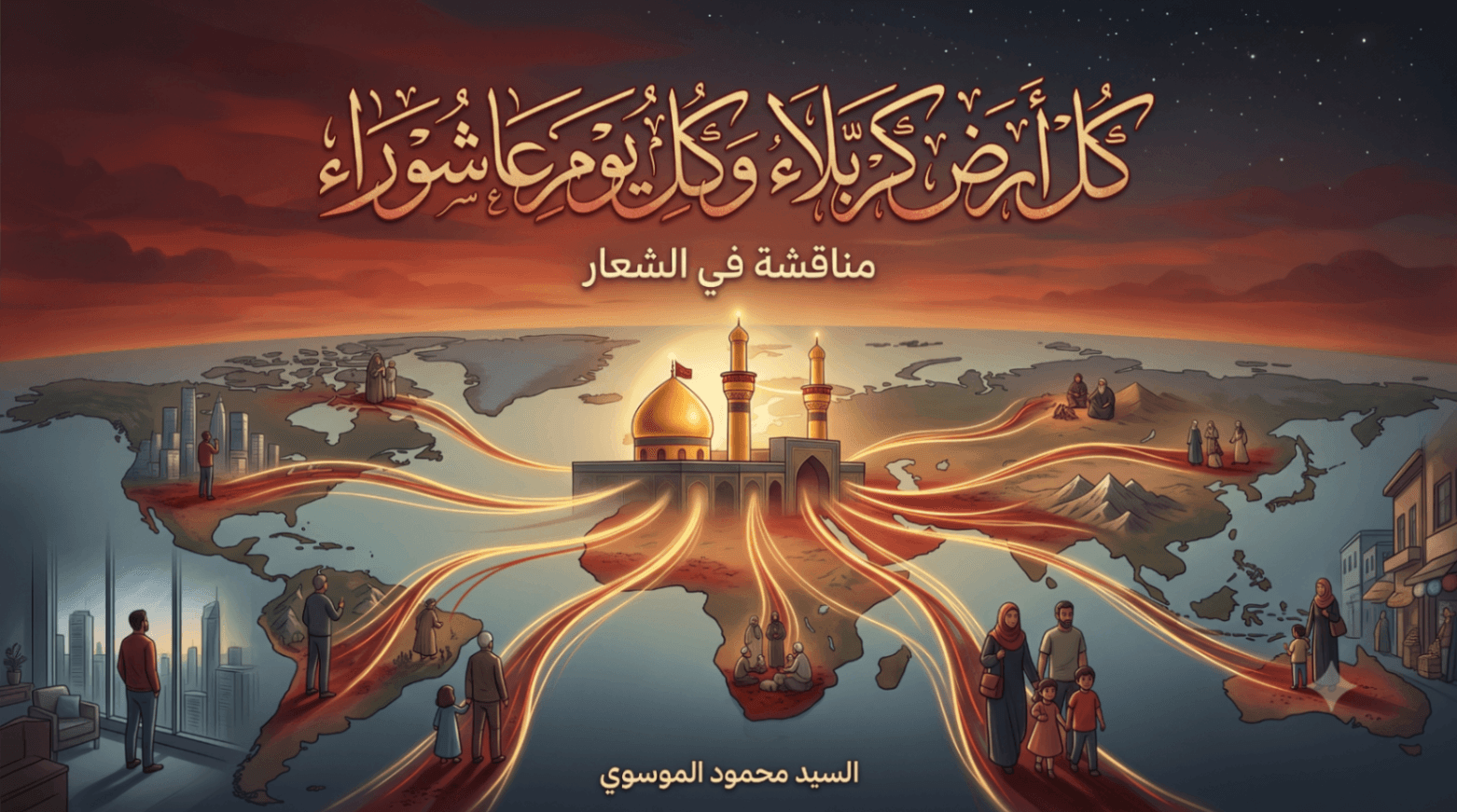
Between Establishing Justice and Dismantling Injustice
Sayed Mahmoud Al-Mosawi
The Husayni project is an integrated civilizational project, and its integration is built on the basis of the comprehensive religious vision that encompasses all areas of life. Since Imam al-Husayn (a) is the infallible Imam whose obedience is obligatory, and he holds the special right of appointment by Allah the Exalted to the caliphate and leadership, he (a) strives in his movement to achieve all the aims—and that is his right—and even if most of them are not achieved, the basis is bearing responsibility for that.
In the era of the Occultation of the Infallible (a), the responsibility of bearing those great civilizational aims continues and does not freeze; its reins are in the hands of the scholars, who are a general extension of the line of the Imamate, even though the particulars differ in the qualifications of the Infallible and in the extent of legislative authority.
On the path of realizing the Islamic civilizational project, it is not a condition that all the hoped-for aims in every respect be achieved in order for those working [for it] to be entitled to embark on any political movement, because achieving the comprehensive goal may be beyond reach and resistant to realization.
On that basis, we ought to distinguish between two notions in this field: the question of establishing justice, and the other question, dismantling injustice. Religion has called, in a way that leaves no room for doubt, for the believers to work in the direction of (realizing justice and consolidating it in society), just as religion’s calls were to (stand against injustice and reject it, so that the believer is an adversary to the oppressor and a helper to the oppressed). This distinction calls us to determine what those who establish justice need in their qualifications and conditions, and, on the other hand, to consider the conditions that ought to be met in one who ought to stand against injustice and tyranny.
We can locate the conditions for establishing justice, and the rightful rule that follows from it, in the words of the Exalted: “We sent down the Torah containing guidance and light. The prophets, who had submitted, judged by it for the Jews, and so did the rabbis and the scribes, as they were charged to preserve the Book of Allah and were witnesses to it. So do not fear the people, but fear Me, and do not sell My signs for a paltry gain. Those who do not judge by what Allah has sent down—it is they who are the faithless.” (Qurʾan 5:44)
His words, Exalted is He, “as they were charged to preserve the Book of Allah” (Qurʾan 5:44) indicate a scholarly station that comprehends the rulings of Allah and the purposes of the sacred Law; and His words, Almighty is He, “and were witnesses to it” (Qurʾan 5:44) mean that they undertake the application of what they know, so that knowledge and action coincide in them. Whoever is in charge of justice must be of high competence.
As for repelling injustice, dismantling it and preventing its occurrence so that it does not cause backwardness and destruction for the umma, that does not need that great station of knowledge; rather, it needs an understanding of the virtues and ethics of action, so that the one working does not himself fall into injustice. Standing up to oppressors is a matter that may be a prelude to establishing justice, and it may be no more than the measure of removing the injustice itself: when injustice befalls a person, he must strive to repel it and push it back. So there is no reason to object to popular mobilization against oppressors on the grounds that it does not possess the scholarly competence to take charge, because it is the establishment and application of justice that need the lofty station. Indeed, in the umma there are those who are qualified for that, especially if the matter is one of consultation among the wise and the sagacious, and above all if we compare the competences with which society abounds with the culture of those who sit enthroned on chairs and positions.