There is no doubt that “reason necessitates caution” and that “caution is overcome by destiny”; yet a person may be preoccupied with the obsession of caution while gripped by fear, and so become a captive held hostage by that fear, and not stir at all toward what benefits him. .
What prompts these words is what we saw in the Hajj season of this year, 1430 of the Hijra, when panic and fear struck people as a result of the spread of the epidemic known as swine flu, against which states took major measures to combat it and its spread, since it is a global pandemic... and it has caused the death of some people in all parts of the world.
The effects on the Hajj season appeared, beginning with talk in the corridors of the governments of Islamic countries about the idea of banning the Hajj, restricting it, or placing conditions on pilgrims, with the aim of limiting that epidemic. Because of that official talk, in addition to the wide media coverage, people began to reconsider heading to the Sacred House of Allah. Those fears were indeed manifested in the announcement by many owners of the groups that provide Hajj services that they would refrain this year from going to Hajj, as they were suffering from not registering a sufficient number. The number of groups did indeed shrink—indeed, the number of those coming to the House of Allah in general—relative to previous years, so much so that some Islamic countries announced that they had cancelled 50% of the rental contracts for the buildings they rent every year, and many countries announced that more than 50 % of their groups had cancelled going to Hajj.
The newspaper Asharq Al-Awsat informed us, in its issue published on 28 Dhu al-Qaʿda 1430 AH, that two days before the closing of permits for domestic pilgrims—in Saudi Arabia—quoting the head of the Hajj and ʿUmrah Committee, there was a drop amounting to 70 % in the numbers of domestic pilgrims compared with every year for the same period. It announced that this would inflict on the companies and establishments for domestic pilgrims financial losses estimated at hundreds of millions of riyals, and he attributed this great decline in the numbers of domestic pilgrims to fear of the spread of swine flu among this year’s pilgrims.
This relative reluctance is considered great in view of the importance of Hajj for Muslims and the importance of Hajj for building the believing personality. Here we need awareness of the conceptual balances in the matter of fear, caution and destiny, so that our conduct is balanced and we do not, because of it, miss the supreme benefits in the precincts of the Sacred House of Allah.
We can observe the general attitude toward frequenting markets and social and recreational occasions, compared with the attitude toward undertaking Hajj. What is certain is that whoever fears something takes precautions and care so as to carry on his life in its normal form; and this is what did indeed happen in the matter of frequenting markets so that a person may provide himself with food or clothing—indeed, even so as to carry on his social and recreational life normally: people began taking their precautions in markets, schools and occasions to avoid any infection with the disease. But this approach did not occur among many people with regard to the obligation of Hajj, and many of them refrained from going to Hajj at all...
It seems that the most important reason for that reluctance is being gripped by fear, which makes a person preoccupied with caution and use it as an excuse, ignoring or heedless of the supreme benefits of the pilgrimage to the Sacred House of Allah. When a person felt the benefit of the market of this world in its foods and clothing, and when he felt the benefit of education in schools and universities, and likewise felt the benefit of social interaction, he took it upon himself to take ordinary precautionary measures to protect himself from the epidemic, on the basis that “reason necessitates caution” and that “a dirham of prevention is better than a qintar of cure,” as Imam ʿAli (a) says.
But many of those reluctant to go to Hajj did not sense those benefits, which cannot be priced, in the market of the Hereafter, which is the Hajj, as in the many hadiths, among them the saying of Imam ʿAli (a): ((The pilgrim of Hajj and the pilgrim of ʿUmrah are the delegation of Allah, and it is a right upon Allah the Exalted that He honor His delegation and grant them forgiveness)).
Imam ʿAli ibn al-Husayn (a) said: ((Perform Hajj and ʿUmrah: your bodies will be healthy, your provisions will expand, and you will be sufficed in the expenses of your dependents)).
Imam al-Sadiq (a) speaks of this great market, saying: ((Hajj and ʿUmrah are two of the markets of the Hereafter; the one who keeps to them is under the guarantee of Allah: if He keeps him alive, He returns him to his family, and if He causes him to die, He admits him to Paradise)).
In the face of this great merit, a person must think seriously and be keen to be among the delegation of Allah—especially those who made a habit of Hajj in times of ease and comfort, then abandon it at the first fear. Just as precautions were taken for the markets of this world, precautions ought to be taken for the markets of the Hereafter, in order to attain their abundant benefits.
The solution, then, is to call to mind the greatness of Hajj and to have genuine faith in those benefits that return to the pilgrim in this world and the Hereafter together...
For when a person’s heart inclines to justifying his situation on the basis of the scales of desire, it deviates and does not make correct decisions; so he must call upon reason and faith in order to arrive at maturity in decisions...
Imam ʿAli (a) says in this regard: ((The most wondrous thing in a human being is his heart: it has sources of wisdom and opposites contrary to it—until he says—and if it is made happy by contentment, it forgets to be on its guard, and if fear befalls it, caution preoccupies it)).
In the end, even with taking precautions and care, destiny is inescapable. A person must strive and do what is within his power to ward off diseases and all forms of harm from himself, but he does not control his appointed term; this is why the Commander of the Faithful (a) said: ((Destiny overcomes caution)). With the difference between the markets of this world and the markets of the Hereafter that for harm in the markets of the Hereafter a person is rewarded, and he is under the eye of Allah the Exalted: “and if He causes him to die, He admits him to His Paradise,” as Imam al-Sadiq (a) said.
Indeed, persisting in the markets of the Hereafter is safety in this world and the Hereafter. It is narrated from Imam al-Sadiq (a): ((Hold to the pilgrimage to this House and persist in it, for in your persisting in Hajj is the warding off from you of the adversities of this world and the terrors of the Day of Resurrection)).
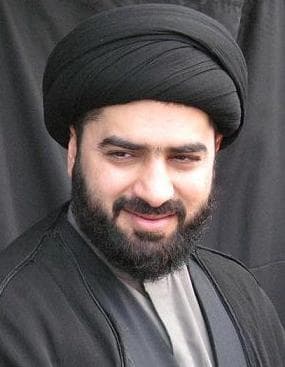
Sayed Mahmoud Al-Mosawi
Holy Mecca, 28 Dhu al-Qaʿda 1430 AH