When we read the behaviors of human beings in general, in their history and their present, we notice that it is part of the innate nature of the human being to be keen on guiding his fellow human being to what he “sees” as true and as containing good and benefit. This phenomenon is prominent in the majority of human societies in various times, despite the existence of a few groups that restrict the direction of this guidance to come from or go to a particular group of human beings; but in the end they do it, even if in a limited way. None depart from this classification except a few exceptions who are keen to monopolize good for themselves, or who are keener on their own comfort than on carrying out this great human role. .
Look at the adherents of religions, ideas and theories in the east of the earth and its west: do you see anyone who does not preach what he sees as true? Look at religiosity, democracy, atheism, capitalism, liberalism, the various sciences, culture, secularism, socialism, philosophy and others: do you see those who believe in their rightness not preaching them and “advising” humanity to follow them? This fact serves humanity, since it directs and guides it to what is good for it and to its progress, and helps it correct its mistakes and avoid great tragedies, if it listens well by following what is proven correct and discarding what is proven wrong.
Nevertheless, some appear who campaign against this human value and spread glittering slogans and principles that attract many people but are mistaken. Among these slogans is the common saying “Everyone has his mind in his head and knows his own salvation.” Interpreting the phrase: there is only one way through which this principle can be correct, and that is when it is meant as leaving people free and not forcing them to follow a particular matter, after offering counsel and guidance, promoting good, setting out the proofs and demonstrations, and repeating this work to an extent sufficient to clarify the picture for the rest of humanity.
Everything that falls within this framework is what reason and the sharia endorse, as has come in the Book of Allah: “There is no compulsion in religion: rectitude has become distinct from error” (Qurʾan 2:256)(1); so after the truth has been made distinct from falsehood, people are left free. This statement is beyond reproach, and we do not take it up here; rather, we are discussing what many of those who believe in this phrase and this principle mean by it: abandoning counsel altogether, because every human being possesses a mind and does not need anyone to clarify for him right from wrong and truth from falsehood—and they consider that the summit of freedom, openness and progress!
Why is this principle promoted?
Some people believe in and promote this principle out of ignorance and confusion, and some of them for personal interests; but what concerns us here are two matters:
1- That some use it to silence their conscience by practicing self-deception with justifications that, with the passage of time, turn into a real conviction that its holder defends and gathers proofs to support, to reassure himself first, and perhaps to convince others later; and consequently the human conscience that urges the spreading of good and reform dies.
2- Directing this principle, in many cases, to attack certain religious practices—which spring from this general social and human value—or to justify falling short and lagging behind in performing them, such as propagation, enjoining what is right and forbidding what is wrong, responding to doubts, and the like.
So let reason and reality speak:
1- The difference in the degrees of knowledge and learning among human beings: every human being, however much knowledge he has attained in a particular field or area, is ignorant in other areas, and consequently he is in need of others who surpass him in knowledge or acquaintance in those areas, to clarify for him what he does not know, or what may be difficult for him to understand, or what becomes doubtful and confused in his mind.
A car that lacks fuel cannot take you to your destination; likewise, a mind that lacks knowledge or correct and deep understanding cannot bring you to correct decisions and convictions without seeking the help of others.
2- Does a human being use his mind in all his decisions and convictions? It is not hidden from anyone that there are external and internal influences that affect the working of the mind and may make it lose its value in many cases; consequently, a human being needs someone to bring him back to his senses.
These states are not rare or particular to some human beings; rather, they happen constantly and to most human beings, among them when we are under the influence of various emotions and psychological and emotional pressures. When a person is deluded, hesitates, rushes, becomes angry, is biased or follows his desires, he mostly does not listen to his mind. Is any drug addict ignorant that he is injecting himself with deadly poisons? Then why does his mind not prevent him from that? Does reason accept that we suppose that any human being—even if he is the most learned of scholars in his field—uses his full mental abilities in all his affairs, small and large, and cannot possibly fall into error, even because of some external influences?
3- Forgetfulness and heedlessness: even supposing that a human being possesses sufficient knowledge and uses his mind in all his movements and moments of rest, is there a human being who does not forget, even for a moment? Does not every human being need someone to remind him? Even if we suppose that a person has built his decisions and convictions on a rational proof, is it right to suppose that everything he does results from his mind and these convictions of his, and that he is never heedless and does not act contrary to his mind and his convictions? Does not every human being need someone to bring him out of his heedlessness when he is heedless? When the All-knowing, the All-wise—Glorified and Exalted is He—said: “And admonish,” He immediately followed it with the words “for admonition indeed benefits the faithful” (Qurʾan 51:55)(2), meaning that those admonished already believe in this thing of which they are reminded, but despite that they may become heedless and forget and need someone to remind them constantly. This matter is of course not confined to religion, because every human being is in need, forgets and becomes heedless, especially amid the bustle of life and its complexities in today's world. Whoever promotes this saying refutes it himself: if this saying is correct, then why do you promote it? If every human being possesses a mind in his head and does not need anyone to guide him to the truth, then all human beings should have believed in this saying—because it is correct in the view of those who say it—and no one would advise anyone, no one would teach anyone, and no one would interfere in anyone's convictions. So was it ever, at any time, the case that “everyone has his mind in his head,” with human beings abandoning these matters and all believing in this saying? Of course not. For that reason the proponents of this saying themselves needed to clarify it, convey it to human beings and advise them to follow it, and thereby they contradicted their own saying and refuted it in practice.
===================
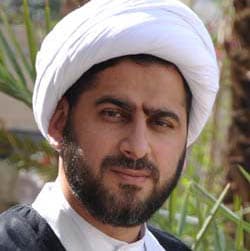
* A writer from Saudi Arabia
(1) Surat al-Baqara, verse 256 (2) Surat al-Dhariyat, verse 55